Search 'keep rodents out of basement and attic' and you get advice written for a house type that barely exists in Georgetown. Almost all housing built here since the 1970s is slab-on-grade — no basement, no crawl space, nothing underneath to seal. The exceptions are Old Town, around the Square, and the older rural stock out toward Weir and Walburg, where a pier-and-beam foundation and a small crawl space still show up. If your house has one of those, the ground-level advice below applies. If it doesn't, and most Georgetown houses don't, the attic is where this actually gets decided.
Ground-Level Entry, Where It Exists
A crawl space in the Old Town and Weir stretch of Georgetown is entered from underneath: skirting gaps, a torn vent screen, a utility penetration that was never packed tight. Rodents work along the ground there, following a fence line or a stack of firewood until they find that one weak seam and squeeze through. Most newer construction around town sits on a slab, so this ground-level route only matters on the older lots. Sealing it means walking the perimeter at foundation height, not the roofline, and checking every vent and pipe entry the same way you would check a door.
Attic Entry, Where Most Houses Actually Get In
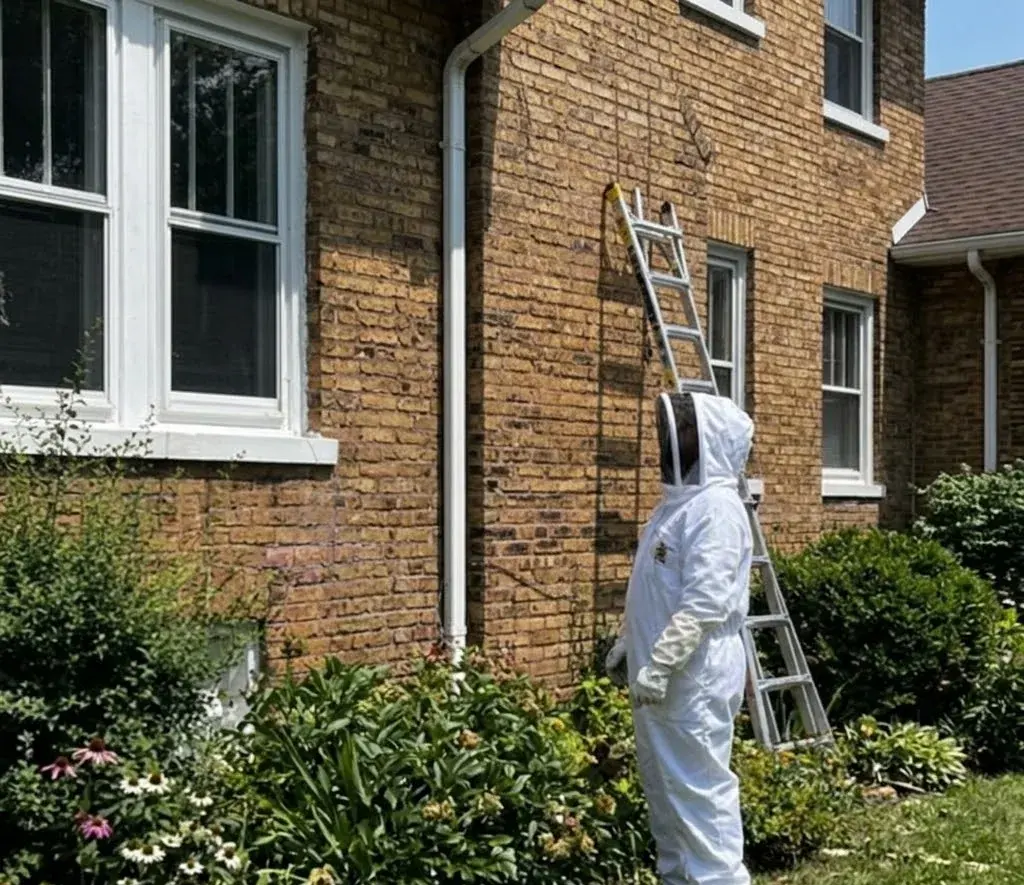
An attic is a different animal altogether, and in Georgetown it is usually the one that matters more. A roof rat does not bother with the ground floor at all; it travels along a power line or a live oak limb until it reaches the fascia, then works into the house through a gap at the roofline, a gable vent with a bent screen, or wherever a soffit has pulled loose. Once inside, the attic gives it room to nest and gnaw on whatever is up there. Checking the roofline after a storm, and keeping tree limbs cut back from the eaves, does more to stop this than anything done at ground level.
The Branch Is Part of the Entry Point
A roof rat will use an overhanging tree limb as a bridge onto the roof, so the entry point isn't always a gap in the structure — sometimes it's a live oak branch that's grown within jumping distance of the fascia. Trimming branches back a few feet from the roofline removes that bridge without any sealing work at all. Neighborhoods with mature tree cover, and anything backing onto a greenbelt, see more of this than a newer subdivision with young landscaping, simply because there's more overhead cover connecting yard to roof.
Sealing an Attic the Right Way
Vents are the main weak point. A gable vent, a soffit vent, or a ridge vent all need a rodent-proof screen behind the decorative louver, not just the louver itself, because a rat can gnaw through thin aluminum trim in a way it can't get through hardware cloth. Check where roofline meets brick or siding for gaps left from construction or from a satellite dish or vent pipe installation — new construction still going up around Georgetown isn't exempt from this, since a gap can be left unsealed from the build itself. Anything wider than a pencil is worth closing before it's a nesting site rather than after.
What This Actually Looks Like In a House
Scratching in the ceiling at night, especially near an exterior wall, usually points to the attic rather than anywhere lower in the house. Droppings along an attic joist, insulation flattened into a path, or a gnawed corner on stored cardboard all confirm it's rodents and not something else. In the rare Old Town or older rural property with an actual crawl space, the same signs at floor level — droppings near a vent, a chewed edge on stored items — point the other way. Either way, the fix is the same principle: find the entry point, close it properly, and don't leave a branch or a torn screen as an open invitation.
Dealing with this in your home?
Georgetown posts start the same way, and it always shows: a scorpion crossed the tile at midnight, a fire ant mound came up overnight off Williams Drive, something is moving in the attic above Berry Creek. This page pulls those threads apart one at a time — what the striped bark scorpion actually wants, why roof rats never touch your slab, why the San Gabriel doesn't explain the ants. By the end you'll know which of those calls can wait until morning.