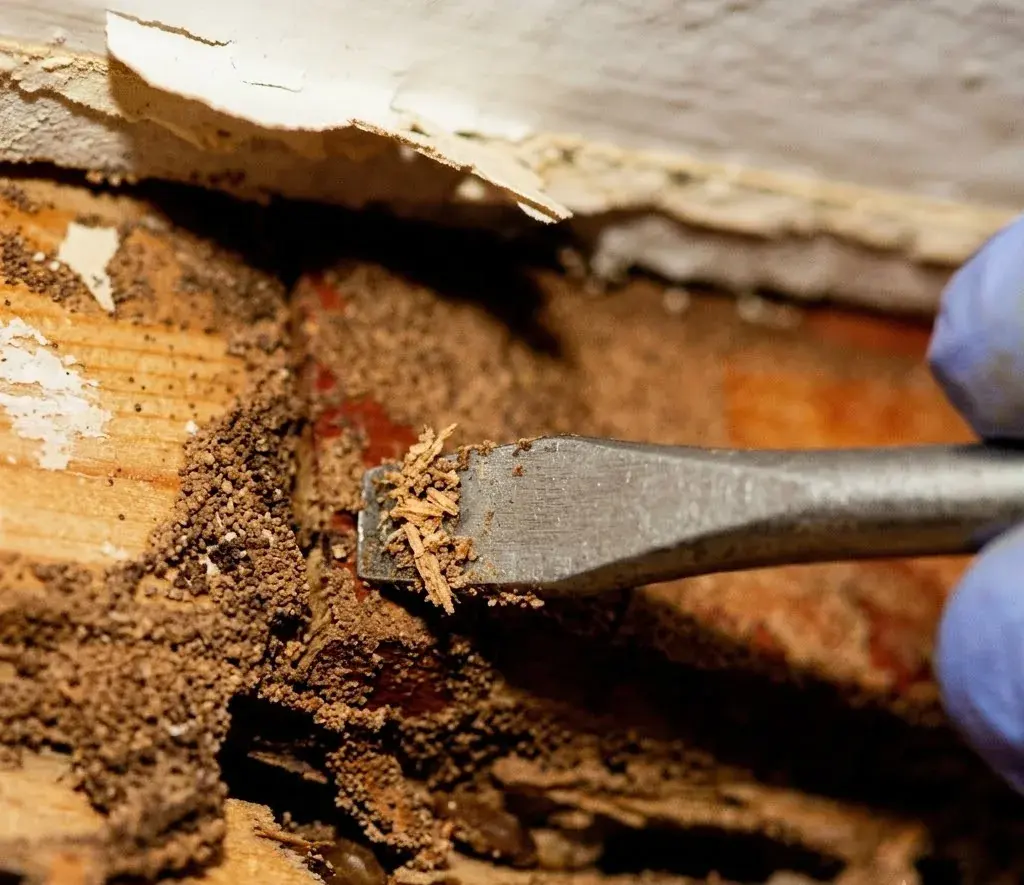
Termite Inspection
A straightforward look at what a routine termite inspection actually checks on a Georgetown home, and what the evidence means…
Learn about Termite InspectionThe angle here is the limestone: fractured rock that carries rainwater sideways rather than down, sitting under a slab-built community old enough to have real landscaping and young enough that most homes share the same foundation type and the same exposure.
Sun City Texas is the Del Webb 55-plus community off Williams Drive on Georgetown's northwest side, and at well over 15,000 residents it's the largest single neighborhood in town. The ground underneath it is Edwards limestone with a thin caliche layer, the same karst rock that Inner Space Cavern sits inside a few miles south. Homes here are slab-on-grade, landscaping is mature after three decades of growth, and a large share of residents are home during the day — all of which shapes what shows up and how it's noticed.
Rock on one side of the county and deep clay on the other, roof rats that enter from above, scorpions drawn to moisture — the ground shapes the problem.
Brick veneer around Sun City means weep holes every few feet by design. That is drainage working as intended and an open door to anything flat enough to use it. Screening them is worth more than treating the wall behind them, and it is the first thing to ask about on a scorpion call.
Standing water is the part people miss near North San Gabriel River. A gutter with a sag in it, a plant saucer, a tarp and an unused wheelbarrow each hold enough for mosquitoes within a week of rain, so walking the ground and tipping things over is worth more than anything sprayed.
The limestone under Sun City holds heat and releases it slowly, so evenings here stay warm later into the fall than the humidity alone would suggest, and a hard summer drought followed by even a modest rain tends to bring fire ant mounds up across lawns within a day or two. Thin caliche over fractured limestone gives scorpions endless cracks to travel through, which is why any street sitting on rock keeps up steady activity right the way through summer.
Del Webb Sun City shape a good part of the workload around Sun City. Where units share a wall and a bin store, whatever turns up in one of them is already the whole building's concern, so treating a single suite on its own rarely holds.
What a visit runs depends on the pest, the house, and whether it is a single call or a standing plan.
| Service | Estimated cost |
|---|---|
| Termite Inspection | an estimated $449–$1400 |
| Yard & Lawn Pest Control | an estimated $79–$169 |
| Rodent Exclusion | an estimated $189–$499 |
| General Pest Control | an estimated $99–$239 |
A show cave a few miles south of Sun City on the same Edwards limestone, useful less as a destination and more as proof of what the ground under this neighborhood is actually made of — fractured rock that moves water sideways instead of letting it drain straight down.
Williams Drive links Sun City to the rest of Georgetown, running southeast past Cedar Breaks Park toward Austin Avenue and Old Town, a straight shot for any inspection scheduled here.
Sun City itself has no creek or pond inside its boundary, but the lake nearby keeps overnight air damp enough that mulched beds and shaded foundation lines stay moist well into the next day, which is the kind of condition fire ants and termites both look for when they are deciding where to move next.
A straightforward look at what a routine termite inspection actually checks on a Georgetown home, and what the evidence means…
Learn about Termite Inspection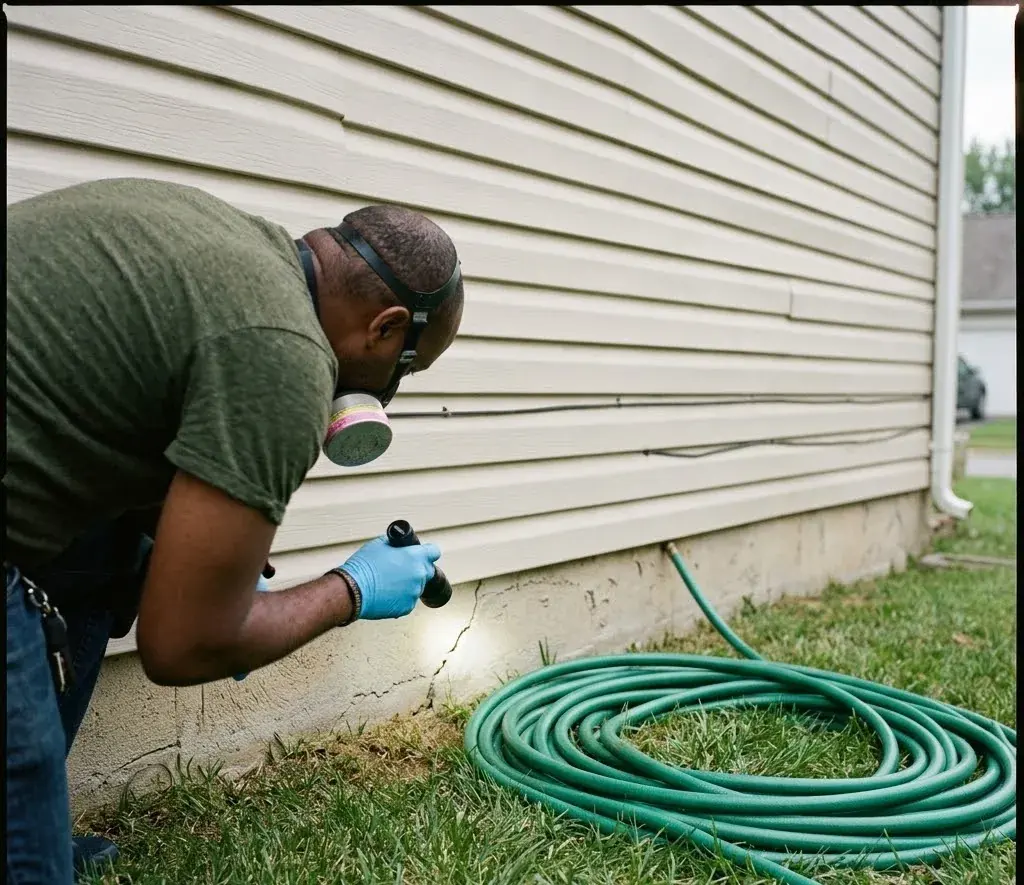
Perimeter and turf pest control for Georgetown yards, covering fire ant mounds, grubs, fleas, ticks, and the barrier that keeps…
Learn about Yard & Lawn Pest Control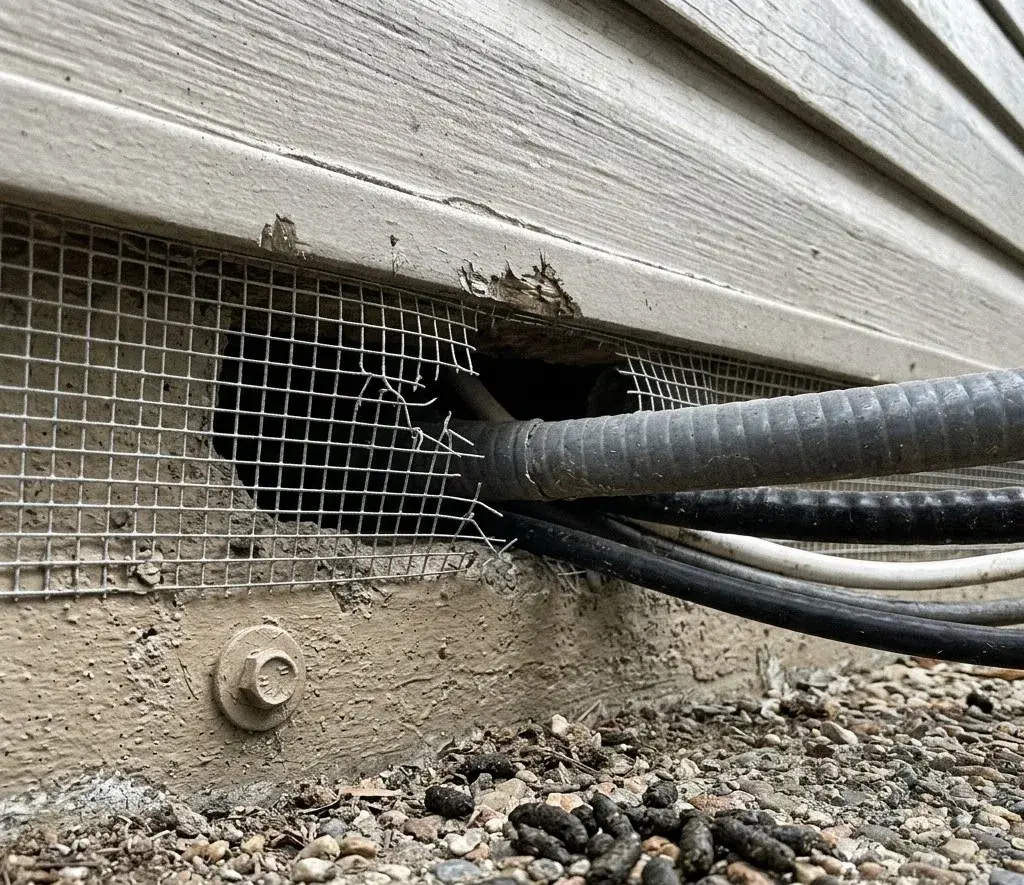
Rodent exclusion in Georgetown: sealing entry points, gaps and vents against roof rats and mice for good
Learn about Rodent Exclusion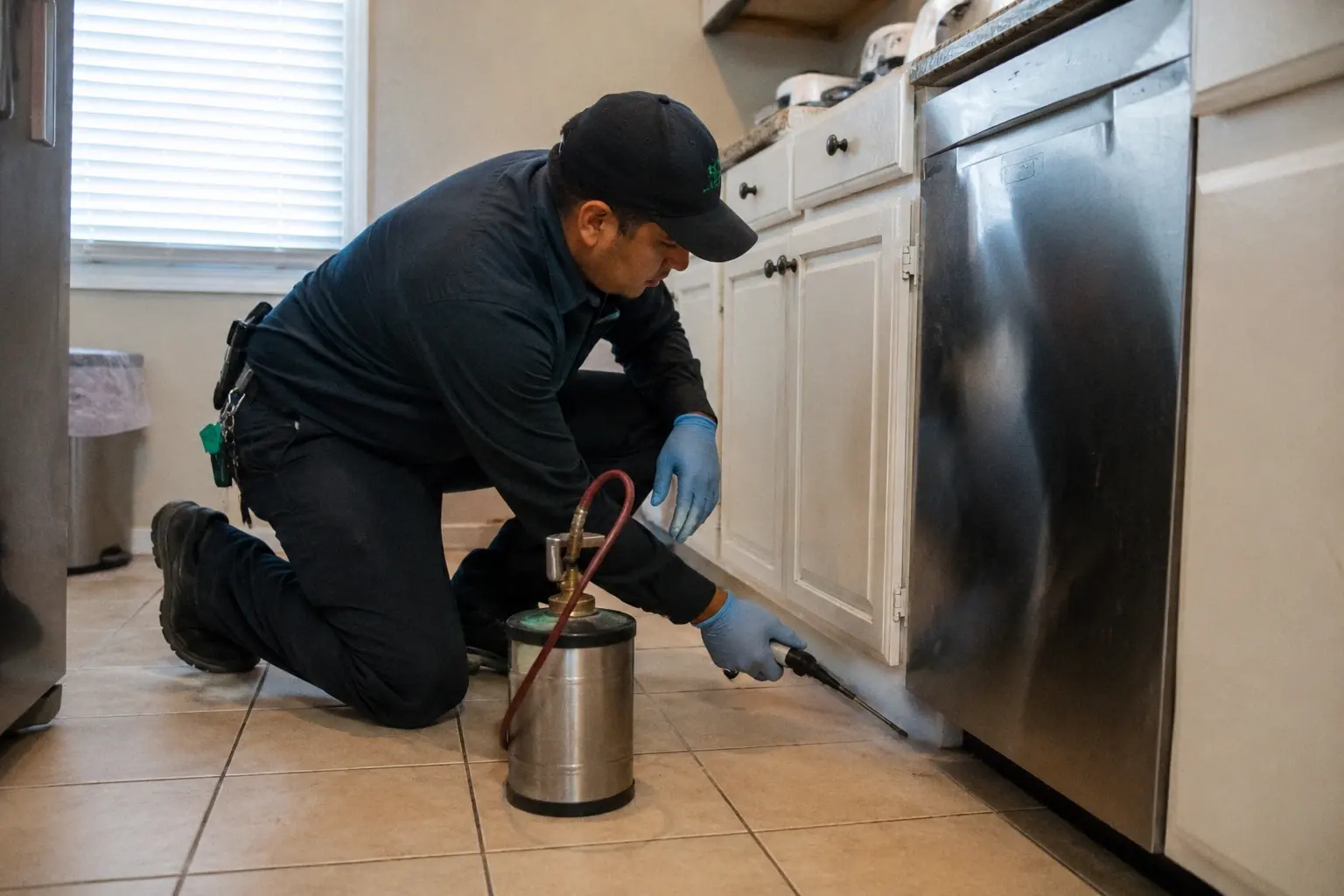
General pest control in Georgetown covering ants, roaches, spiders and silverfish with interior and exterior treatment
Learn about General Pest ControlSun City sits on Edwards limestone with a thin caliche cap, west of I-35 off Williams Drive. That ground is full of small fractures that move water sideways instead of straight down, so moisture ends up sitting against slab edges longer than you'd expect after rain. Combined with mature, established landscaping throughout the community and slab-on-grade construction across nearly every home, it's a setup that favors both fire ants working the perimeter and termites working the slab. Pest pressure here has more to do with the limestone than with the age of any one house.
Yes, and it's one of the more common calls out of Sun City. Native subterranean termites swarm in daylight after a rain, mostly between February and May, and they don't need a lot of water to find their way to a slab crack — in a dry stretch a colony will actually push harder toward any moisture it can reach under the house. Mud tubes along a slab edge or foundation pier, discarded wings on a windowsill or patio, and trim that sounds hollow when tapped are the signs worth a walk around the perimeter for.
Red imported fire ants are established throughout Georgetown, and Sun City's irrigated lawns and mature beds give them plenty to work with. Mounds can show up across a yard within a day or two of rain, seemingly out of nowhere, and during a dry spell it's not unusual for a colony to move in through a foundation crack looking for moisture. An inspection of the yard and perimeter after a wet stretch is the most useful time to catch new mounds before they're established.
Almost all of Sun City is slab-on-grade, built from the mid-1990s onward as part of the Del Webb community, so crawl space concerns that apply to older Old Town houses don't really apply here. The relevant structure is the slab itself and the foundation perimeter around it — that's where moisture collects against the limestone and caliche, and it's where a treatment or inspection is actually focused, not underneath the house.
Mexican free-tailed bats turn up occasionally in attics or under eaves in older sections of Sun City, and Texas law protects every bat species — you can't hunt, sell, buy or possess one. An individual bat inside a home can be removed, but a colony can't be excluded between roughly May 1 and August 15, when pups can't yet fly. Rodenticides, insecticides or mothballs used against bats are a federal violation, so this is one situation where the approach has to be exclusion and timing, not a standard treatment.
This is not a service that runs on one emergency number the way a fire department does. A fire ant colony pushing indoors through a slab crack during a drought, or a scorpion showing up in a bathroom in Sun City, are both treated as priority calls, but priority still depends on who is free that day across the county. Ask straight out whether today is realistic rather than assuming it.
Every neighborhood here has its own pattern, whether that is greenbelt scorpions, roof rats along the fence line, or fire ant mounds showing up after the first real rain. Call and name your street or subdivision. The licensed pros we connect you with will already know what to expect nearby.
Call (866) 829-2897