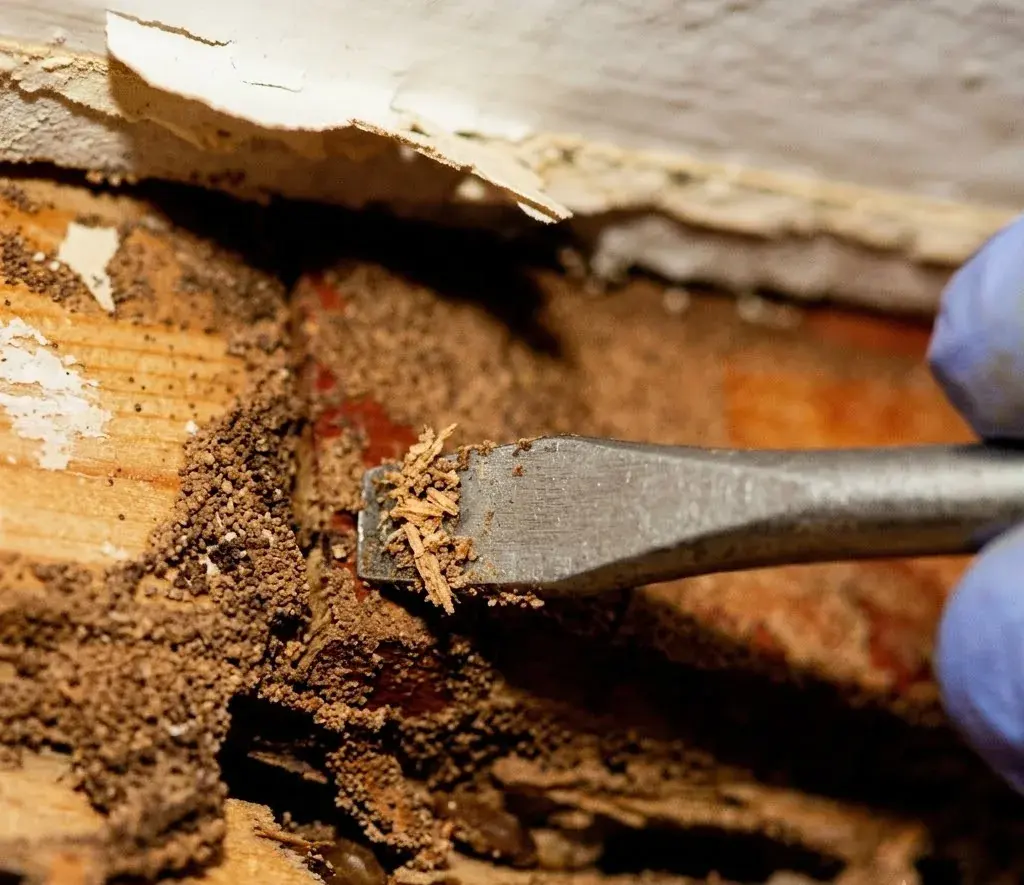
Termite Inspection
A straightforward look at what a routine termite inspection actually checks on a Georgetown home, and what the evidence means…
Learn about Termite InspectionThe angle here is foundation type, not distance from town. Weir's older rural housing stock means pier-and-beam and crawl-space construction where most of Georgetown has moved to slab-on-grade, and that single fact changes how an inspection and a termite treatment plan need to work.
Weir doesn't look like the rest of Georgetown. Where Wolf Ranch and Teravista are slab-on-grade subdivisions built from the 1990s on, Weir is older and more rural, with pier-and-beam construction and small crawl spaces still common under the houses. That foundation difference changes what an inspection needs to check: not just a slab perimeter, but the ground and framing underneath the house itself, where moisture and wood-to-soil contact are the real conducive conditions for termites.
Limestone ground and greenbelt cover push scorpions and roof rats toward houses, and Weir gets its share of both.
Roof lines matter as much as foundations in Weir. Roof rats travel fence tops, wires and overhanging limbs, then come in at a gable vent or a lifted soffit return, well above anything a perimeter treatment reaches. On a single-story house the attic is the part to look at first.
Properties beside area creeks and farm ponds take more weather than the rest of the area. Swollen trim, failed caulk and a door that no longer seals open a route a fraction of an inch at a time, so sealing work earns its place here in a way that a heavier treatment does not.
Summers run hot and dry with long stretches between rain, then a downpour saturates the clay-heavy soil fast because there's little pavement out here to shed it, and that swing between drought and sudden saturation is what pushes both fire ants and termites toward a house foundation Scorpion calls climb from April through October in Georgetown, worst in June, July and August, and the striped bark scorpion is the one behind almost every one of them.
Sites like nearby Georgetown businesses put the pressure on the loading side rather than the front door. Waste handling, delivery bays and a propped-open back door account for most of what turns up, and a standing schedule around those beats reacting to a sighting on the floor.
Cost shifts with the pest, the property, and whether the visit tackles fire ants, scorpions, or a roof rat problem in the attic.
| Service | Estimated cost |
|---|---|
| Termite Inspection | an estimated $449–$1400 |
| Yard & Lawn Pest Control | an estimated $79–$169 |
| General Pest Control | an estimated $99–$239 |
| Rodent Exclusion | an estimated $189–$499 |
A small unincorporated community near Weir, reached along the same county roads, and the closest place of comparable size and rural character.
The store building no longer operates as a shop but the crossroads it sits on is still how people orient themselves, since Weir has no numbered street grid and everything is described by what road it's off of
Corn Hill sits on ground that never got subdivided, and the pastureland around it is the same kind of open, sun-baked acreage that surrounds most of the older houses scattered near Weir
A straightforward look at what a routine termite inspection actually checks on a Georgetown home, and what the evidence means…
Learn about Termite Inspection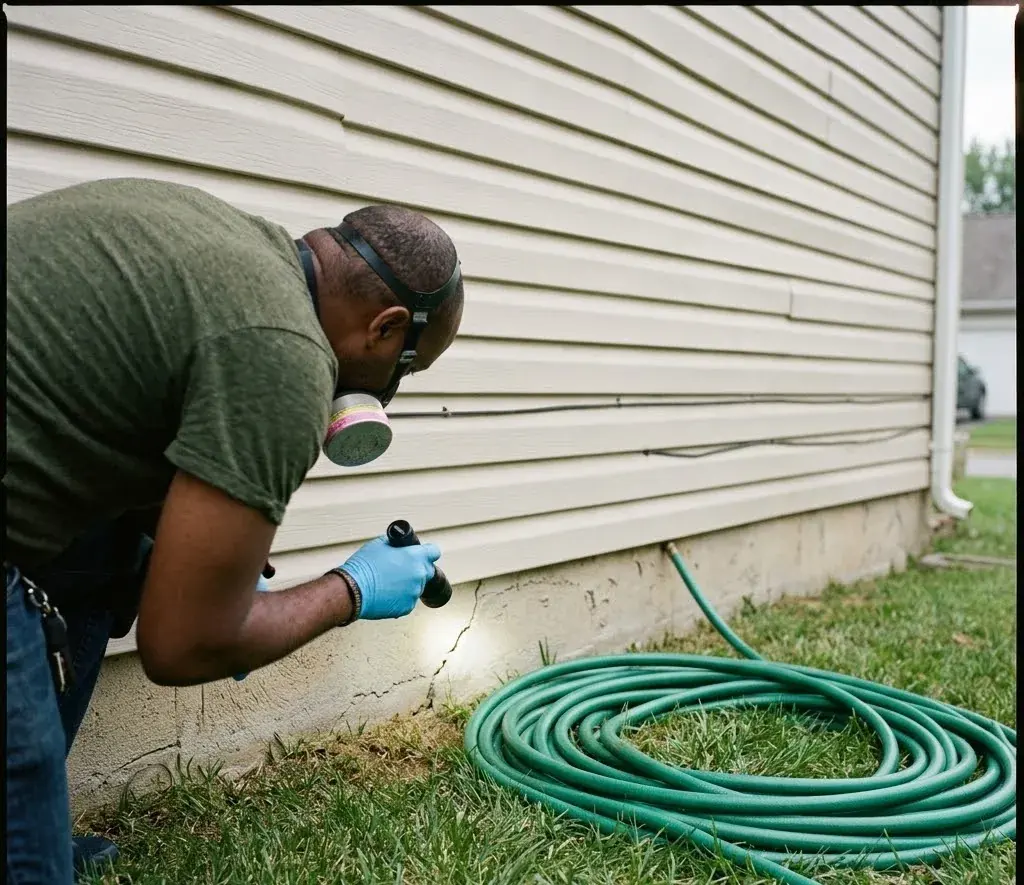
Perimeter and turf pest control for Georgetown yards, covering fire ant mounds, grubs, fleas, ticks, and the barrier that keeps…
Learn about Yard & Lawn Pest Control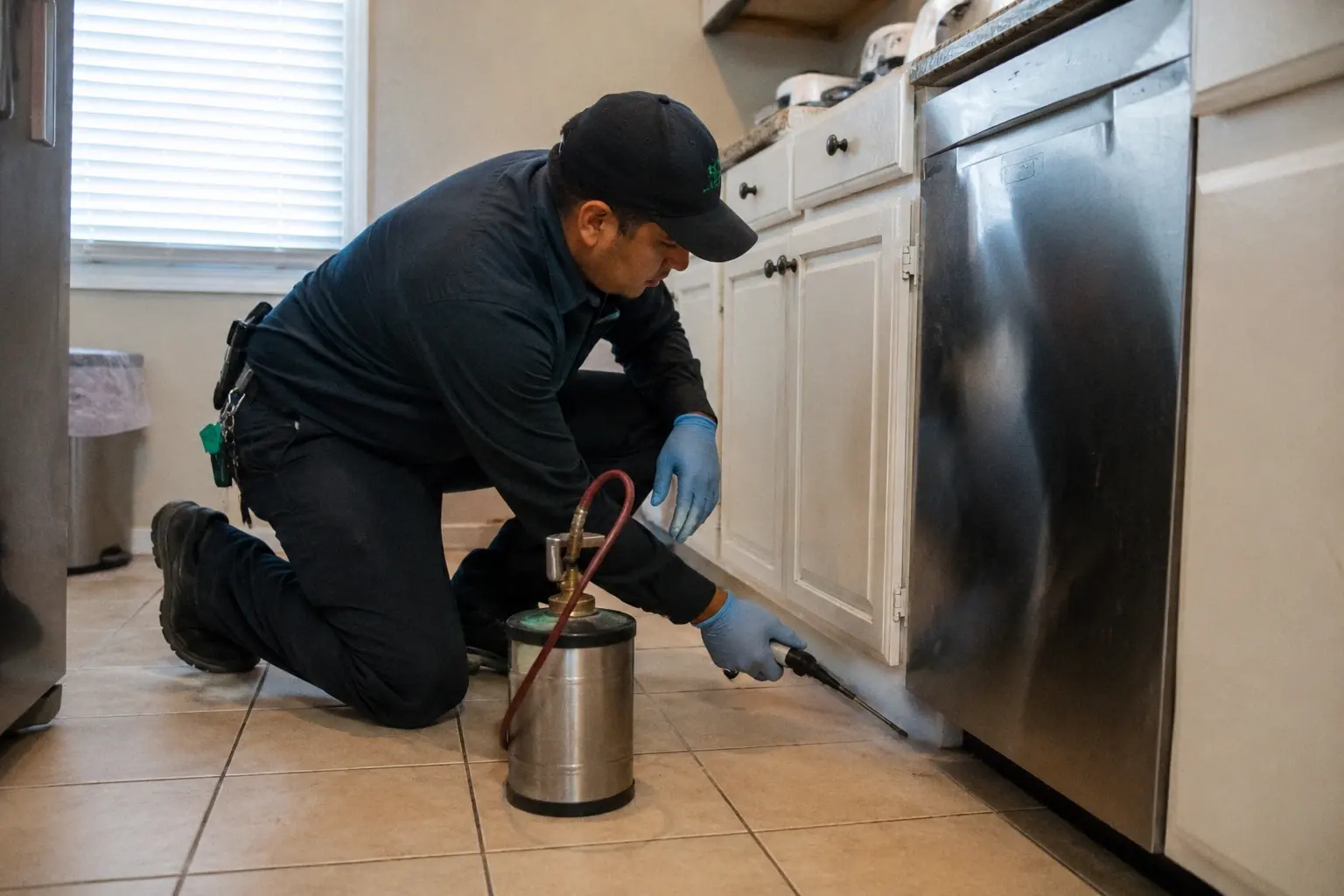
General pest control in Georgetown covering ants, roaches, spiders and silverfish with interior and exterior treatment
Learn about General Pest Control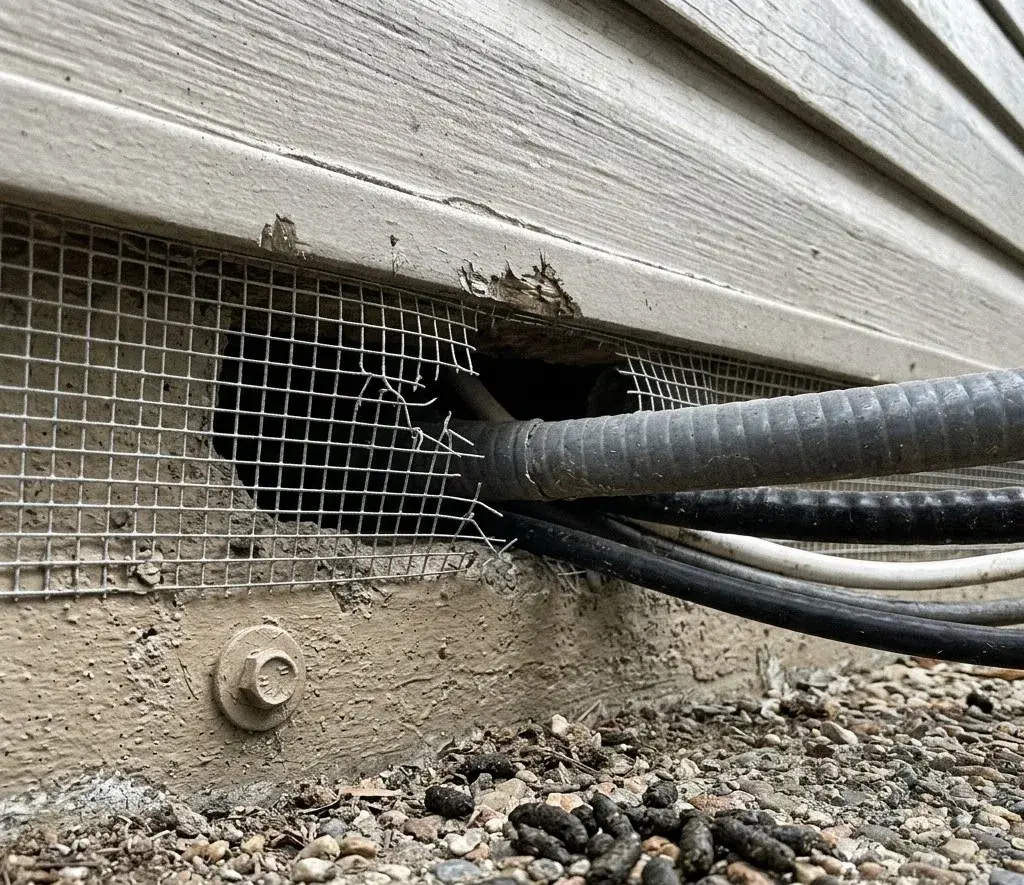
Rodent exclusion in Georgetown: sealing entry points, gaps and vents against roof rats and mice for good
Learn about Rodent ExclusionWeir is unincorporated, out past Georgetown proper along the older county roads north of town, and most of the housing there is older rural stock rather than a slab-built subdivision. That means pier-and-beam and small crawl spaces show up more here than in Georgetown's newer neighborhoods. A pier-and-beam house needs a different inspection than a slab: the pros we connect Weir homeowners with check under the house directly, not just the exterior perimeter.
Weir sits well out from Georgetown proper, and most of the older places here still have a pier-and-beam foundation or a real crawl space rather than the slab-on-grade that dominates the newer subdivisions closer to town. That gap under the house holds ground moisture longer after rain, which is exactly what draws eastern subterranean termites and gives them an easy, hidden route into the framing. An inspection out here should always include getting under the house, not just walking the slab perimeter, because that is where the first tube or the first soft joist usually turns up.
Yes. Eastern subterranean termites are established throughout this part of Williamson County, and Weir's older homes with wood-to-soil contact and pier-and-beam foundations are exactly the conducive conditions the state's own inspection report is built to flag. Watch for mud tubes on piers or foundation edges and discarded wings on windowsills after a spring rain. Drought doesn't stop them here; it just pushes the colony deeper toward moisture under the structure.
Not from us directly. This site connects Weir homeowners with the licensed local pros who do the inspection and treatment work. For a property sale, that means a technician licensed in the termite category completing Texas's official wood-destroying insect report, which covers what was and wasn't accessible, any visible damage, and conditions like excess moisture or wood touching soil.
Rural moisture control looks different out here than in a Georgetown subdivision. On a pier-and-beam house, that's grading water away from the piers and keeping the ground underneath from staying wet. On the newer slab construction that's crept into the area, it's the same perimeter and foundation checks used everywhere else in Georgetown. Either way, an inspection should identify which type of foundation you actually have before recommending treatment.
There is no fixed after-hours crew sitting idle waiting for the phone to ring. What exists is a routing process: your call goes to whichever licensed local pro can actually reach Weir that day. Evenings and weekends are covered less consistently than a weekday morning, so if the problem can wait until the next business day, it is worth asking whether that saves you the after-hours rate.
Every neighborhood here has its own pattern, whether that is greenbelt scorpions, roof rats along the fence line, or fire ant mounds showing up after the first real rain. Call and name your street or subdivision. The licensed pros we connect you with will already know what to expect nearby.
Call (866) 829-2897