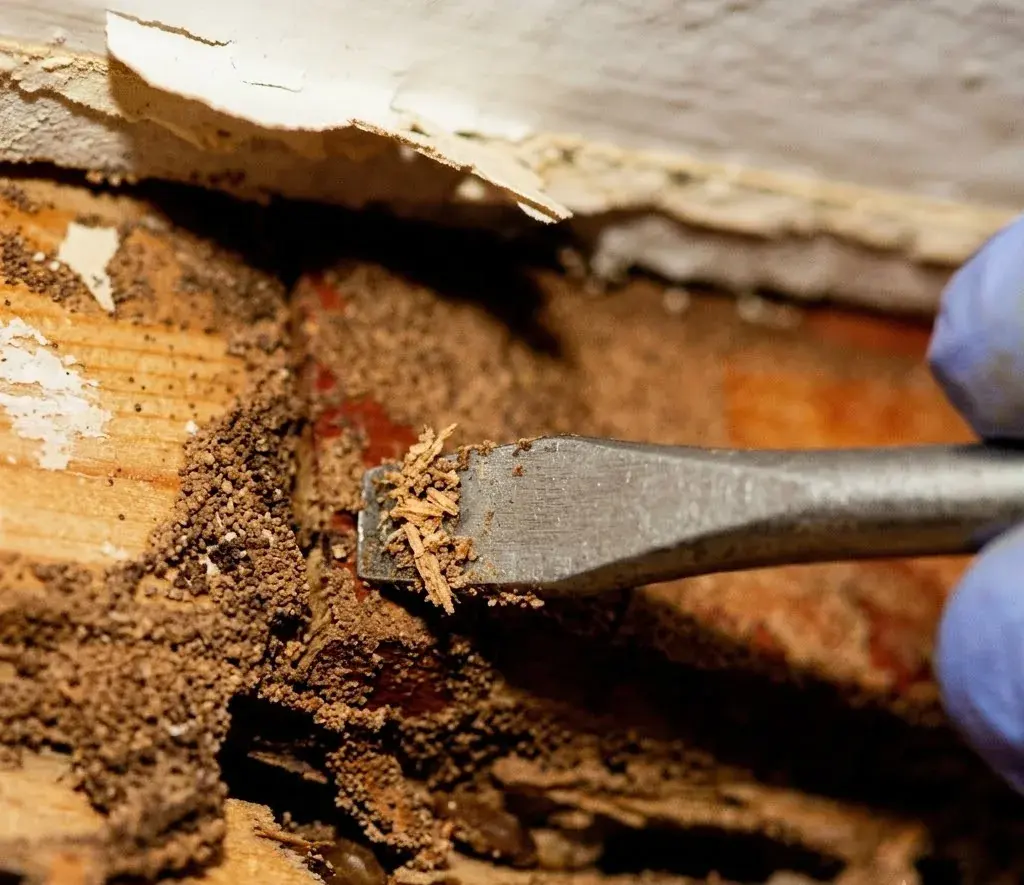
Termite Inspection
A straightforward look at what a routine termite inspection actually checks on a Georgetown home, and what the evidence means…
Learn about Termite InspectionThe angle for Georgetown Village is soil and slab: this is Blackland clay ground, not the rockier Edwards Plateau side of town, and the pest pressure here follows directly from how that clay swells and cracks around a slab foundation through wet and dry cycles.
Georgetown Village sits on the clay side of Georgetown, east of I-35, where Houston Black and Taylor series soils swell in wet weather and shrink hard in a dry one. That movement opens cracks along slab edges that a fire ant colony or a termite tube can use. Almost every home here is slab-on-grade, part of the newer subdivision growth rather than the older Old Town stock near the Square, so the inspection points that matter are the perimeter and foundation, not a crawl space.
Rock underfoot, roof-level rat entry, and scorpions moving toward bathrooms all shape how the licensed pros we connect you with treat a house here.
Older stock and newer stock sit side by side around Georgetown Village, and they fail differently. A pier-and-beam house gives you a void to inspect and a skirt to seal; a slab gives you neither, and the whole job moves to the outside wall. Which one you are standing in front of decides the quote.
San Gabriel River sets the pattern in Georgetown Village. Rain arrives in bursts rather than steadily, so the ground goes from cracked to saturated and back inside a week. Fire ants shift their mounds after each one, and anything that was sitting out a dry spell underground comes up, which is why the calls cluster in the days after a storm.
Georgetown Village sits on the Blackland Prairie side of town, east of I-35, where the Houston Black and Taylor clay soils swell hard when wet and crack open in drought. Those cracks run right down beside a slab foundation, and they're the path fire ants and termites both use to get in. Roof rats move along fence lines and power drops into attics and soffits, so a homeowner in Georgetown Village is better off checking the eaves and gable vents before looking at the foundation.
Georgetown Village has Round Rock and Austin commuters nearby, which brings tenanted and mixed-use buildings as well as houses. Access coordination is half the job on those, because getting into every affected space on the same day is what stops a population moving next door and coming back.
Slab size, roofline access for roof rats, and how close a lot in Georgetown Village sits to open ground all move the number.
| Service | Estimated cost |
|---|---|
| Termite Inspection | an estimated $449–$1400 |
| Yard & Lawn Pest Control | an estimated $79–$169 |
| General Pest Control | an estimated $99–$239 |
| Rodent Exclusion | an estimated $189–$499 |
San Gabriel Park sits along the river closer to central Georgetown, a green space residents of Georgetown Village can reach easily, and a reminder of how much this side of town still runs on the San Gabriel's floodplain moisture even away from the riverbank itself.
Georgetown Village sits on the thick Blackland Prairie clay east of I-35, near Katy Crossing and Teravista, where the same swelling, cracking ground runs under every slab in the subdivision.
Georgetown Village backs up toward that river corridor rather than sitting on open prairie, and the extra shade and standing moisture near the water table show up as more mosquito pressure and steadier ant activity through the warmer months than a subdivision further from the river would see.
A straightforward look at what a routine termite inspection actually checks on a Georgetown home, and what the evidence means…
Learn about Termite Inspection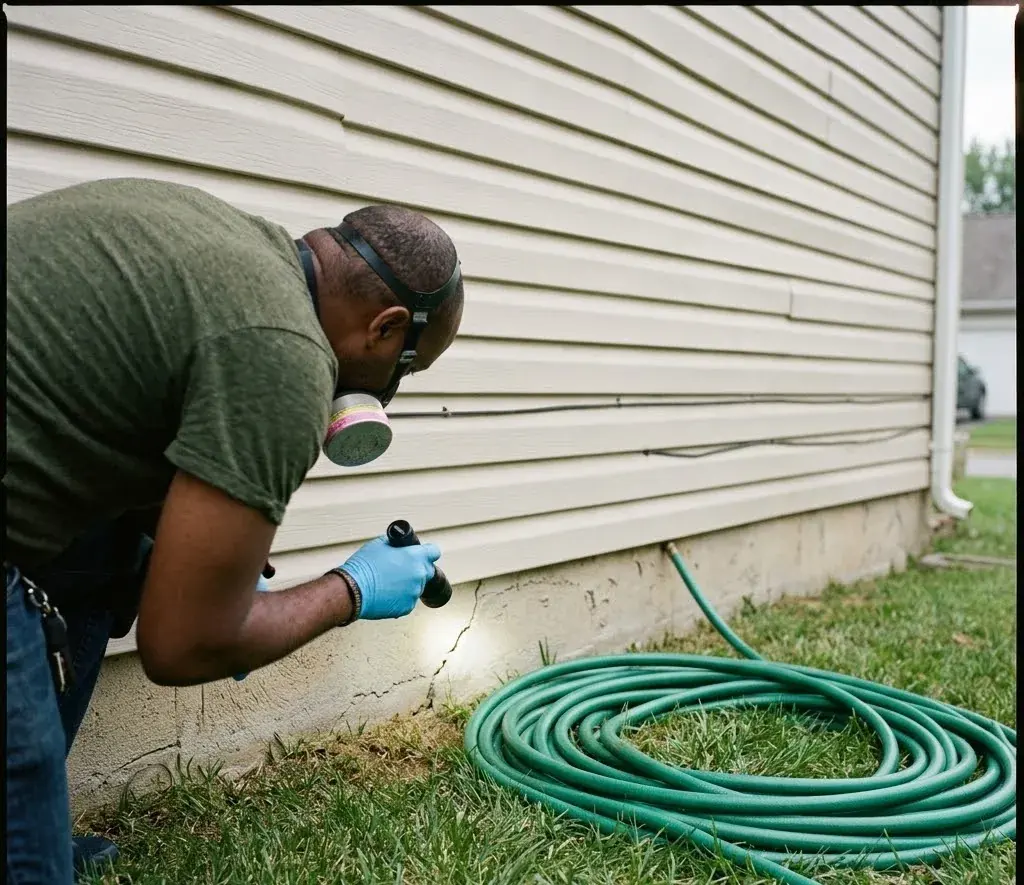
Perimeter and turf pest control for Georgetown yards, covering fire ant mounds, grubs, fleas, ticks, and the barrier that keeps…
Learn about Yard & Lawn Pest Control
General pest control in Georgetown covering ants, roaches, spiders and silverfish with interior and exterior treatment
Learn about General Pest Control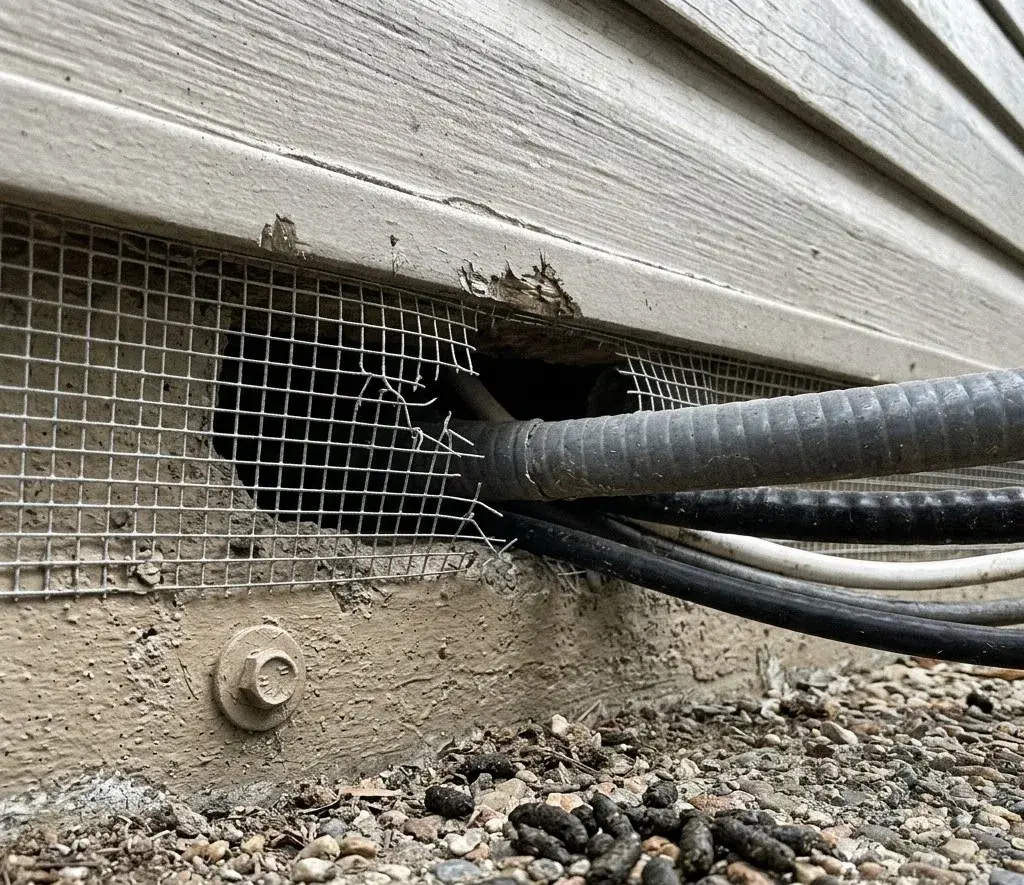
Rodent exclusion in Georgetown: sealing entry points, gaps and vents against roof rats and mice for good
Learn about Rodent ExclusionJarrell · Weir · Walburg · Florence · Sun City · Berry Creek · Teravista · Wolf Ranch
Georgetown Village sits east of I-35 on Blackland Prairie clay, some of the thickest in Georgetown, and that clay is the reason for most calls here. It cracks wide as it dries out, and fire ants and moisture-seeking pests follow those cracks straight to the foundation. Slab-on-grade construction is standard through the neighborhood, so an inspection focuses on the perimeter and slab edge rather than underneath the house. Subterranean termites are the main concern, especially after a run of rain, and early spring swarms are worth a prompt look. A perimeter treatment timed around soil moisture works better here than a single one-off visit.
Almost every house in Georgetown Village is slab-on-grade, going up mainly from the 1990s forward, so there is no underfloor space for anything to nest in the way it might in an older pier-and-beam house near the Square. That changes where an inspection actually looks: along the slab perimeter, at doors and utility lines, and in the yard right up against the foundation, rather than under the structure itself.
Yes. Eastern subterranean termites are established across this side of Georgetown, and they follow moisture under the slab rather than sitting dormant in dry years. Swarms typically show after rain between February and May. Mud tubes at a slab edge, discarded wings on a windowsill, or trim that sounds hollow when tapped are worth an inspection regardless of season.
Fire ant mounds show up fast in this neighborhood after rain, often building a fresh mound in a lawn within a day or two of a good soaking. In a dry stretch the same colony will push toward the house instead, following moisture in toward a slab crack rather than staying out in the open yard. Either way it is worth a look before mowing turns a mound into a scattered colony across a wider stretch of lawn.
Georgetown Village is close enough to central Georgetown that a same-day or next-day visit is normal, and the pros we connect residents with know this stretch of the Blackland clay east of I-35 well, including how it behaves differently than the rockier ground on the other side of the highway near Sun City and Berry Creek.
This is not a service that runs on one emergency number the way a fire department does. A fire ant colony pushing indoors through a slab crack during a drought, or a scorpion showing up in a bathroom in Georgetown Village, are both treated as priority calls, but priority still depends on who is free that day across the county. Ask straight out whether today is realistic rather than assuming it.
Every neighborhood here has its own pattern, whether that is greenbelt scorpions, roof rats along the fence line, or fire ant mounds showing up after the first real rain. Call and name your street or subdivision. The licensed pros we connect you with will already know what to expect nearby.
Call (866) 829-2897