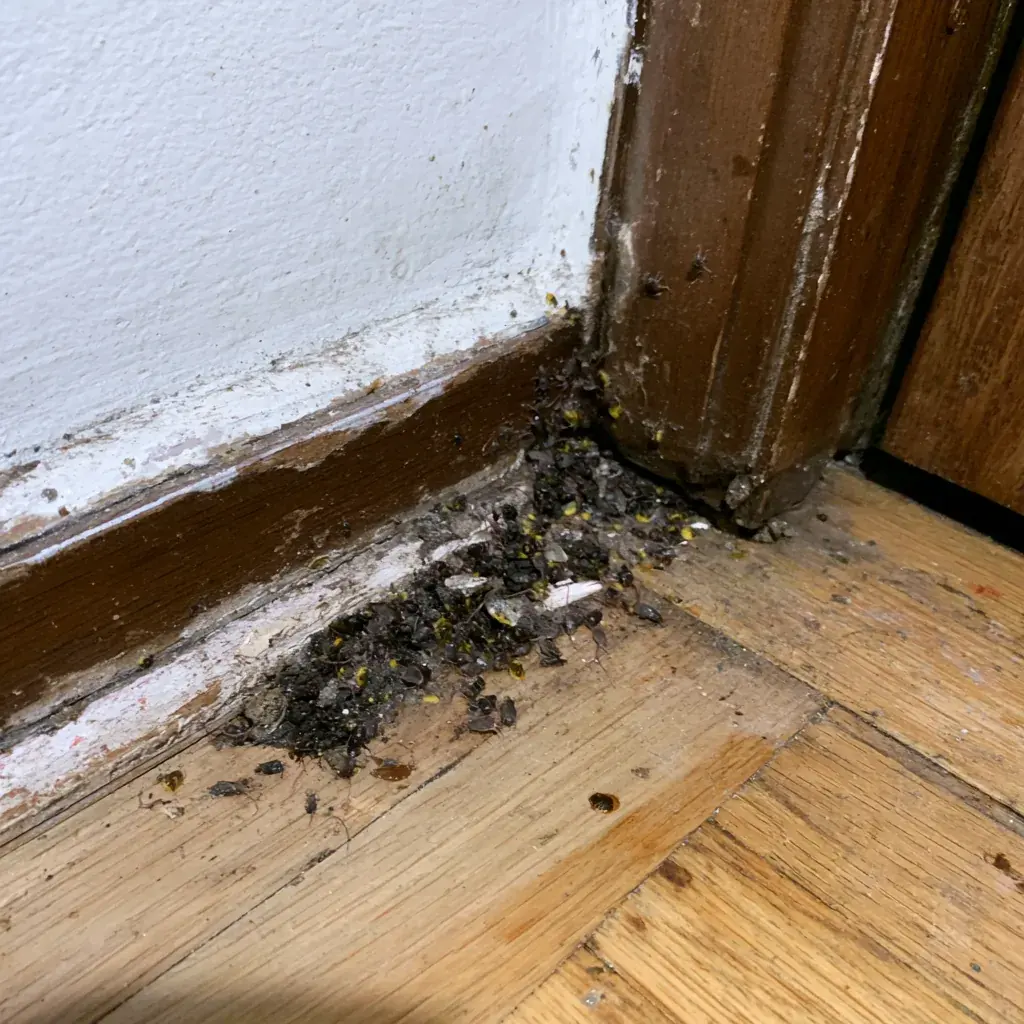
Why Silverfish Do Well on This Ground
Georgetown homes are slab-on-grade, and a silverfish doesn't need much more than a gap around a water heater pan or a damp spot under a bathroom vanity to move in. Once a Williamson County summer dries the clay out and pulls it back from the slab edge, that same crack that lets in ants and scorpions gives silverfish a path indoors too.
The bathrooms in Old Town's older houses and the slab homes going up around Water Oak and Cimarron Hills share one thing silverfish care about: steady humidity near a water heater or under a sink where a slow drip never quite dries out. Georgetown's dry stretch pushes them toward that indoor moisture rather than killing them off, so a closet near a bathroom in Serenada or Berry Creek can hold a small population long after the yard outside has gone dust dry.
Fire ants do not wait for a forecast to pass. A colony can push mounds up through a Berry Creek or Teravista lawn within a day of rain, then pull back underground the moment the ground dries out. In a real drought stretch, that same colony often shifts toward a house instead, working in through a hairline crack in the slab where the soil still holds a trace of moisture. It is less an invasion than a colony following the water it needs, wherever that water happens to be.
Silverfish at a Glance
- Size and shape
- About half inch, tapered teardrop body
- Color and shine
- Found near bathrooms and water heaters
- Movement
- Fast, fish-like wriggle across tile and grout
- Where found
- Bathrooms, water heater closets, under sinks
- What they leave behind
- Small pepper-like droppings and shed scales
- Local Pest Knowledge
- Active year-round indoors, most often noticed in damp bathrooms and near water heaters through humid Georgetown summers
- Annual Contract
- an estimated $89–$189
Schedule Your Georgetown Inspection
Firebrats, house centipedes. The easiest way to tell them apart in a Georgetown home is location and color: a metallic silver-gray insect in a cool bathroom or water heater closet is a silverfish, while a mottled brownish one near a furnace or attic heat source leans firebrat. Both respond to the same moisture-focused approach, so misidentifying one for the other rarely changes what needs to happen next.
What Happens When Someone Comes Out
The licensed pros we connect you with treat silverfish by drying out the harborage first, then applying a residual product into wall voids, baseboards, and the cracks around plumbing penetrations where the insects travel and hide during the day.
A follow-up visit checks whether the nest sites behind tile or under a vanity have been reached, since a silverfish population that started before the first treatment can take more than one pass to bring down fully.
A scorpion under the bathroom door in July gets a same-day call. A rat scratching in the attic over Wolf Ranch or Teravista in January gets put off for a week, then two. Both are worth acting on quickly, just for different reasons — one is a safety question for anyone with kids or pets in the house, the other is a structural one that gets more expensive the longer a roof line stays open.
Same licensed pros, every trip out
| Scorpions, Fire Ants, Roof Rats |
Local Pros Along Williams Drive |
|---|
| Roof rats moving in along Berry Creek fence lines | Fire Ants After Rain |
| Scorpions, roof rats and fire ants around Georgetown, explained plainly | Roof Rat Entry Points |
| Licensed local pros covering Georgetown from Berry Creek to Teravista | Scorpion Calls Peak June Through August |
Where DIY Works on Silverfish and Where It Does Not
A dehumidifier in the bathroom or laundry room, sealing gaps around baseboards and pipe penetrations, and clearing stacked cardboard or old paper will reduce numbers on their own, but a population already established behind tile or drywall usually needs a treatment reaching into the void itself.
What Silverfish Mean for Your Household
Silverfish do not bite or sting and are not known to spread disease in a home. The real cost is to paper goods, wallpaper glue, and book bindings, which is what they actually feed on once they are inside.
Talk to a Georgetown Pro
A scorpion under the door or a fire ant mound that showed up overnight after rain is not something to sit on in Georgetown. The licensed pros we connect you with know that the west side of I-35, from Sun City down through Cimarron Hills and Water Oak, is limestone ground where these things move differently than they do east of the highway. Call and describe what you're seeing — a phone call costs nothing and gets you talking to someone who can actually place the problem.Scorpion visits usually come with an entry point already at fault — a slab crack, a loose weep screen, a gap around a laundry line. Fixing that spot is often folded into the same visit rather than billed as extra, since it's a few minutes of caulk and screen versus a repeat call in July. Roof rat exclusion works the same way: the estimate covers sealing the fascia gap or gable vent that let them into the attic in the first place, not just clearing what's already up there. pricing guide, and the service that handles this is General Pest Control.