Now taking calls — fast callback for urgent pest issues · (866) 829-2897
Attic Pest Control in Georgetown, TX
Georgetown, TX

Stopping Attic Pests Before They Spread in Georgetown, TX

Roofline inspection and exclusion for whatever has gotten into a Georgetown attic, from the soffit and gable vents to the nest itself.

In Georgetown, most attic problems start at the roofline, not inside the house. Roof rats travel along fence lines, tree limbs and power drops, then step onto a roof where a limb touches the fascia or a gable vent has lost its screen. From there the attic is just open floor space with insulation on it. Homes near Berry Creek and Teravista back up to tree cover that gives rats an easy route in, and older Old Town roofs often have gaps at the soffit that were never sealed tight to begin with.

Once something is in the attic, the signs show up as droppings along the joists, dark rub marks where fur has worn a path, and chewed insulation or wiring near the entry point. The fix has two parts: find every gap in the roofline — soffit, gable, ridge vent, fascia — and close them, then deal with whatever is already inside. Skipping the exclusion half means paying for the same attic again next year, whether the house is in Sun City or out along Williams Drive.

Attic Pest Control in Georgetown, TX isn't one-size-fits-all, whether you're in Sun City, Berry Creek, Teravista, or elsewhere around Georgetown, we tailor the treatment to your property and the way roof rats behave here. That local focus is what separates a lasting fix from a temporary one.

This is most often a home job — residential pest control explains how we handle houses, or use commercial pest control if the property is a business or rental.

Pests We Treat

  • Roof rats
  • House mice
  • Mexican free-tailed bats
  • Turkestan cockroaches
  • Fire ants
  • Scorpions
  • Squirrels
Warning Signs

Signs You May Need Attic Pest Control

Droppings and Staining Along the Joists

The clearest sign is droppings along the joists near the roofline, especially where a soffit or gable vent meets the attic floor. Roof rats leave dark, tapered pellets clustered near their travel paths, while smaller, grittier droppings near an eave usually point to mice. Look too for chewed insulation, a greasy rub mark along a stud where fur repeatedly brushes past, or torn ductwork where something has pushed through to build a nest. Staining around a ridge vent or a soffit seam often means the same gap is letting in both water and animals. In a Georgetown attic, these signs cluster at the entry point itself, so tracing droppings back to where they start is usually faster than searching the whole attic floor.

Chewed Wiring and Insulation

Look at the insulation itself before assuming the attic is clear. Matted-down trails through blown-in insulation, chewed sections near wiring, or a greasy dark smear along a joist where fur brushes the same spot night after night all point to an active entry point somewhere close by. In houses around Wolf Ranch and Cimarron Hills with newer construction, these trails often lead straight back to a gable vent screen that shipped loose or a soffit seam that was never fully closed.

Noise at the Roofline After Dark

Noise at the roofline in the evening — scratching, light thumping, or a scurrying sound that moves toward the eaves — usually means the animal is coming and going rather than settled deep in the insulation. That pattern is common with roof rats, which forage at night and return to the same nest. A one-time noise after a storm is different from the same sound every evening for a week; the second is worth a look before it turns into chewed wiring or a bigger nest.

How It Works

Our Attic Pest Control Process

Roofline Inspection in Georgetown

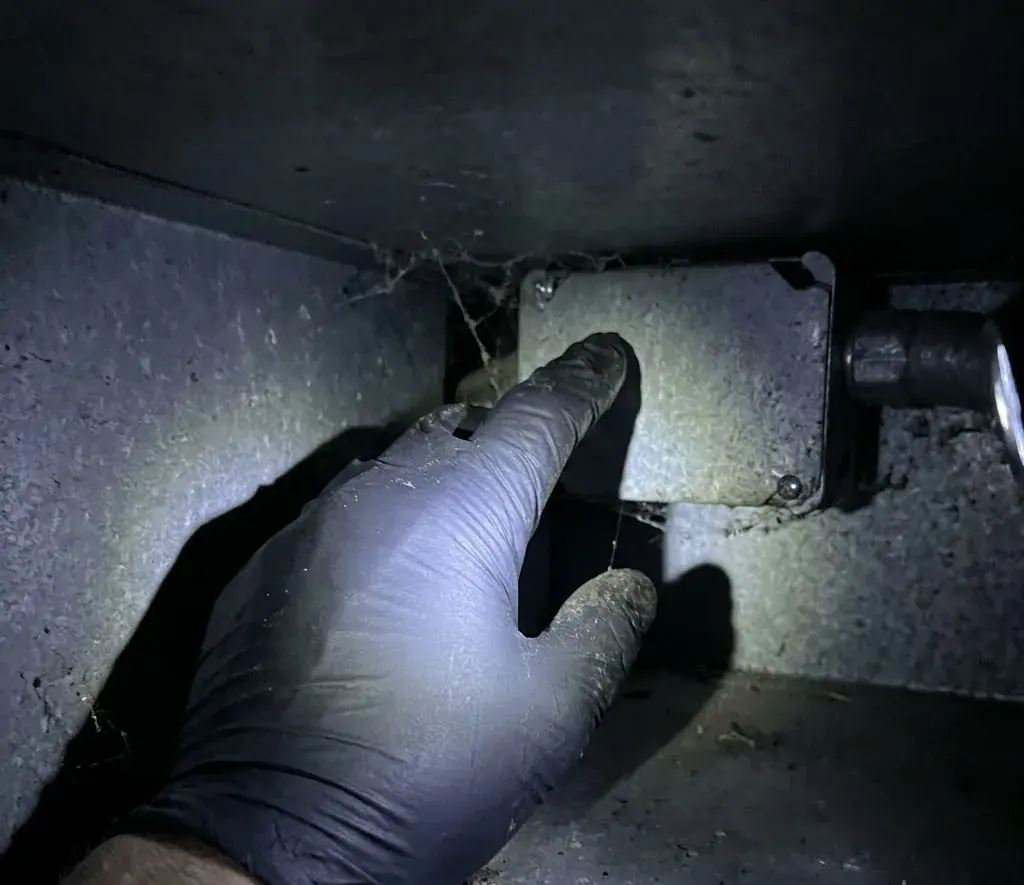
The inspection starts on the roofline, not inside the attic. The licensed pros we connect you with walk the perimeter of the house looking for the same gaps a roof rat or squirrel would use: a gable vent with a torn screen, a soffit seam pulled loose, a ridge vent with a gap at the end cap, or a limb resting against the fascia.

Reading the Attic in Georgetown Homes

Inside the attic, droppings and staining tell most of the story. Rat droppings clustered along a joist near the eave point back to the entry point directly above them, while a wider scatter with chewed wiring or insulation dragged into a pile usually means squirrels or a longer-running rat problem that has had time to settle in.

Treatment and Sealing for Georgetown Attics

Once the entry point is confirmed, the licensed pros we connect you with treat the active problem first, then seal the roofline: steel mesh or flashing at the gable and soffit gaps, a repaired ridge vent end cap, and hardware cloth over any louver wide enough for a rat or squirrel to squeeze through.

Final Roofline Check in Georgetown

The last step is a walk of the full roofline again, checking that every soffit, gable and ridge vent gap identified in the first pass is now closed. Insulation replacement and any deeper cleanup are separate work; this step confirms the house is sealed against re-entry before that conversation happens.

Why this matters

Georgetown is slab-on-grade country, so there is no crawl space or basement pulling pest pressure away from the attic — the attic is often the only large open cavity in the house. Combine that with a roof rat that enters overhead rather than at ground level, and the attic becomes the first place activity shows up, not the last. Left alone, chewed insulation and wiring in the attic turn into a bigger repair than the entry point itself would have cost to close.

Licensing & Local Standards

Code-Compliant Attic Pest Control in Texas

Why Georgetown Attics Get Roof Rats

Georgetown roofs cover a wide mix of ages, from new builds around Wolf Ranch Town Center to older homes near the Williamson County Courthouse and The Square, and each era tends to fail at the roofline in its own way. Newer construction often has factory gable and ridge vents that look sealed but ship with gaps around the frame. Older Old Town houses were built before pest-proof vent screening was standard practice, so the soffit itself can have openings a rat can flatten through.

Bats and the Legal Exclusion Window

Tree cover changes where the entry points show up. Neighborhoods with mature live oaks close to the roofline — parts of Berry Creek and Serenada, and lots backing onto greenbelt near San Gabriel Park — give roof rats a direct branch-to-roof route that skips the ground entirely. On lots with less tree cover, like newer sections near Teravista, rats are more likely to travel fence lines and power drops instead, so the inspection has to check the whole perimeter of the roof, not just the side nearest the trees.

Ground Type

Why Slab Homes Cost Less to Treat

Bat colonies come with their own cost logic. Removing bats from inside a house is one job; excluding a colony from a roofline is another, and it cannot happen from roughly May through mid-August while pups are unable to fly. A homeowner near Lake Georgetown or Old Town who calls in June about bats in a soffit should expect a wait for the exclusion, not a same-week price.

Your Real Cost Depends on the Job
Free InspectionLicensed ProsSame-Day Calls
Spot Treatment Georgetown scorpion, fire ant and roof rat control from licensed local pros an estimated $195–$790
Quarterly Service Striped bark scorpion control for Georgetown homes near limestone, greenbelts and new construction an estimated $230–$1125
Bi-Monthly Service Roof rats, scorpions and fire ants around Sun City and Old Town Georgetown foundations an estimated $345–$1800
Monthly Service Roof rat entry points around Sun City and Berry Creek attics, soffits and roof lines an estimated $550–$3000

Most estimates hold steady once the pro is actually inside the house, but roof rats are the one call where the number can move. If the nesting turns out to be in the soffits along more than one side of the roofline, or the attic access near Wolf Ranch or Teravista is tight, the job runs longer than a standard rodent visit and the quote reflects that before work starts, not after.

Questions & Answers

Frequently Asked Questions

How do I know if it's rats or squirrels in my attic?

Usually roof rats. In Georgetown they are the rat that matters, and they get in overhead rather than through the foundation — along a tree limb, a fence line, or a power drop that reaches the roof. House mice show up in attics too. Squirrels and, less often, bats can also end up in a roofline gap, which is why the inspection looks at the whole roof rather than assuming one species.

What's making that scratching sound in my ceiling at night?

Look for droppings along the joists, chewed or matted insulation, dark rub marks on wood where fur repeatedly brushes the same spot, and scratching or movement sounds near the eaves in the evening. A musty smell in a bedroom closet under the attic can also point to a nest directly above. Any one of these on its own is worth checking; two or more together usually means an active entry point somewhere on the roofline.

Can you get bats out of my attic in Georgetown?

The pros we connect you with walk the roofline looking for gaps at the soffit, gable vents, ridge vent, and any spot where a tree limb or wire touches the fascia, then check the attic itself for droppings, chewed material and nest sites. Treatment addresses what is already inside, and exclusion closes every gap found so the same entry point cannot be used again. Both steps happen on the same visit where possible.

Why do I keep finding droppings in the same corner of my attic?

Bats are protected under Texas law, and a colony cannot legally be excluded roughly between May 1 and August 15, when pups can't yet fly and would be trapped inside if the entry point were sealed. Outside that window, exclusion follows the same logic as with rats: find every gap, let the bats leave on their own through a one-way exit, then close the roofline. A single bat that gets inside a living space is handled differently than a colony in the attic.

How did rats even get into my attic in the first place?

Not fully, and that is the point of exclusion. Poison or trapping deals with what is already inside, but if the gable vent screen or soffit gap that let them in stays open, the attic gets reoccupied. Georgetown's mix of mature tree cover in neighborhoods like Berry Creek and newer construction around Wolf Ranch both create roofline gaps in different ways, so closing the specific entry point found on that roof matters as much as the initial treatment.

Will sealing the roofline actually keep them from coming back?

Chewed wiring is the main risk, since it can be a fire hazard and is often not visible until the insulation is pulled back. Damaged or compacted insulation loses some of its effectiveness, and buildup of droppings can create odor and a health concern over time. This page covers finding the entry point and stopping the activity; cleaning up droppings and contamination or replacing ruined insulation are separate jobs once the attic is actually clear.

How much does attic pest control cost in Georgetown?

Roof rats explain why an attic inspection near Wolf Ranch or Teravista starts at the roofline, not the foundation. They travel fence lines and power drops into soffits and gable vents, so the fix looks upward. Fall field crickets are simpler: they swarm porch lights and shop fronts along Williams Drive and Austin Avenue every autumn, and turning a light off does more than any treatment. Georgetown's pest calendar runs on these patterns more than on the calendar month.

Local Conditions

Where Scorpions Come From West of I-35

Why fire ant mounds show up across Georgetown lawns a day or two after rain

Common Household Pests in Georgetown, TX: A Homeowner's Guide
Local Pests

Common Household Pests in Georgetown, TX: A Homeowner's Guide

A homeowner's guide to the pests actually common in Georgetown, from ant trails and roof rats to the fall cricket swarm and what the limestone west of I-35 means for termites.

Read article
Signs You Need Pest Control in Georgetown
Pest Warning Signs

Signs You Need Pest Control in Georgetown

Most pests around a Georgetown house are a nuisance you can live with for a while. This post walks through the handful of signs that mean it is time to stop waiting and call a licensed pro instead.

Read article
How Mice Get Into Georgetown Homes in Fall
Rodent Exclusion

How Mice Get Into Georgetown Homes in Fall

A mouse does not need much of an opening. As temperatures drop around Georgetown, the gaps worth checking are smaller and higher up than most people expect, from garage door corners to roofline vents.

Read article
Get Started Today

Ready To Book A Visit

Whether it is a single scorpion sighting in Berry Creek or a rat that has been in the attic all summer near Wolf Ranch, the next step is the same: call and describe it. The licensed pros we connect you with will take it from there.

Call (866) 829-2897
Free inspections & same-day service available
Call (866) 829-2897 Schedule Online