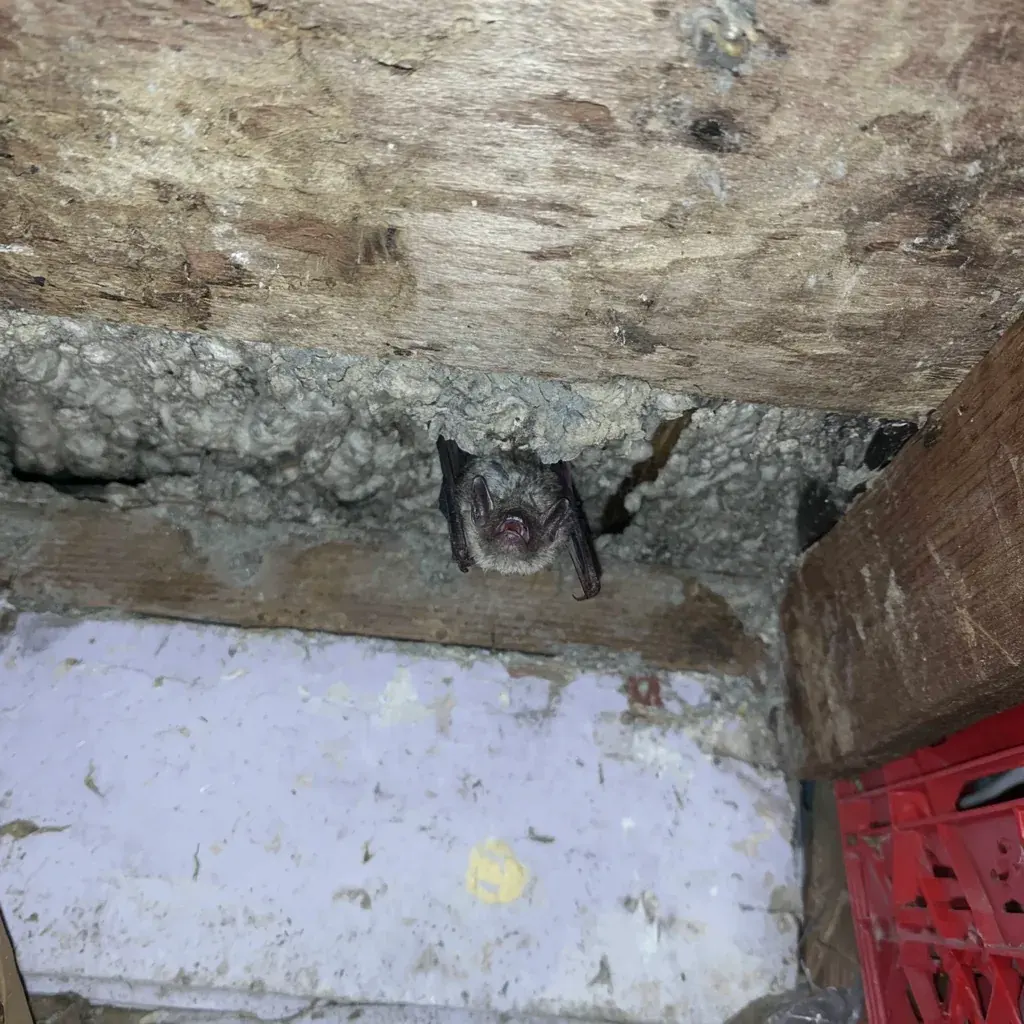
Cleaning Out An Attic After Pests In Georgetown
What decontaminating an attic really involves once rodents or bats have moved out — the droppings, the smell, and the air.
Attic decontamination is the cleanup after an infestation ends: droppings and soiled nesting are removed, surfaces are sanitized, and the odor and pheromone trails that draw the next animal in are broken down. In Georgetown it usually follows rodent or bat removal.
What An Infestation Leaves Behind
When an infestation ends in a Georgetown attic, the animals leave but the mess does not. Droppings, urine, shed hair and abandoned nesting stay behind in the insulation and along the rafters, and they keep working long after the last rat or squirrel is gone. The odor draws the next animal in, the dust carries a real health risk, and the contamination sits directly above the rooms people sleep in. This page walks through what attic decontamination actually involves in a Georgetown home — the removal, the sanitizing, the pheromone trails that have to be broken, and the protective gear the job takes.
Georgetown attics get hot, and heat is part of why cleanup matters here. From late spring through the long Central Texas summer, an attic over on Williams Drive or out in Sun City can sit well above a hundred degrees, and that heat bakes the smell out of dried droppings and old nesting so it drifts down into the living space through can lights and return vents. It also speeds up decay, which changes the air quality in the whole house. Waiting for winter to deal with it does not help — the mild Georgetown winter never gets cold enough to shut any of this down.
Once the droppings and nesting material are bagged out, the attic still is not safe to leave alone. Rodent and bat waste dries to a fine dust that rides the air every time someone moves a box up there, and the pheromone and scent trails left behind act as an invitation for the next animal to follow the same route in. The licensed pros we connect you with across Georgetown work in a fitted respirator with HEPA filtration, HEPA-vacuum the surfaces, then fog an enzyme cleaner that breaks down the odor rather than masking it — the step that actually protects the air quality in a Sun City or Berry Creek home below.
Droppings, Nesting And The Odor
The first job is getting the contaminated material out. Droppings, urine-soaked insulation, nesting made from chewed cardboard and shredded paper, and any carcasses all have to leave the Georgetown attic rather than get pushed to one side. This is usually the point where soiled insulation is bagged and hauled off, though replacing that insulation is a separate job from the decontamination itself. Removal is slow, dirty work in a cramped, superheated space, and it is where most of the airborne dust gets stirred up — which is exactly why it is done in protective equipment and not in a T-shirt on a Saturday afternoon.
How much comes out depends on how long the animals were in and what they were. A brief squirrel visit in a Berry Creek attic leaves far less than a rat colony that spent two summers in a Georgetown house near Old Town. Bats change the math again: their droppings pile up in one spot and carry their own hazards, and Texas protects every bat species, so the removal cannot start until the colony is legally and completely gone. Whatever the source, the goal of this stage is the same — get every trace of nesting and droppings out before anything gets cleaned or sanitized.
- Removing all visible droppings and nesting material before any sanitizing product touches the attic surfaces
- Bagging and sealing contaminated insulation batts and boards separately from ordinary household trash
- Wiping joists, decking and ductwork by hand rather than relying on a fogger alone
- Treating urine-soaked wood and drywall to cut the odor before it draws in a new animal
- Running an enzyme-based cleaner on soft-touched trails where droppings have already broken down
- Checking HVAC returns and supply boots for droppings that fell in during the infestation
The Air Under Your Roof
Once the attic is clear, cleaning and sanitizing bring down the contamination that removal alone cannot reach. Droppings and urine leave bacteria and dried residue on rafters, joists and ductwork, and a physical wipe-down only gets the surface. Sanitizing goes after what is left on and in those surfaces. In a Georgetown attic this often means a combination of cleaning agents and an enzyme treatment, because an enzyme breaks down the organic residue itself rather than just covering it — and that residue is both the health concern and the thing feeding the smell.
This is also the stage that protects the air the family actually breathes. An attic is not sealed off from the house; air moves between the two all day, so contamination overhead becomes an air quality problem in the bedrooms below. Sanitizing the surfaces, paired with HEPA filtration to pull the fine dust out of the air rather than blow it around, is what turns a decontaminated attic into a house that is safe to live in. For a Georgetown family, particularly one with anyone who has asthma or allergies, that part is not optional.
- N95 or half-face respirator rated for particulates, not a plain dust mask off a shelf
- Disposable coveralls sealed at the wrists and ankles so nothing rides out on clothing
- Nitrile or rubber gloves changed out once they contact droppings or soiled insulation
- HEPA-filtered vacuuming of insulation and framing to pull out droppings and nesting material before any sanitizing step begins
- Shoe covers removed before stepping back down into the living space below
When To Call A Pro
Odor and pheromone trails are the part most people underestimate. Animals mark their routes and their nesting sites with scent, and that pheromone trail is a standing invitation to the next rat, squirrel or raccoon that comes prospecting along the San Gabriel River greenbelts and into Georgetown neighborhoods. Masking the smell with a deodorizer does nothing to the trail. Breaking it takes an enzyme treatment that actually destroys the scent compounds, which is why the same enzymes used for sanitizing do double duty here — clear the odor a person notices and the pheromone signal an animal follows.
The health risks are why none of this should be done casually. Dried droppings crumble into dust that carries bacteria and, in the case of bat guano, fungal spores, and that dust goes airborne the moment anyone disturbs it. That is the reason the licensed pros we connect you with in Georgetown work in a fitted respirator rather than a paper mask, along with gloves, coveralls and eye protection, and use HEPA equipment throughout. A homeowner crawling into a Cimarron Hills attic in a bandana is breathing the exact contamination the job exists to remove.
The Cleanup At A Glance
- Georgetown's mild winters mean rodent activity in attics rarely slows for long
- Drought-cracked slab edges give rodents and other pests a path toward the house
- Karst limestone west of I-35 shapes crawl and attic access on older homes
- Leftover odor and pheromone trails are what draw a second animal back in
- Respirator and sealed coveralls are standard for anyone working around old droppings
- Decontamination is separate work from exclusion and from insulation replacement
Frequently Asked Questions
Is it safe to clean out attic droppings myself?
Not safely, no. The dust from droppings and old nesting carries bacteria and, with bats, fungal spores, and it goes airborne the second you disturb it in a hot Georgetown attic. Doing it right takes a fitted respirator, HEPA filtration, enzyme sanitizing and a way to get soiled material out without scattering it through the house. Most homeowners have none of that. If you only clear the visible mess and skip the sanitizing and the pheromone trails, the smell stays and the next animal is drawn straight back in.
How long does attic decontamination usually take?
It depends on the animal and how long it was there. A short squirrel intrusion in a Sun City attic might be a few hours of removal, cleaning and sanitizing. A rat colony that lived through two Georgetown summers, or a bat roost with built-up guano, is a bigger job because there is more soiled insulation and nesting to bag out and more surface area to sanitize. The pros we connect you with can give you a real figure after seeing the attic, not before.
Does the leftover smell really attract more pests?
You can smell it. Even after the animals and the visible droppings are gone, an attic that was only cleared and not sanitized still carries odor, and that gets worse in the Georgetown summer heat as the residue keeps breaking down. The other tell is a repeat visitor — if a new animal shows up in the same spot, the pheromone trail was never broken. Proper decontamination clears both the smell a person notices and the scent signal that keeps drawing wildlife back.
Should the insulation be replaced after an infestation?
Decontamination and insulation are two different jobs. Decontamination is the removal, cleaning, sanitizing and odor work covered here. Replacing insulation is separate — sometimes the old insulation is soiled enough that it gets bagged out during decontamination, but putting new insulation in, and sealing the entry points so nothing gets back into the Georgetown attic, are their own tasks. It is worth sorting out which you actually need before the work starts, so you are not paying for one and expecting the other.
Ready To Clean Out That Attic?
Wildlife left droppings, nesting, and pheromone trails in your Georgetown attic. The licensed pros we connect you with sanitize the space and clear contamination before it draws the next animal in.
Call (866) 829-2897