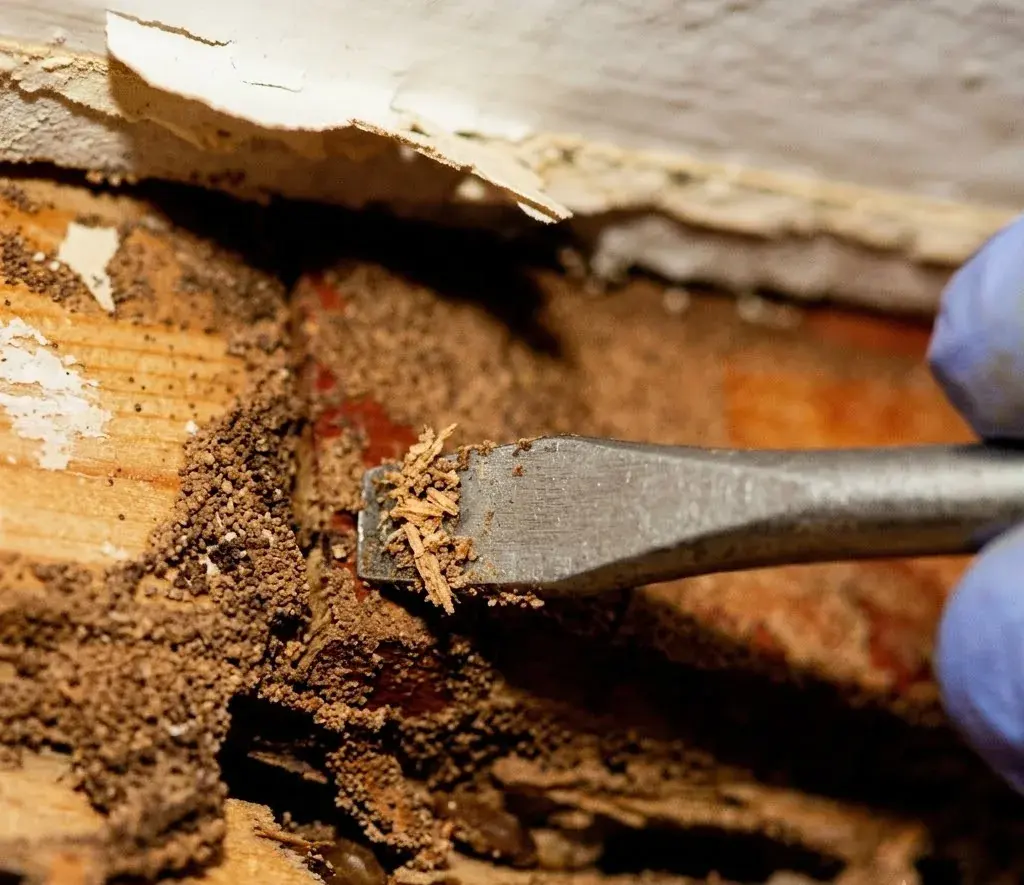
Termite Inspection
A straightforward look at what a routine termite inspection actually checks on a Georgetown home, and what the evidence means…
Learn about Termite InspectionNew construction tied to the Samsung plant build gives this page a different angle than an established neighborhood: fresh slabs, disturbed soil, and a wave of first-time local homeowners who have never had a termite inspection scheduled before and do not yet know the regional swarm calendar.
Taylor is close enough to Georgetown to share a pest calendar but far enough east that it is its own place, out along US-79 rather than the I-35 corridor. Growth here is tied to the Samsung semiconductor plant under construction, which means a wave of new slab foundations going in alongside older rural stock. New concrete cures and settles for a year or two, which is exactly the window where a first termite or ant inspection catches a problem while it is still small and cheap to treat.
Rock on one side of the county and deep clay on the other, roof rats that enter from above, scorpions drawn to moisture — the ground shapes the problem.
Older stock and newer stock sit side by side around Taylor, and they fail differently. A pier-and-beam house gives you a void to inspect and a skirt to seal; a slab gives you neither, and the whole job moves to the outside wall. Which one you are standing in front of decides the quote.
Standing water is the part people miss near not available in facts. A gutter with a sag in it, a plant saucer, a tarp and an unused wheelbarrow each hold enough for mosquitoes within a week of rain, so walking the ground and tipping things over is worth more than anything sprayed.
Taylor sits in the same Central Texas climate band as Georgetown: hot, dry summers followed by heavy rain events that hit clay ground hard. Termites swarm in daylight after rain, typically between February and May, and drought years afterward do not slow them down, since the colony simply follows moisture underground toward whatever foundation still has some. Thin caliche over fractured limestone gives scorpions endless cracks to travel through, which is why any street sitting on rock keeps up steady activity right the way through summer.
Taylor has Samsung semiconductor plant nearby, which brings tenanted and mixed-use buildings as well as houses. Access coordination is half the job on those, because getting into every affected space on the same day is what stops a population moving next door and coming back.
Slab size, roofline access for roof rats, and how close a lot in Taylor sits to open ground all move the number.
| Service | Estimated cost |
|---|---|
| Termite Inspection | an estimated $449–$1400 |
| Yard & Lawn Pest Control | an estimated $79–$169 |
| Rodent Exclusion | an estimated $189–$499 |
| General Pest Control | an estimated $99–$239 |
Taylor falls within the same Williamson County jurisdiction as Georgetown, which means the same state-level regulation applies: structural pest control here is governed by the Texas Department of Agriculture's Structural Pest Control Service under the Structural Pest Control Act, with no separate local board or county-specific rule layered on top.
Taylor sits southeast on US-79, now known locally for the Samsung semiconductor plant under construction there, pulling commuter traffic through the same corridor Georgetown residents use toward Austin.
Taylor and the ground around it sit on the same Blackland Prairie clay found east of I-35 through Georgetown, the Houston Black and Taylor soil series that swells when wet and cracks hard in a dry spell. That movement opens gaps beside a slab foundation and gives subterranean termites and moisture-seeking pests a direct line indoors.
A straightforward look at what a routine termite inspection actually checks on a Georgetown home, and what the evidence means…
Learn about Termite Inspection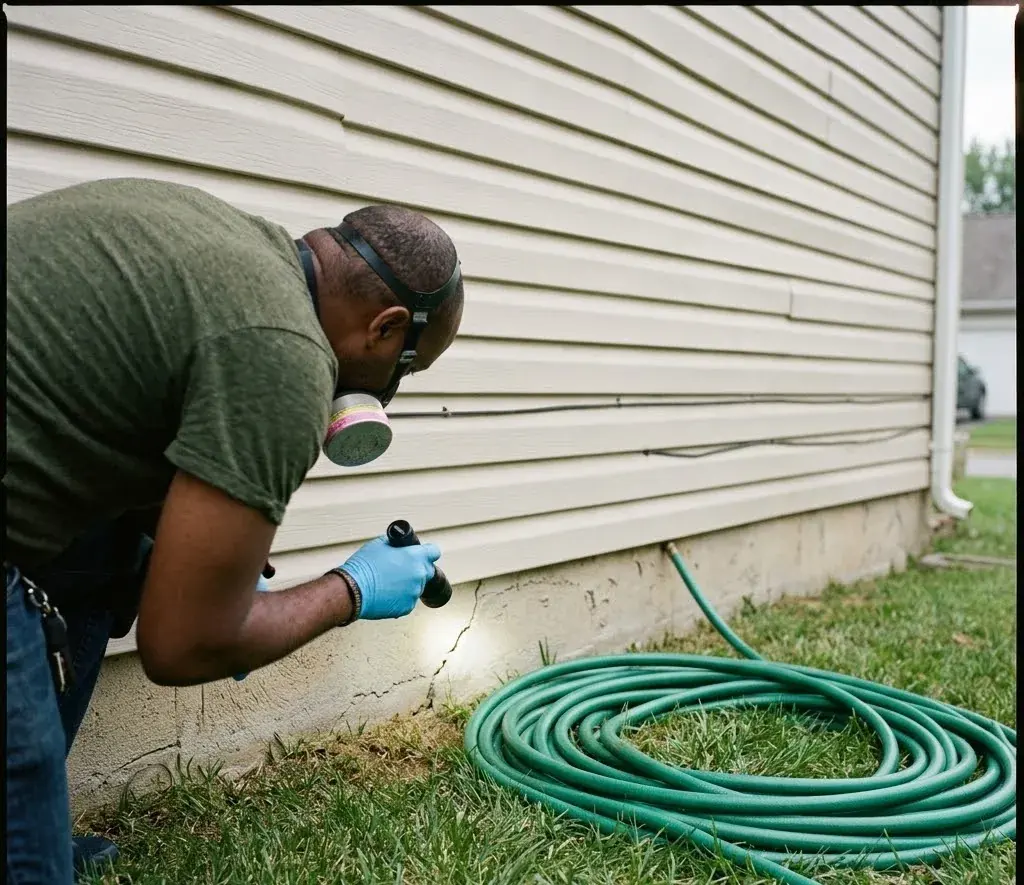
Perimeter and turf pest control for Georgetown yards, covering fire ant mounds, grubs, fleas, ticks, and the barrier that keeps…
Learn about Yard & Lawn Pest Control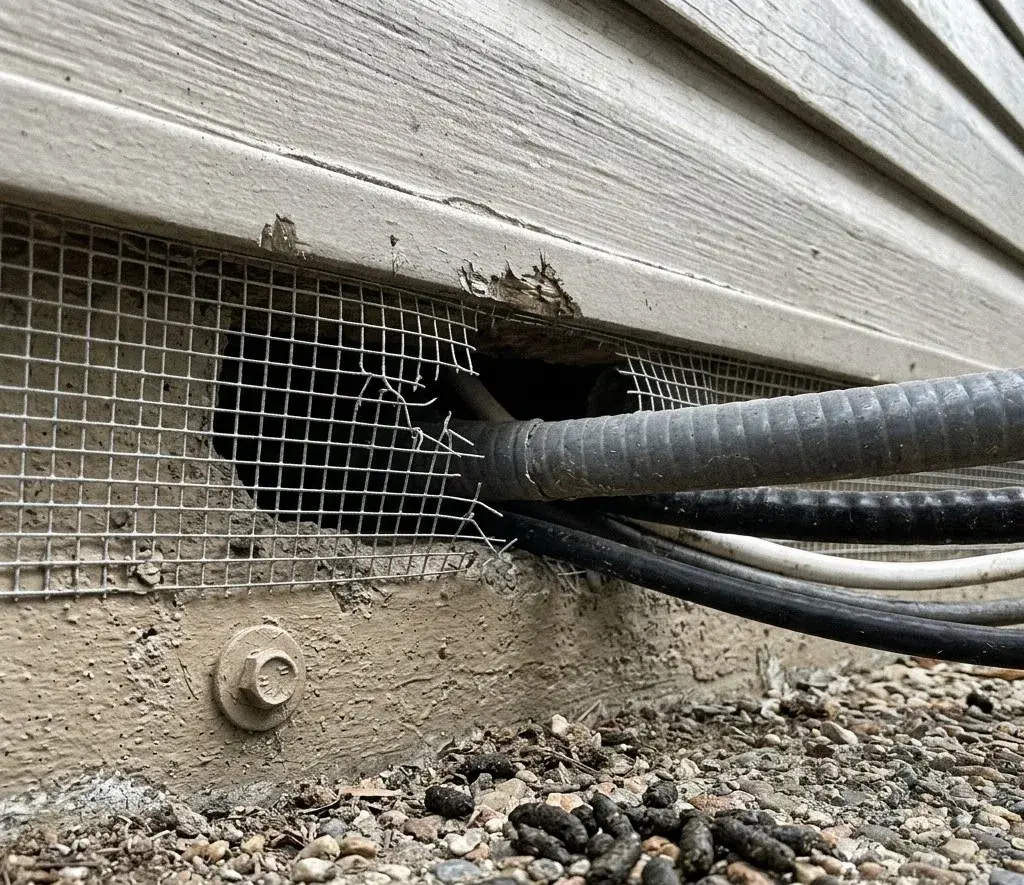
Rodent exclusion in Georgetown: sealing entry points, gaps and vents against roof rats and mice for good
Learn about Rodent Exclusion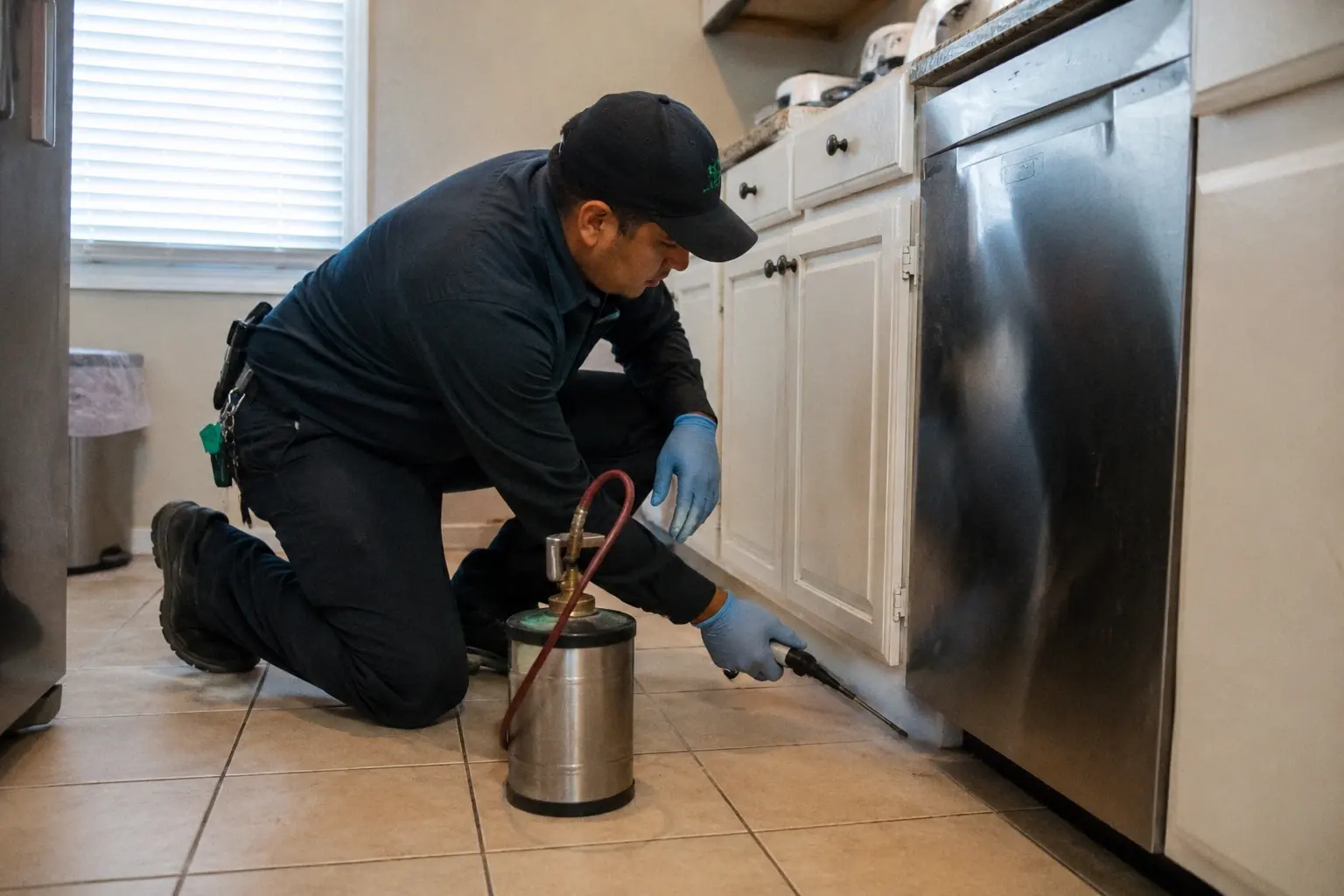
General pest control in Georgetown covering ants, roaches, spiders and silverfish with interior and exterior treatment
Learn about General Pest ControlLeander · Hutto · Sun City · Berry Creek · Teravista · Wolf Ranch · Cimarron Hills · Serenada
Taylor sits east of Georgetown on US-79, and the two towns share the same Blackland Prairie clay that runs east of I-35 through Berry Creek and Teravista. That clay swells when it rains and shrinks hard in a dry spell, and the cracking that follows gives fire ants and moisture-seeking termites a way toward a slab. A house near Taylor on that same soil faces the same pressure Georgetown's east side does.
Eastern subterranean termites are the termite that matters in this part of Williamson County, including toward Taylor. They swarm in daylight after rain, typically February through May, and a drought year does not slow them down — the colony just follows the moisture that collects under a slab. Mud tubes at a slab edge or discarded wings on a windowsill are the signs worth checking for near Georgetown and out toward Taylor alike.
Taylor sits on the same Blackland Prairie clay that runs east of I-35, so the pattern is familiar: the ground swells after rain and pulls back hard in a dry spell, and that movement opens gaps beside a slab foundation that a colony of native subterranean termites can use to reach the wood framing above. Fire ant mounds show up in yards within a day or two of any real rain. An inspection before you buy or twice a year if you already own is the practical way to catch mud tubes or a spring swarm before they turn into a repair.
Formosan subterranean termites are not confirmed in Williamson County, so a Taylor-area home is not dealing with that species. They are established one county south, in Travis County, and worth watching for over time, but the termite actually swarming around Georgetown and Taylor in spring is the native eastern subterranean termite, not the Formosan.
Most housing on this side of the county, including newer construction near Taylor and the growth corridor along US-79, is slab-on-grade. Pier-and-beam and crawl spaces are the exception here, found mainly in Georgetown's Old Town and older rural stock further out. A foundation inspection on this soil is checking a slab edge and perimeter, not a crawl space.
The honest answer on timing is that pest calls around Taylor do not spread evenly through the year. Scorpion season from April through October and the fall cricket emergence each create short stretches where every pro working the area is already booked solid. Outside those weeks, next-day and even same-day slots are far easier to come by.
Every neighborhood here has its own pattern, whether that is greenbelt scorpions, roof rats along the fence line, or fire ant mounds showing up after the first real rain. Call and name your street or subdivision. The licensed pros we connect you with will already know what to expect nearby.
Call (866) 829-2897