Why Roof Rats Keep Turning Up in Georgetown Homes
Roof rats travel above ground, along fence lines, tree limbs and power drops, which is why a house near mature trees in Berry Creek or Cimarron Hills can have an entry point at the roofline with no sign of activity at ground level. They follow a branch to the fascia and go in at a gap most homeowners never look at.
Georgetown's older neighborhoods near Old Town and the tree-lined lots around San Gabriel Park give roof rats the overhead cover they use to move between yards. Newer construction in Teravista or Wolf Ranch isn't immune either — a soffit gap or an unscreened gable vent is enough of an entry point regardless of the neighborhood's age.
Georgetown splits along I-35. On the Sun City and Cimarron Hills side, limestone sits close under a thin caliche layer, cracked enough to move water sideways instead of down, which is why scorpions turn up in bathrooms after rain. The Water Oak and DB Wood Road stretch shares that rock. East toward Teravista the clay holds moisture differently, and roof rats still enter at the eaves either way.
Know What You Are Looking At
- Six to eight inches long, tail excluded
- Slender build with a pointed nose
- Tail longer than head and body combined
- Large ears, prominent dark eyes
- Droppings pointed at both ends, scattered
- Found in attics, not under sinks
- Scratching and running sounds after dark
- Grease marks along beams and fence tops
- Gnawed gable vents or roofline gaps
- Active year-round, worse in dry heat
- Local Pest Knowledge
- Active year round, with roof rats moving into attics along Berry Creek and Teravista fence lines heaviest in fall
- Annual Contract
- an estimated $189–$499
Talk to a Local Pro Now
Norway rats and squirrels. The Norway rat is the other rat present in Williamson County, but it runs heavier and blunter with a shorter tail than its body, and it nests low, near drains, foundations, and water, not up at the roofline. If the activity is overhead and the tail is the longest part of the animal, it is a roof rat, not a Norway rat.
What Treating Roof Rats Actually Involves
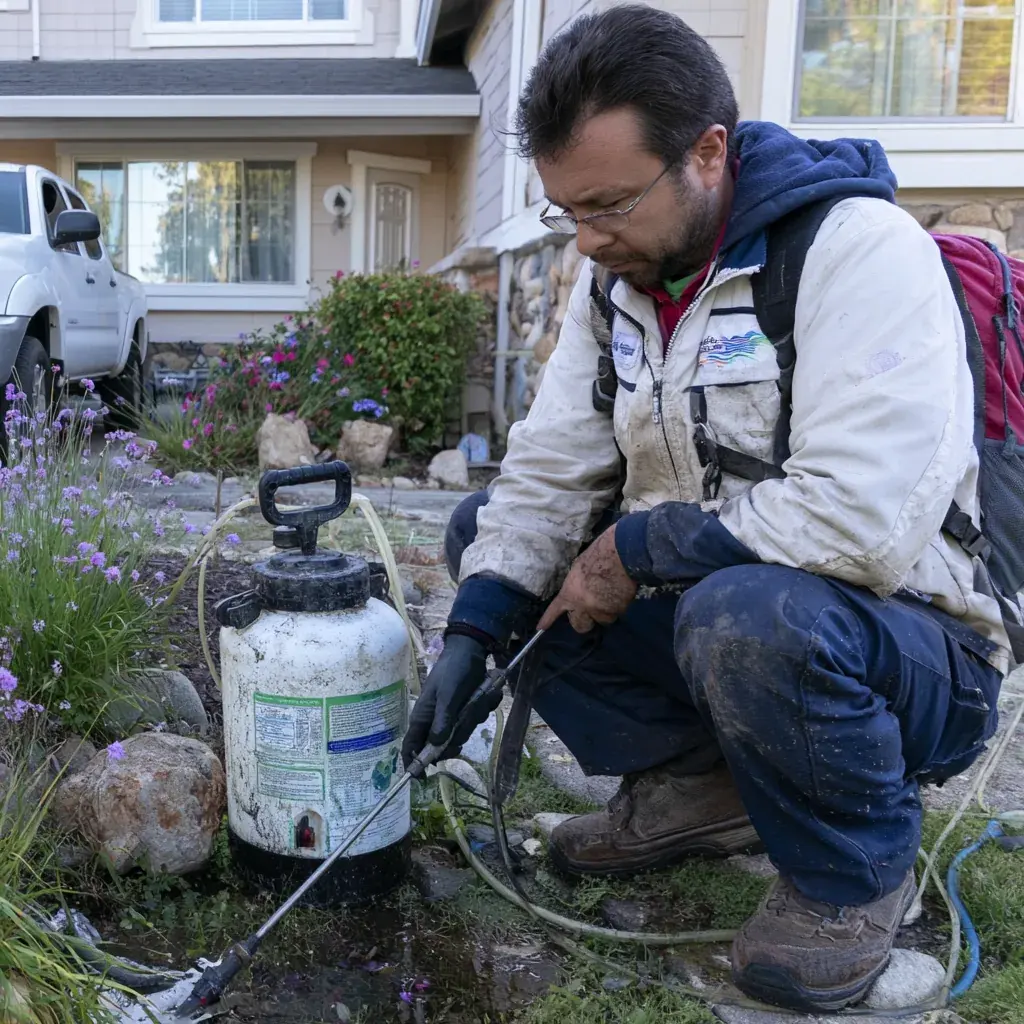
The licensed pros we connect you with start at the roofline, not the foundation: attic, soffits, gable vents, and the point where a tree limb or power line touches the house. Entry points get sealed first, because trapping without closing the gap just means new rats move in behind the ones removed.
Inside the attic, trapping is placed along the joists and wall tops where droppings and rub marks show travel routes. Bait is used carefully and only where children and pets can't reach it, and the licensed pros we connect you with will check attic insulation for nesting damage before calling the job finished.
A scorpion under the bathroom door in July gets a same-day call. A rat scratching in the attic over Wolf Ranch or Teravista in January gets put off for a week, then two. Both are worth acting on quickly, just for different reasons — one is a safety question for anyone with kids or pets in the house, the other is a structural one that gets more expensive the longer a roof line stays open.
Local pros who know Georgetown ground
| Limestone Ground, Local Pests |
Fast Help Near Lake Georgetown |
|---|
| Scorpion activity near Sun City and Cimarron Hills | Roof Rats In Attics |
| What actually works against fall crickets near Georgetown porches | Scorpion Season Watch |
| Fire ant mounds after rain, fall crickets under every porch light | Fire Ant Mounds Return After Rain |
Worth Trying on Roof Rats Before You Call
Sealing an obvious gap at the fascia or trimming a limb back from the roofline helps, but roof rats are strong climbers and a homeowner working from a ladder around Williams Drive or DB Wood Road can miss the actual entry point ten feet away. A full attic inspection finds routes that aren't visible from the ground.
The Health Side of Roof Rats, Honestly
Roof rats contaminate stored food and insulation with droppings and urine, and their constant gnawing on wiring in an attic is a fire risk that matters as much as any disease concern. A nest against a wall top can also mean an odor that spreads into the rooms below before anyone sees a rat.
Talk to a Georgetown Pro
A scorpion under the door or a fire ant mound that showed up overnight after rain is not something to sit on in Georgetown. The licensed pros we connect you with know that the west side of I-35, from Sun City down through Cimarron Hills and Water Oak, is limestone ground where these things move differently than they do east of the highway. Call and describe what you're seeing — a phone call costs nothing and gets you talking to someone who can actually place the problem.Scorpion visits usually come with an entry point already at fault — a slab crack, a loose weep screen, a gap around a laundry line. Fixing that spot is often folded into the same visit rather than billed as extra, since it's a few minutes of caulk and screen versus a repeat call in July. Roof rat exclusion works the same way: the estimate covers sealing the fascia gap or gable vent that let them into the attic in the first place, not just clearing what's already up there. pricing guide, and the service that handles this is Rodent Exclusion.