Termite Inspection
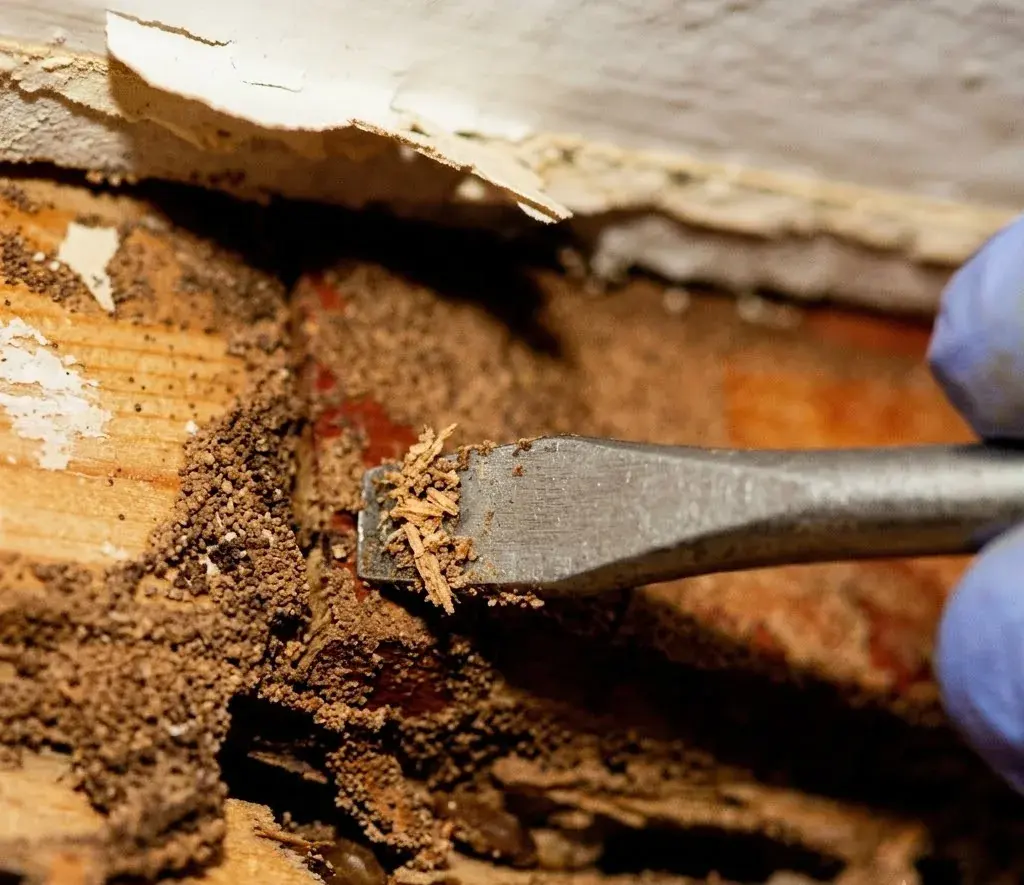
A straightforward look at what a routine termite inspection actually checks on a Georgetown home, and what the evidence means…
Learn about Termite InspectionOld Town is the one part of Georgetown where pier-and-beam construction and real crawl spaces show up regularly instead of the slab-on-grade default, and the mature tree canopy around the Square holds shade and moisture longer than the open lots in newer subdivisions, which changes where termites, ants and moisture pests actually settle in.
The pier-and-beam construction common in Old Town means an open crawl space instead of a slab, and that changes the whole approach to termite and moisture control. A crawl space traps humidity against wood framing in a way a slab foundation doesn't, and combined with mature pecan and live oak roots pushing toward the house, it's a setup that favors subterranean termites and the odd moisture-seeking pest. An inspection here checks the crawl space itself, the pier caps, and the yard drainage around the foundation, not just the exterior perimeter.
Limestone ground and greenbelt cover push scorpions and roof rats toward houses, and Old Town Georgetown gets its share of both.
Ground movement decides a lot in Old Town Georgetown. Clay swells with rain and shrinks back through a dry spell, and the slab edge travels with it, so the gap beside a hose bib or a gas line is never the same width twice. Sealing here is a repeat check rather than a job finished once.
Anywhere close to San Gabriel River and Blue Hole, the air along a foundation stays damper than the rest of the lot. Roaches, silverfish and spiders follow that toward the house. Treating them without dealing with a dripping hose bib or a downspout emptying against the slab just means treating them again next month.
Old Town sits close to the San Gabriel River on ground that stays wetter after rain than the higher subdivisions east of I-35. Native subterranean termites in Central Texas swarm most often between February and May, and a pier-and-beam crawl space here holds exactly the kind of moisture that colony follows. Scorpion calls climb from April through October in Georgetown, worst in June, July and August, and the striped bark scorpion is the one behind almost every one of them.
Old Town shops and offices means a steady run of non-residential work around Old Town Georgetown. Roof rats move between adjoining roofs, and fire ants come up through the seam where a paved apron meets a slab, so the perimeter of a commercial building is usually where the answer is.
What a treatment costs shifts with the home, the pest, and whether it is a one-time call or a standing plan against the same thing returning.
| Service | Estimated cost |
|---|---|
| Termite Inspection | an estimated $449–$1400 |
| Yard & Lawn Pest Control | an estimated $79–$169 |
| General Pest Control | an estimated $99–$239 |
| Rodent Exclusion | an estimated $189–$499 |
San Gabriel Park runs along the San Gabriel River near enough to Old Town that its tree cover and riverside ground share some of the same moisture conditions that shape pest pressure around the older homes near the Square, even though the park itself is public land rather than a residential area.
San Gabriel Park sits along the river just north of the Square, where the North and South San Gabriel come together. The confluence keeps the ground near Old Town damp longer after a storm than blocks set back from the water, which matters for pier-and-beam houses whose crawl spaces sit low.
The courthouse anchors the Square and is how most Old Town residents give directions to their own street. The pecans and live oaks planted around it are as old as the neighborhood itself, and their roots run under more than one nearby foundation and slab edge.
A straightforward look at what a routine termite inspection actually checks on a Georgetown home, and what the evidence means…
Learn about Termite Inspection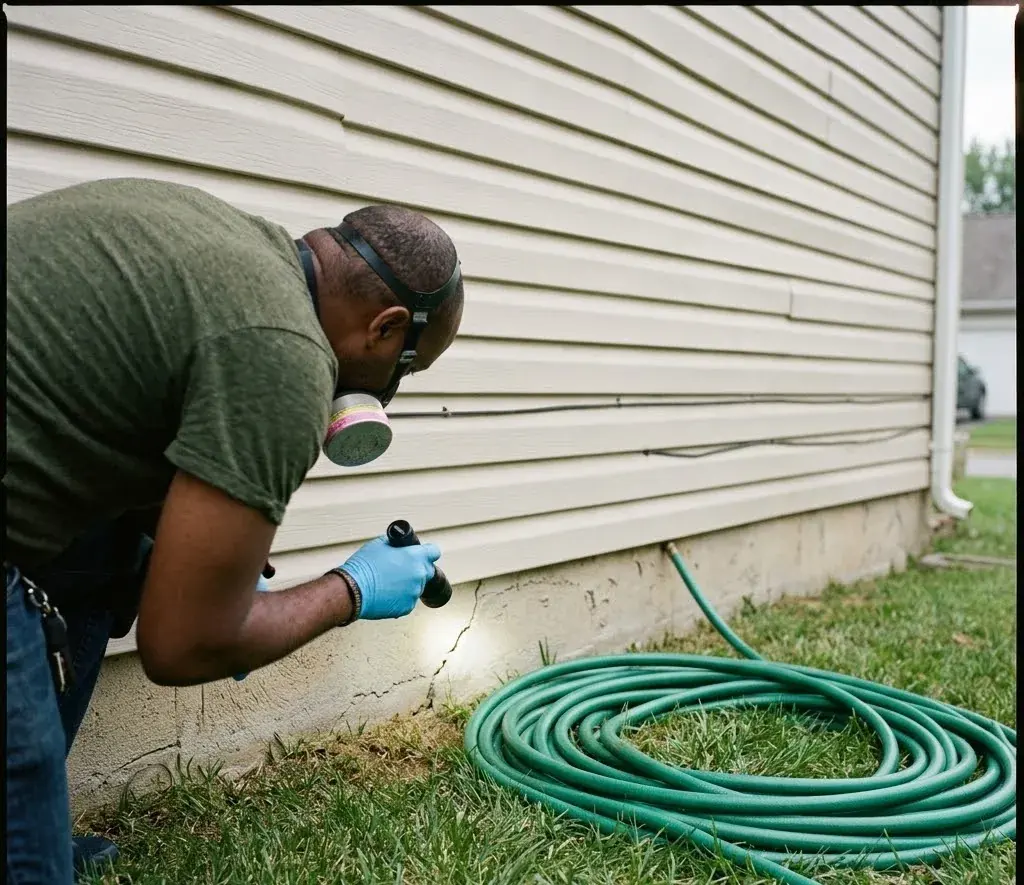
Perimeter and turf pest control for Georgetown yards, covering fire ant mounds, grubs, fleas, ticks, and the barrier that keeps…
Learn about Yard & Lawn Pest Control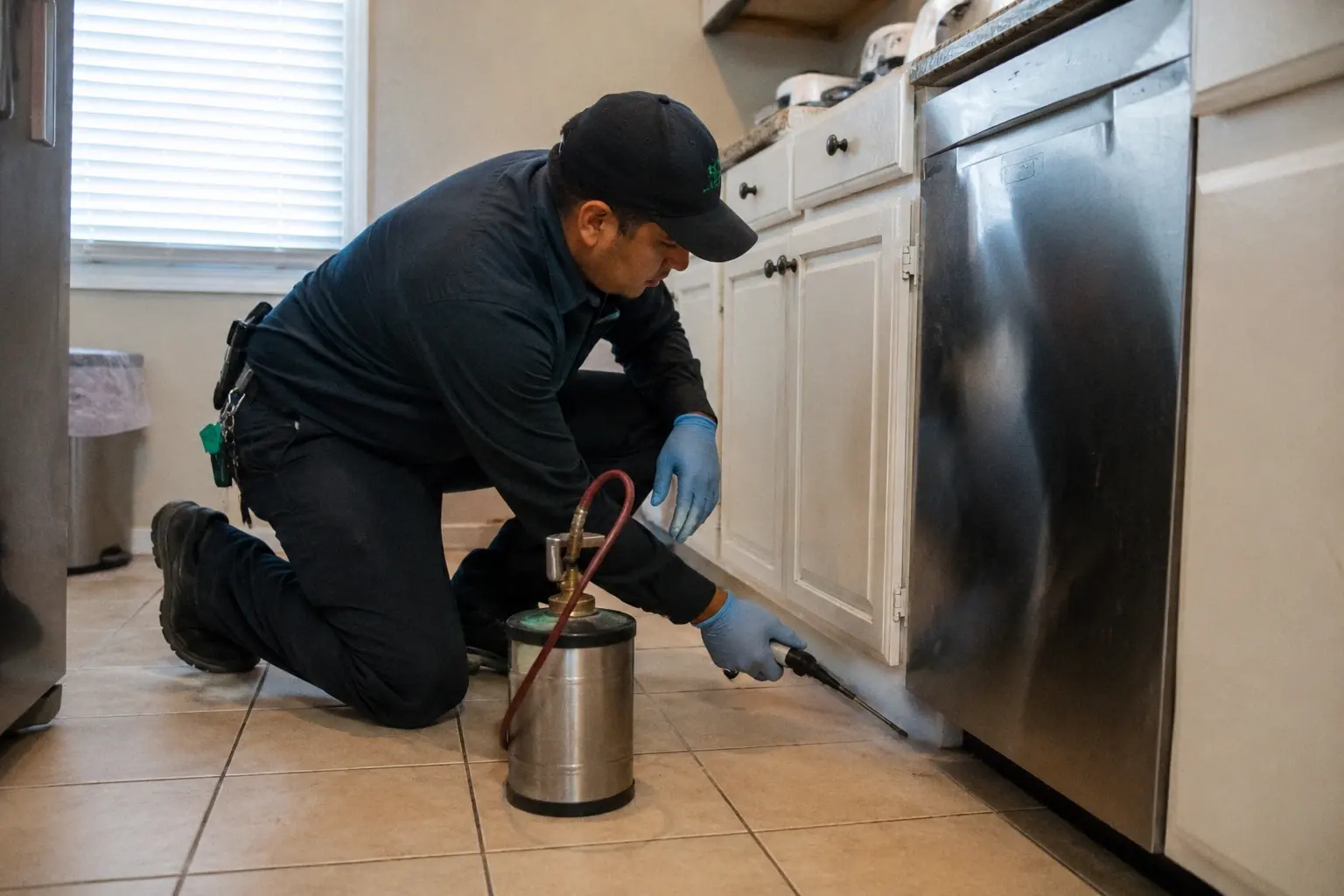
General pest control in Georgetown covering ants, roaches, spiders and silverfish with interior and exterior treatment
Learn about General Pest Control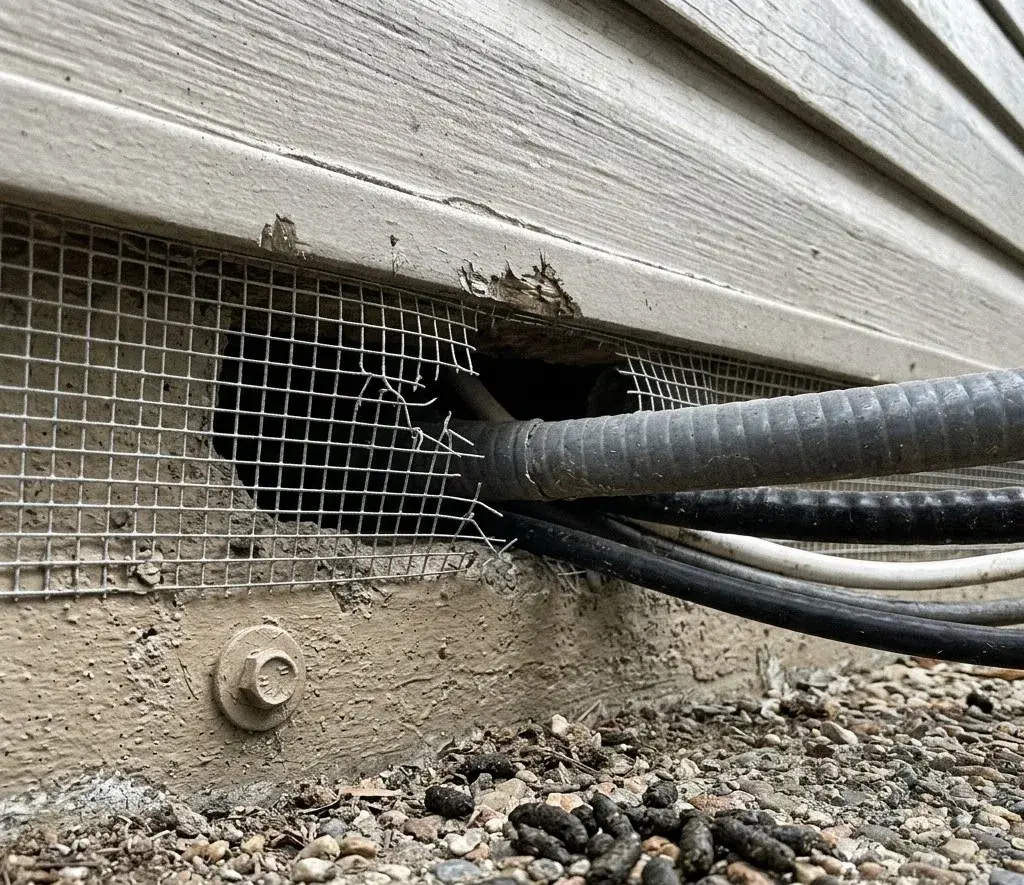
Rodent exclusion in Georgetown: sealing entry points, gaps and vents against roof rats and mice for good
Learn about Rodent ExclusionOld Town's houses run older than most of Georgetown, and a fair number near the Square sit on pier-and-beam rather than a slab, with a real crawl space underneath. That gap changes what an inspection looks for: moisture pooling under the house, gaps in the foundation vents, and wood-to-soil contact that a newer slab home never has. A pro checking an Old Town property spends real time under the house, not just walking the perimeter.
Termite swarms in Old Town show up the same way they do everywhere in Georgetown, mostly February through May after a rain, but mature pecans and live oaks along these streets give the eastern subterranean termite more shaded, moist soil to work from than a bare new subdivision lot does. Mud tubes climbing a pier, or wings shed near a foundation vent, are worth a call regardless of the season.
Old Town's pier-and-beam houses near the Square give termites a way in that slab homes around Georgetown don't have: open framing underneath instead of a poured slab. Mud tubes climbing a pier, discarded wings on a windowsill, and floor joists or trim that give a papery, empty knock are the signs worth checking after a wet spring. The mature pecans and live oaks shading these lots keep the soil damp longer than newer subdivisions, which suits a subterranean colony fine. An inspection underneath is the only way to know what's already established versus what's just started.
Pier-and-beam construction near the Square means there is open space and exposed wood under parts of the house that a slab home in a newer part of Georgetown does not have. That space stays cooler and holds moisture longer, which is exactly the setup termites and moisture-seeking pests look for. An inspection here checks under the house directly rather than only scanning the slab edge.
Old Town's mature pecan and live oak canopy holds shade and moisture in the yard and around the foundation longer after rain than the newer, more open subdivisions elsewhere in Georgetown. That slower drying is good for the trees and less good for keeping ants, termites and moisture pests away from the house, so yard drainage and gutter runoff are worth checking alongside the foundation itself.
Weekend cover is real but thinner than weekday cover, because fewer of the licensed pros we connect you with are running Saturday and Sunday routes across Williamson County. A mound problem, or a rodent noise in an attic in Old Town Georgetown, can usually be looked at within a day or two even at the weekend, though a firm same-day promise is not something anyone can honestly make ahead of time.
Every neighborhood here has its own pattern, whether that is greenbelt scorpions, roof rats along the fence line, or fire ant mounds showing up after the first real rain. Call and name your street or subdivision. The licensed pros we connect you with will already know what to expect nearby.
Call (866) 829-2897