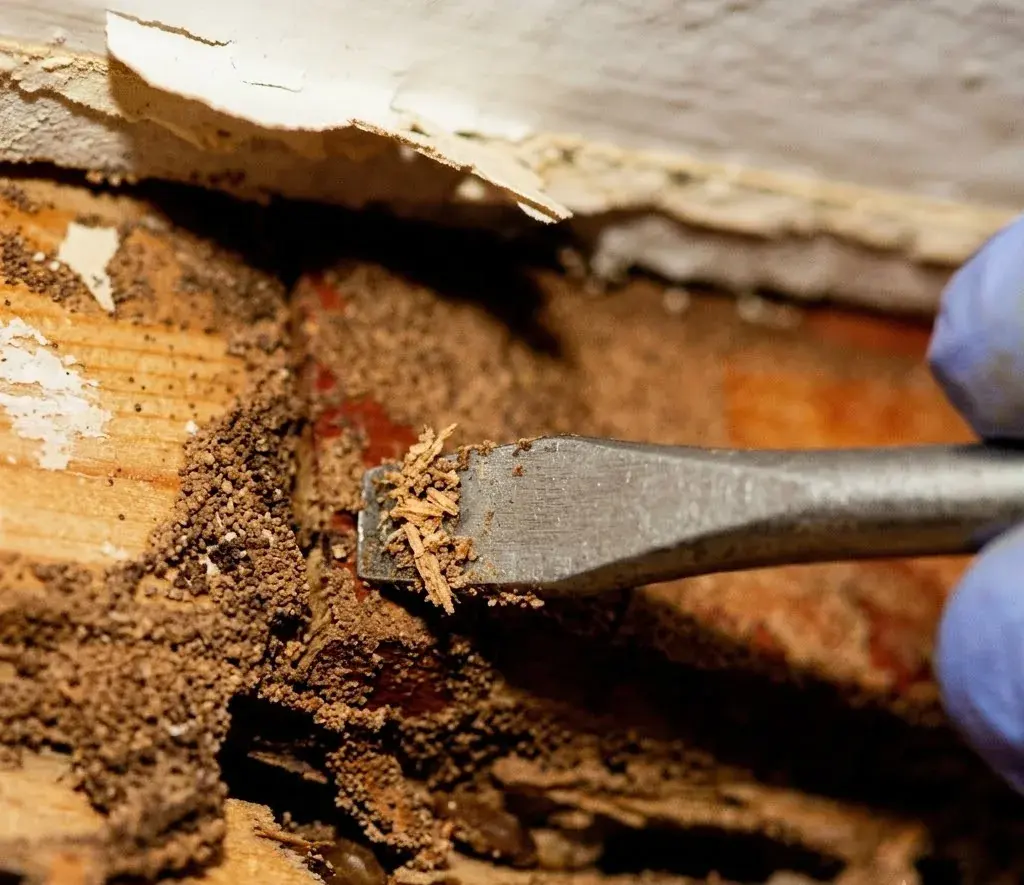
Termite Inspection
A straightforward look at what a routine termite inspection actually checks on a Georgetown home, and what the evidence means…
Learn about Termite InspectionThe angle here is limestone and lot size: karst ground that holds and redirects moisture unevenly along a longer slab perimeter than a standard subdivision lot, which changes where an inspection needs to focus and how fire ant colonies behave between the yard and the foundation.
Cimarron Hills is Georgetown's gated golf community off TX-29, built on Edwards limestone with a thin caliche layer over it, the same karst ground that runs under Inner Space Cavern a few miles east. The larger custom lots here mean more open yard for fire ant mounds after rain and more slab perimeter for a termite inspection to cover. Being slab-on-grade throughout, the pest issues that matter are foundation-level, not sub-floor.
Rock underfoot, roof-level rat entry, and scorpions moving toward bathrooms all shape how the licensed pros we connect you with treat a house here.
Older stock and newer stock sit side by side around Cimarron Hills, and they fail differently. A pier-and-beam house gives you a void to inspect and a skirt to seal; a slab gives you neither, and the whole job moves to the outside wall. Which one you are standing in front of decides the quote.
North San Gabriel sets the pattern in Cimarron Hills. Rain arrives in bursts rather than steadily, so the ground goes from cracked to saturated and back inside a week. Fire ants shift their mounds after each one, and anything that was sitting out a dry spell underground comes up, which is why the calls cluster in the days after a storm.
The limestone shelf under Cimarron Hills does not absorb a heavy rain the way open soil does, so water moves sideways through cracks in the rock instead of draining straight down, and that lateral movement is exactly what pushes moisture toward a slab edge during a wet stretch. Fall brings the field cricket swarm, piling up wherever lights burn after dark, and one porch light left on in Cimarron Hills will collect more of them than anything else on the property.
Commercial standards apply to a lot of the work near Cimarron Hills: defined treatment zones, product records, and a report a property manager can file without a covering note. With Round Rock, Austin commuters close by, that side of the job comes up as often as the treatment does.
Slab size, roofline access for roof rats, and how close a lot in Cimarron Hills sits to open ground all move the number.
| Service | Estimated cost |
|---|---|
| Termite Inspection | an estimated $449–$1400 |
| Yard & Lawn Pest Control | an estimated $79–$169 |
| General Pest Control | an estimated $99–$239 |
| Rodent Exclusion | an estimated $189–$499 |
A show cave just west of I-35 on the same limestone that underlies Cimarron Hills, useful as a reminder that the ground here is full of fractures and channels that move water sideways rather than straight down through the soil.
Inner Space Cavern lies on the south side of town, cut into the same limestone shelf that runs under this neighborhood, which is a useful way to picture what a foundation inspection here is actually checking for underneath the slab and along the perimeter.
It has no direct pest connection to this neighborhood, but it is one of the reasons Georgetown keeps adding rooftops in this direction, which means more slabs poured into the same fractured rock every year.
A straightforward look at what a routine termite inspection actually checks on a Georgetown home, and what the evidence means…
Learn about Termite Inspection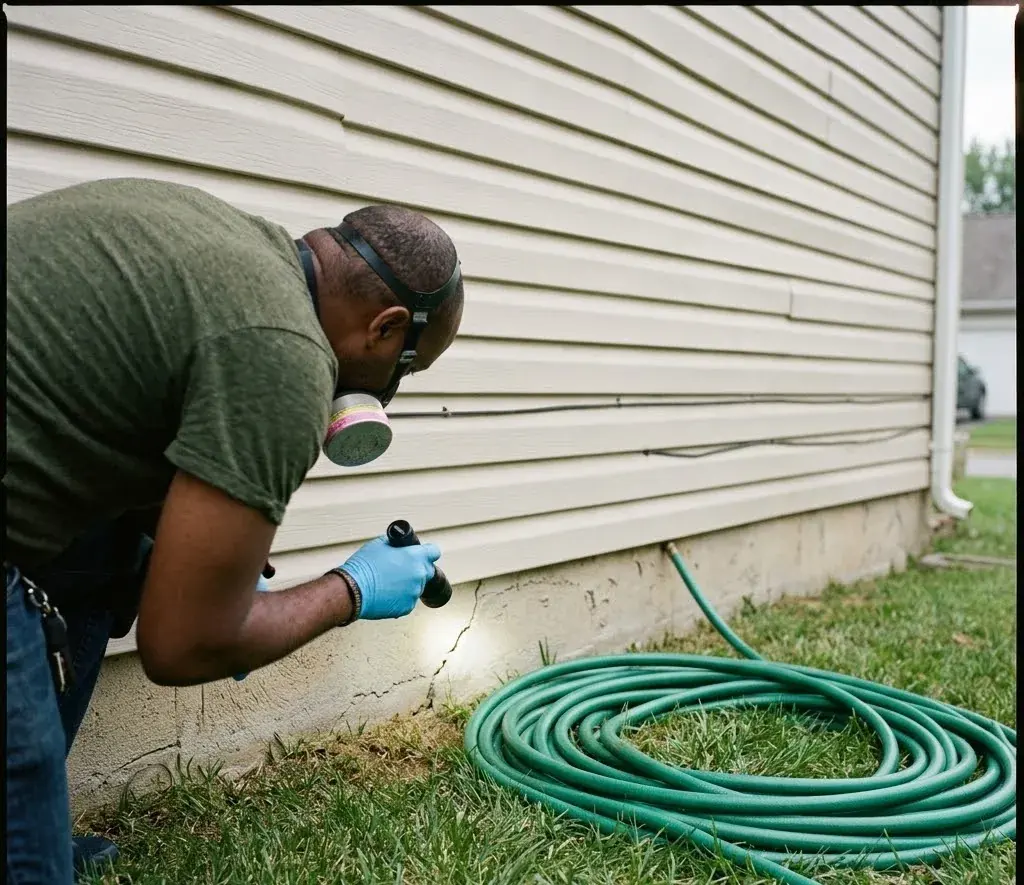
Perimeter and turf pest control for Georgetown yards, covering fire ant mounds, grubs, fleas, ticks, and the barrier that keeps…
Learn about Yard & Lawn Pest Control
General pest control in Georgetown covering ants, roaches, spiders and silverfish with interior and exterior treatment
Learn about General Pest Control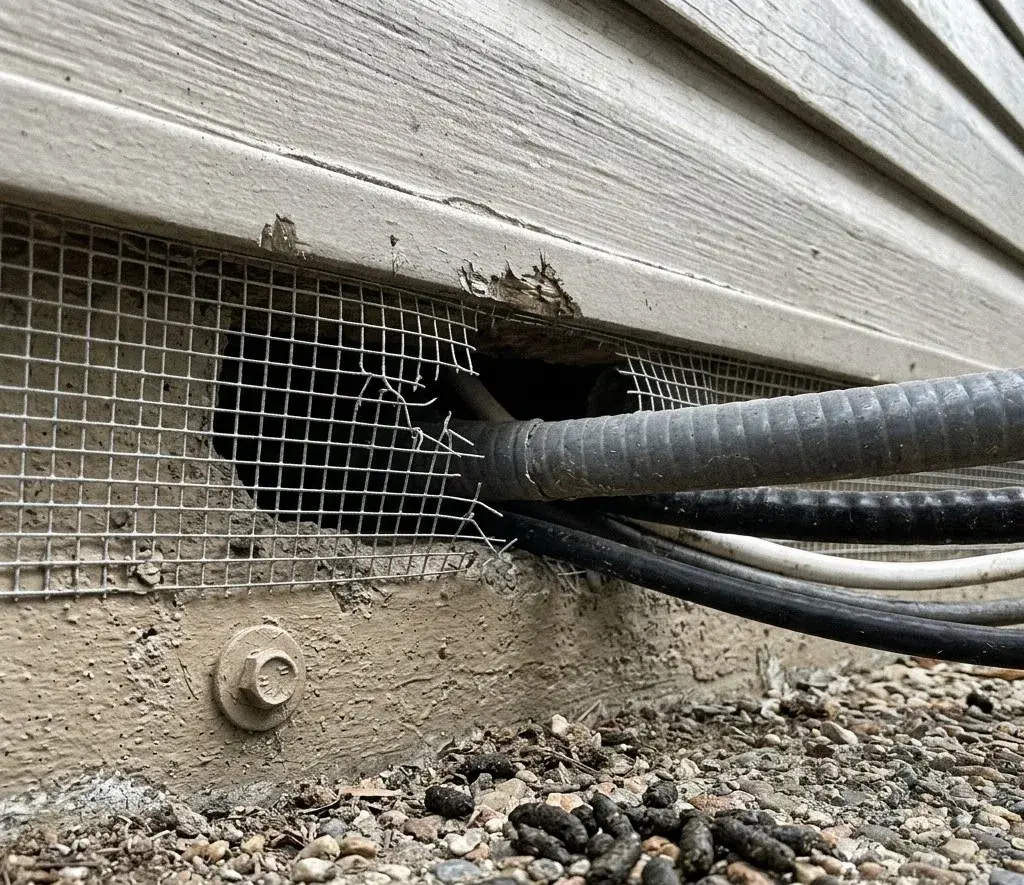
Rodent exclusion in Georgetown: sealing entry points, gaps and vents against roof rats and mice for good
Learn about Rodent ExclusionJarrell · Weir · Sun City · Berry Creek · Teravista · Wolf Ranch · Serenada · Georgetown Village
Yes. Cimarron Hills sits on Edwards limestone with only a thin caliche cap over it, and that rock is full of small fractures and channels that carry rainwater sideways rather than letting it drain straight down. That sideways movement keeps pockets of soil damp along a slab edge even weeks after a storm, which is exactly the condition eastern subterranean termites look for. An inspection focused on the slab perimeter and any exterior plumbing penetrations is worth doing here regardless of the home's age, since the limestone itself is the draw, not just an older structure.
Fire ants are common on the golf course frontage and the larger lots typical of Cimarron Hills, and a mound can show up in turf a couple of days after rainfall soaks into the caliche layer. During a Central Texas drought, colonies will push through a slab crack looking for the same moisture the limestone below is holding onto. Perimeter treatment around the foundation, paired with routine yard checks after rain, is the practical way homeowners here stay ahead of both the lawn mounds and any indoor intrusion.
Cimarron Hills homes are slab-on-grade, like most Georgetown construction from the 1970s onward, so there is no crawl space to inspect. Termite and moisture checks here focus on the slab edge, expansion joints, and anywhere plumbing penetrates the foundation, since that is where native subterranean termites find their way in rather than through open sub-floor vents.
Eastern subterranean termites are the species that matters around Georgetown, and they swarm in daylight after rain, most commonly between February and May. In a custom-home neighborhood like Cimarron Hills, the tell is usually mud tubes running up an exterior slab edge or discarded wings collected on a windowsill after a warm rain, rather than anything visible in the wood itself until the damage is already done.
The limestone ground under Cimarron Hills holds water in fractures rather than letting it drain straight through, so drought years do not slow termite activity the way people expect. The colony simply follows the moisture that collects under the slab, so dry weather outside can still mean active termites underneath. Regular inspection matters as much in a dry year as a wet one here.
Same-day slots fill fast when a scorpion turns up in a bathroom sink in Cimarron Hills or a roof rat starts scratching in the eaves. If your street backs onto a greenbelt, say so when you call — that detail moves you up the list, because limestone ground with rock and cedar cover is exactly where scorpions concentrate. Most callers get someone out within the day, though a hard promise is not something to expect in advance.
Every neighborhood here has its own pattern, whether that is greenbelt scorpions, roof rats along the fence line, or fire ant mounds showing up after the first real rain. Call and name your street or subdivision. The licensed pros we connect you with will already know what to expect nearby.
Call (866) 829-2897