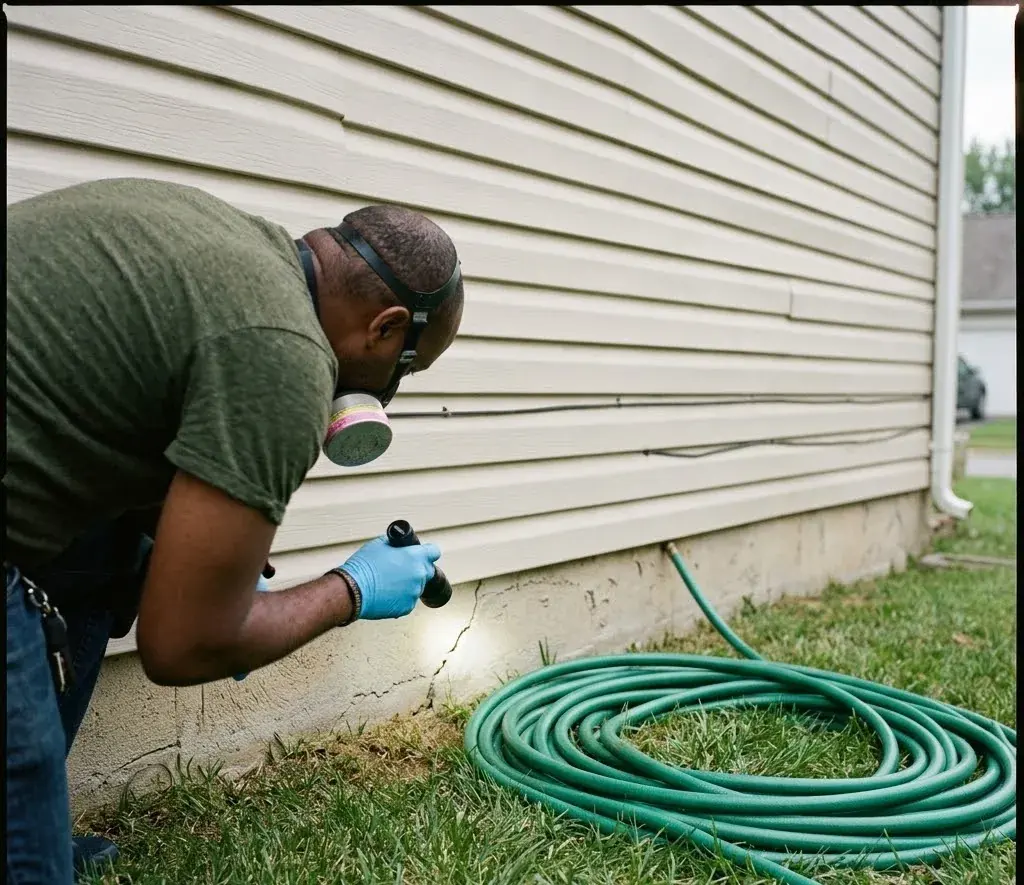
Yard & Lawn Pest Control
Perimeter and turf pest control for Georgetown yards, covering fire ant mounds, grubs, fleas, ticks, and the barrier that keeps…
Learn about Yard & Lawn Pest ControlKarst limestone west of I-35 that moves water sideways through the rock, slab foundations with no crawl space, and fire ants that push indoors through slab cracks during dry spells after mound activity following rain.
Water Oak sits on the karst limestone west of I-35, the same fractured ground that runs under Sun City and Cimarron Hills toward Inner Space Cavern. That rock carries moisture sideways instead of draining it, so slab cracks and foundation perimeters here stay damp longer after rain than the soil alone would suggest. Fire ant colonies exploit those cracks in dry spells, and the same moisture draws silverfish toward water heaters. An inspection of the yard and slab perimeter is the starting point before any treatment.
Where roof rats nest, why scorpions turn up in bathrooms, and what a mound in a yard around Water Oak after rain actually means.
The weak points repeat from job to job in Water Oak: the garage threshold, the seam where a driveway meets the slab, the sleeve around an irrigation line, and the corner where two wall materials meet. None of those is a treatment problem. They are a sealing problem, and they are why one house calls twice.
Ground near North San Gabriel River and Lake Georgetown nearby drains at two speeds. Limestone lets a heavy rain disappear in hours, and the clay beside it holds the same water for days. Both matter: the fast half moves whatever was living in a crack, and the slow half keeps a slab edge damp long enough for ants and roaches to stay interested.
Summers here run long and dry, broken by sudden downpours that do not soak in so much as run across the caliche and into the cracks below it. A yard that looks fine in July can flood at the foundation line within an hour of a real storm, which is exactly the kind of swing that pushes pests toward the house. New building along a greenbelt edge disturbs the limestone and cedar cover scorpions favor, and that is part of why the newest streets in Water Oak tend to call more often than the settled ones.
Because of Round Rock and Austin commuters, a fair share of the Water Oak calls are commercial. Those turn on discretion and documentation more than on product: service outside trading hours, and a written record of every visit a manager can hand to an inspector without explaining it.
Slab foundations, scorpion pressure along a greenbelt edge, and roof rat entry points all shift what gets quoted in Water Oak.
| Service | Estimated cost |
|---|---|
| Yard & Lawn Pest Control | an estimated $79–$169 |
| General Pest Control | an estimated $99–$239 |
| Termite Inspection | an estimated $449–$1400 |
| Rodent Exclusion | an estimated $189–$499 |
A show cave cut into the Edwards limestone just west of I-35, near enough to Water Oak to make the point plainly: the rock underneath this neighborhood is fractured and hollow in places, which is exactly why it moves rainwater sideways against foundations instead of letting it drain straight down.
Inner Space Cavern sits just west of I-35 on the same limestone that runs under Water Oak, the fractured rock that carries rain sideways into foundations instead of straight down.
Rivery sits nearby on the same side of Georgetown, close enough that the two neighborhoods share the same limestone base and the same drainage habits. A homeowner comparing notes with a neighbor in Rivery about ant pressure after rain or moisture near the foundation is comparing two houses sitting on nearly the same ground.
Perimeter and turf pest control for Georgetown yards, covering fire ant mounds, grubs, fleas, ticks, and the barrier that keeps…
Learn about Yard & Lawn Pest Control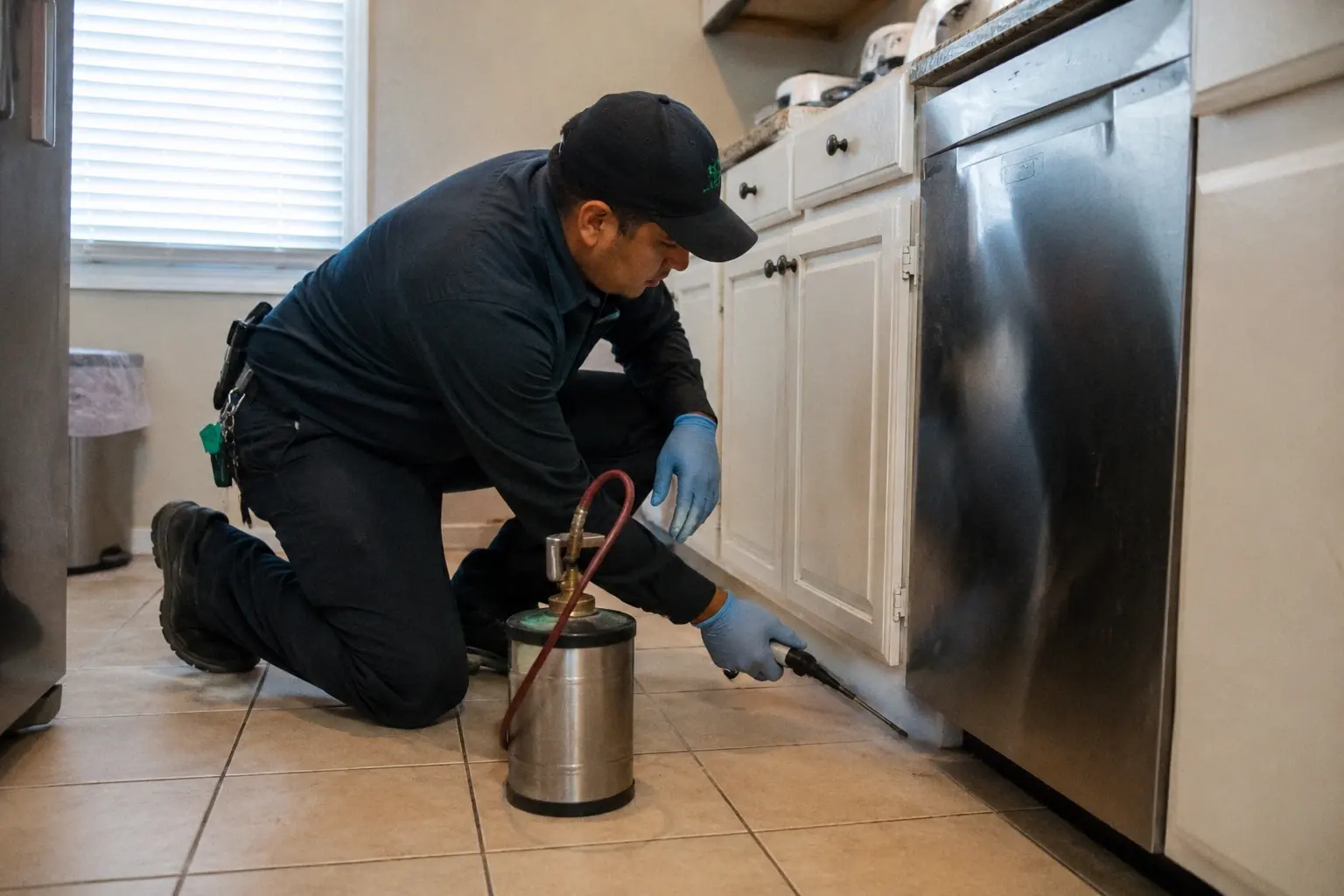
General pest control in Georgetown covering ants, roaches, spiders and silverfish with interior and exterior treatment
Learn about General Pest Control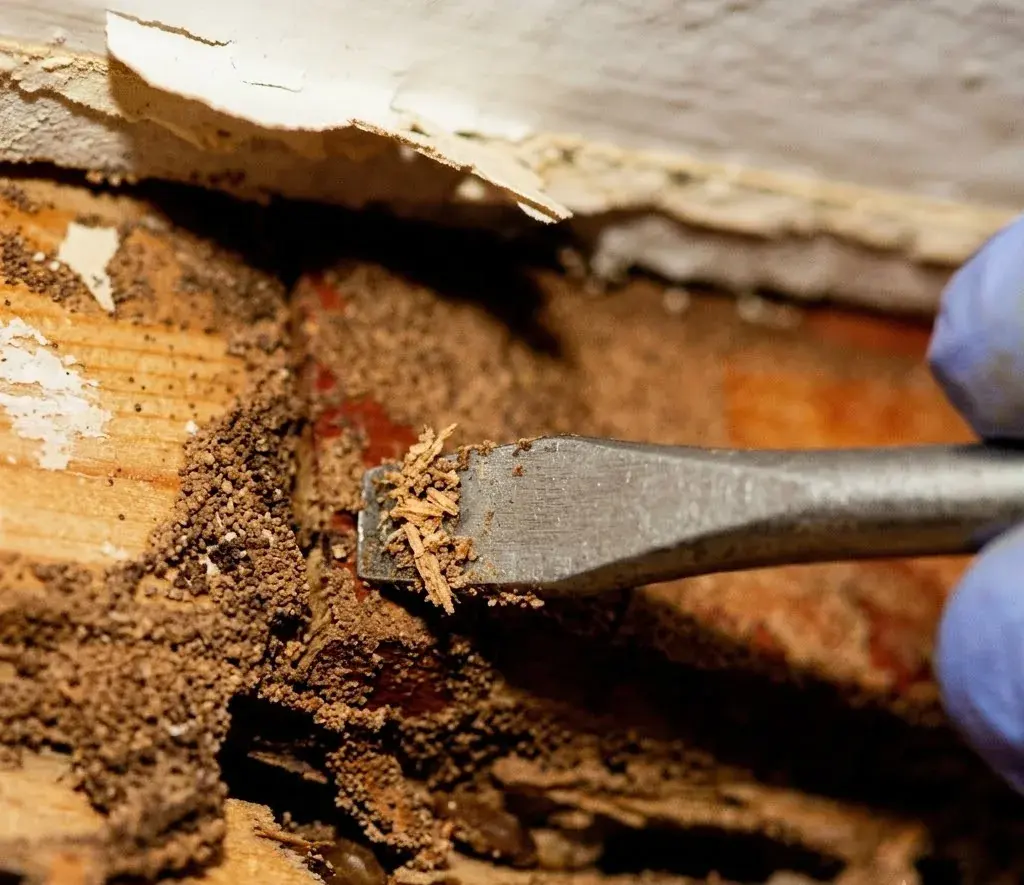
A straightforward look at what a routine termite inspection actually checks on a Georgetown home, and what the evidence means…
Learn about Termite Inspection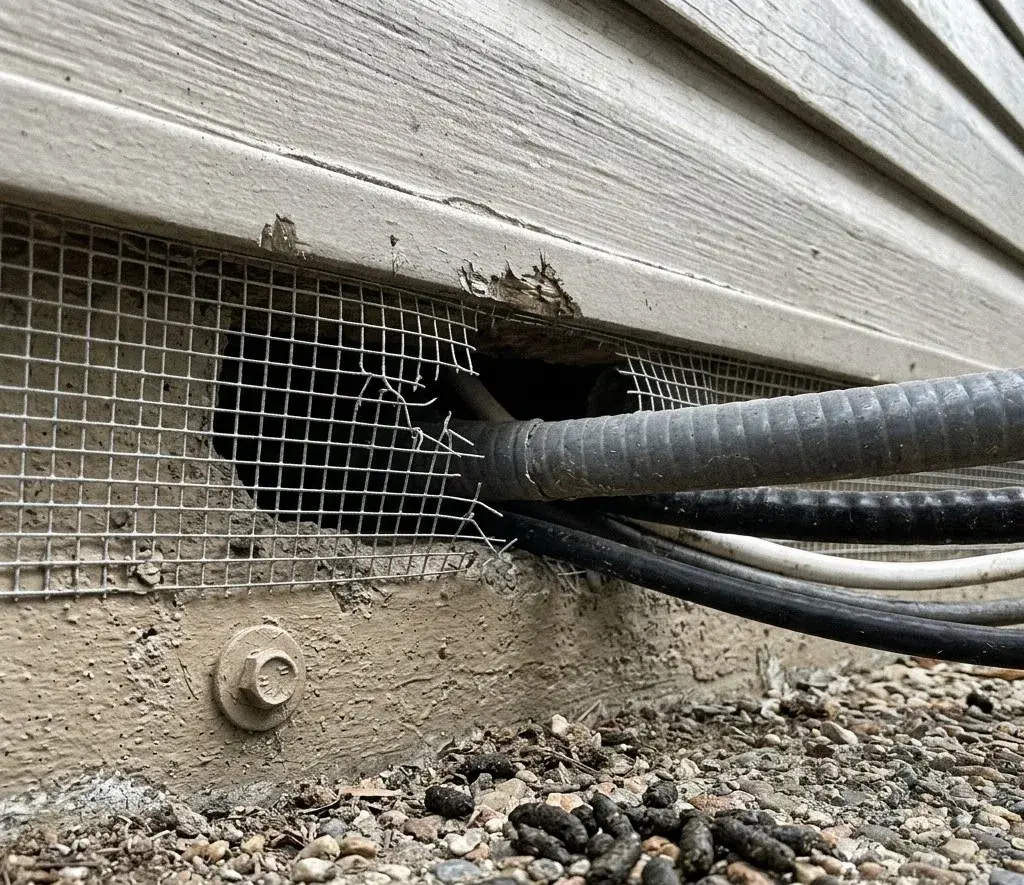
Rodent exclusion in Georgetown: sealing entry points, gaps and vents against roof rats and mice for good
Learn about Rodent ExclusionWater Oak sits on the karst limestone west of I-35, the same formation that shows up hollowed out at Inner Space Cavern nearby. That ground carries water sideways through fractures instead of straight down, so a slab foundation here can pick up moisture along one edge after a hard rain even when the yard looks dry everywhere else. Pest pressure follows that moisture, which is why an inspection after wet weather catches problems a dry-season look would miss.
Yes. Red imported fire ants are established across Georgetown, and Water Oak's lawns are no exception — mounds can show up within a day or two of rain. In a dry stretch, a colony will sometimes work its way indoors through a crack in the slab looking for moisture, which is a separate problem from the mounds outside and usually means checking the perimeter as well as the yard.
Almost all of Water Oak was built slab-on-grade, which is the standard foundation type across most of Georgetown outside Old Town. There's no crawl space to inspect underneath. Pest entry points are more likely to be slab cracks, expansion joints, and gaps around plumbing penetrations than anything below the floor, so an inspection here focuses on the perimeter and the slab edge rather than sub-floor access.
Silverfish turn up in bathrooms and around water heaters in Water Oak homes, drawn to the same moisture that also attracts scorpions in this part of the county. It's a sign of a damp spot rather than a structural issue on its own, and it's worth mentioning during an inspection so the moisture source gets addressed, not just the insects.
Formosan subterranean termites are established one county south in Travis County but have not been confirmed in Williamson County, so it isn't accurate to call them a Water Oak problem. Native subterranean termites are the more realistic concern here, and either way a termite inspection is about finding activity and moisture conditions around the foundation, not assuming the worse species.
Weekend cover is real but thinner than weekday cover, because fewer of the licensed pros we connect you with are running Saturday and Sunday routes across Williamson County. A mound problem, or a rodent noise in an attic in Water Oak, can usually be looked at within a day or two even at the weekend, though a firm same-day promise is not something anyone can honestly make ahead of time.
Every neighborhood here has its own pattern, whether that is greenbelt scorpions, roof rats along the fence line, or fire ant mounds showing up after the first real rain. Call and name your street or subdivision. The licensed pros we connect you with will already know what to expect nearby.
Call (866) 829-2897