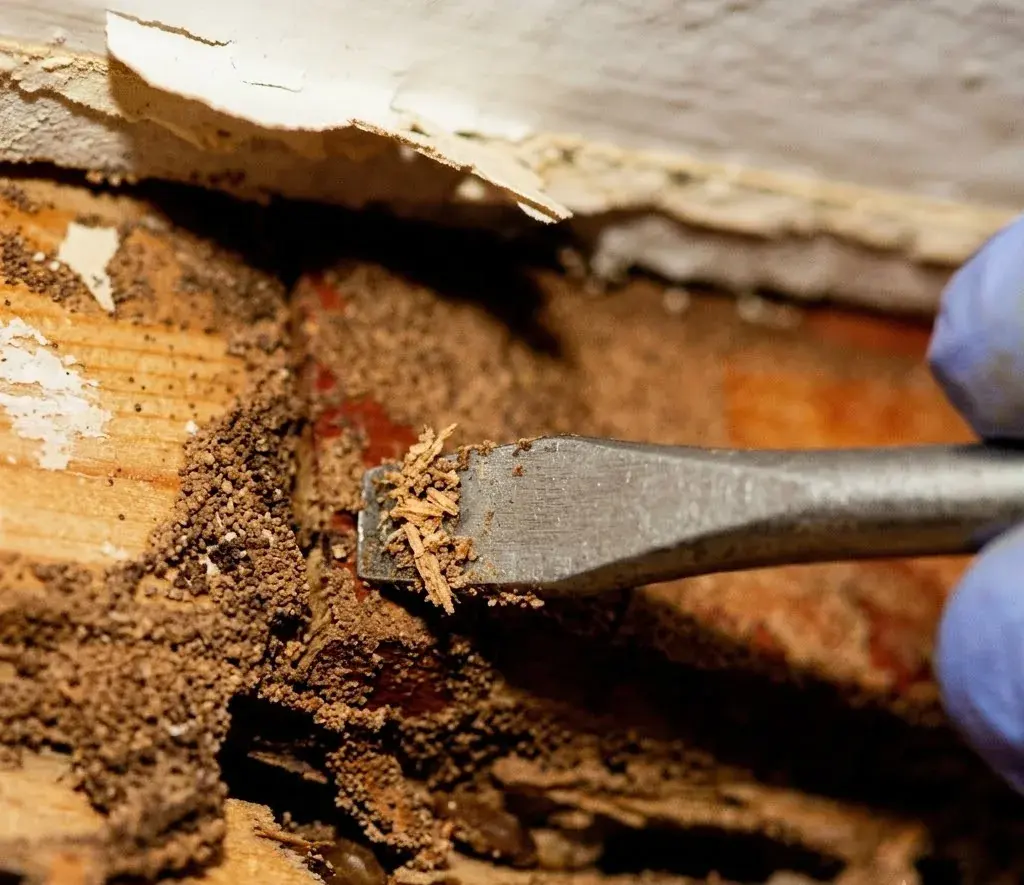
Termite Inspection
A straightforward look at what a routine termite inspection actually checks on a Georgetown home, and what the evidence means…
Learn about Termite InspectionOlder pier-and-beam construction near Walburg puts the crawl space and foundation posts at the center of an inspection, where a slab-built Georgetown subdivision home would have almost none of that exposure.
Walburg is older and more rural than the subdivisions ringing Georgetown, and the housing reflects it: more pier-and-beam construction, more actual crawl spaces than the slab-on-grade norm closer to town. Moisture under a crawl space draws native subterranean termites the same way it does under a slab, just with easier access. Fire ant mounds are routine in any open yard after rain.
Where roof rats nest, why scorpions turn up in bathrooms, and what a mound in a yard around Walburg after rain actually means.
Roof lines matter as much as foundations in Walburg. Roof rats travel fence tops, wires and overhanging limbs, then come in at a gable vent or a lifted soffit return, well above anything a perimeter treatment reaches. On a single-story house the attic is the part to look at first.
Properties beside San Gabriel River and North San Gabriel River take more weather than the rest of the area. Swollen trim, failed caulk and a door that no longer seals open a route a fraction of an inch at a time, so sealing work earns its place here in a way that a heavier treatment does not.
Being further out from Georgetown's built-up core, Walburg sees less shade cover overall and drier, more exposed ground through the summer, conditions that push fire ants and other insects toward whatever moisture a house or barn is holding onto. Fire ant mounds can appear across a Georgetown lawn within a day or two of rain, then vanish indoors through a slab crack the moment a drought sets in.
Sites like commuters to Round Rock, Austin put the pressure on the loading side rather than the front door. Waste handling, delivery bays and a propped-open back door account for most of what turns up, and a standing schedule around those beats reacting to a sighting on the floor.
Cost shifts with the pest, the property, and whether the visit tackles fire ants, scorpions, or a roof rat problem in the attic.
| Service | Estimated cost |
|---|---|
| Termite Inspection | an estimated $449–$1400 |
| Yard & Lawn Pest Control | an estimated $79–$169 |
| Rodent Exclusion | an estimated $189–$499 |
| General Pest Control | an estimated $99–$239 |
Weir shares the same older, rural housing pattern as Walburg, with pier-and-beam construction common enough that foundation and crawl space conditions matter more here than they do on Georgetown's newer slab-built streets.
A few miles further out along the same rural stretch, Andice is smaller still than Walburg, another marker on the map for the ranchland northwest of the county rather than a place with its own commercial center or services.
Walburg's own founders were part of this settlement pattern, and the same building habits followed: pier-and-beam framing on modest footings, wide eaves, and outbuildings that have stood on the same rural lots for a century, aging under the same sun and the same dry spells.
A straightforward look at what a routine termite inspection actually checks on a Georgetown home, and what the evidence means…
Learn about Termite Inspection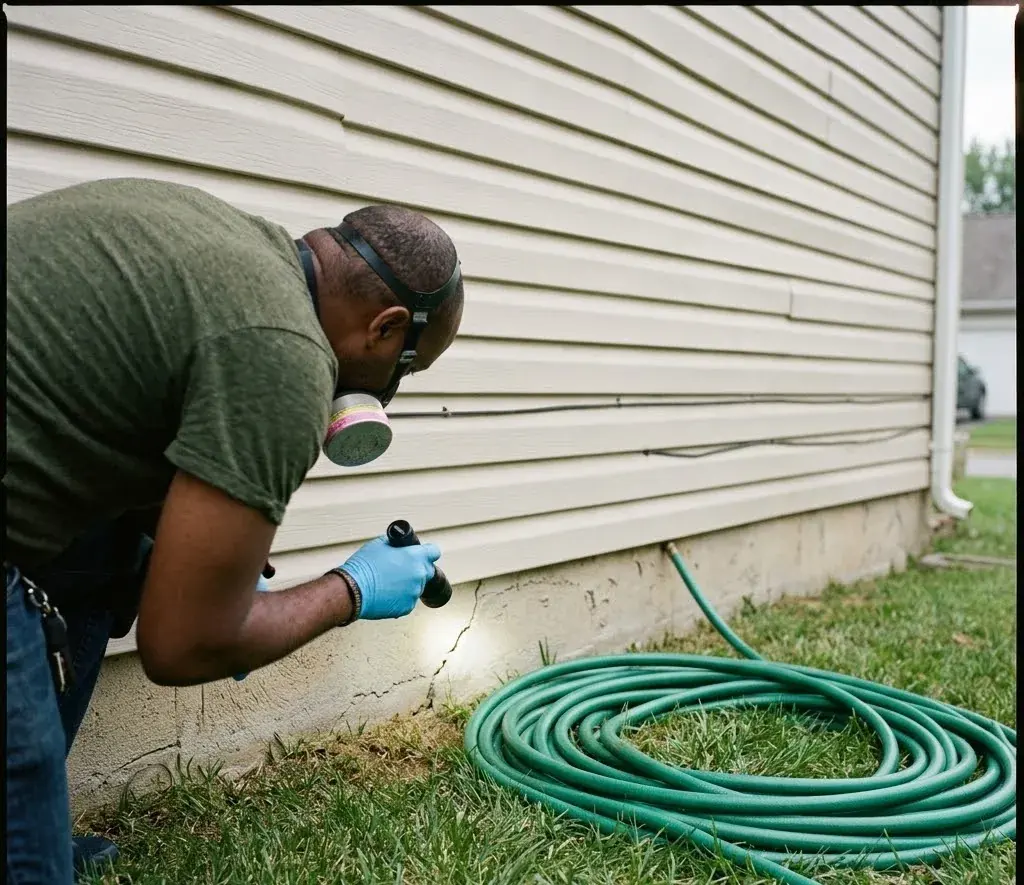
Perimeter and turf pest control for Georgetown yards, covering fire ant mounds, grubs, fleas, ticks, and the barrier that keeps…
Learn about Yard & Lawn Pest Control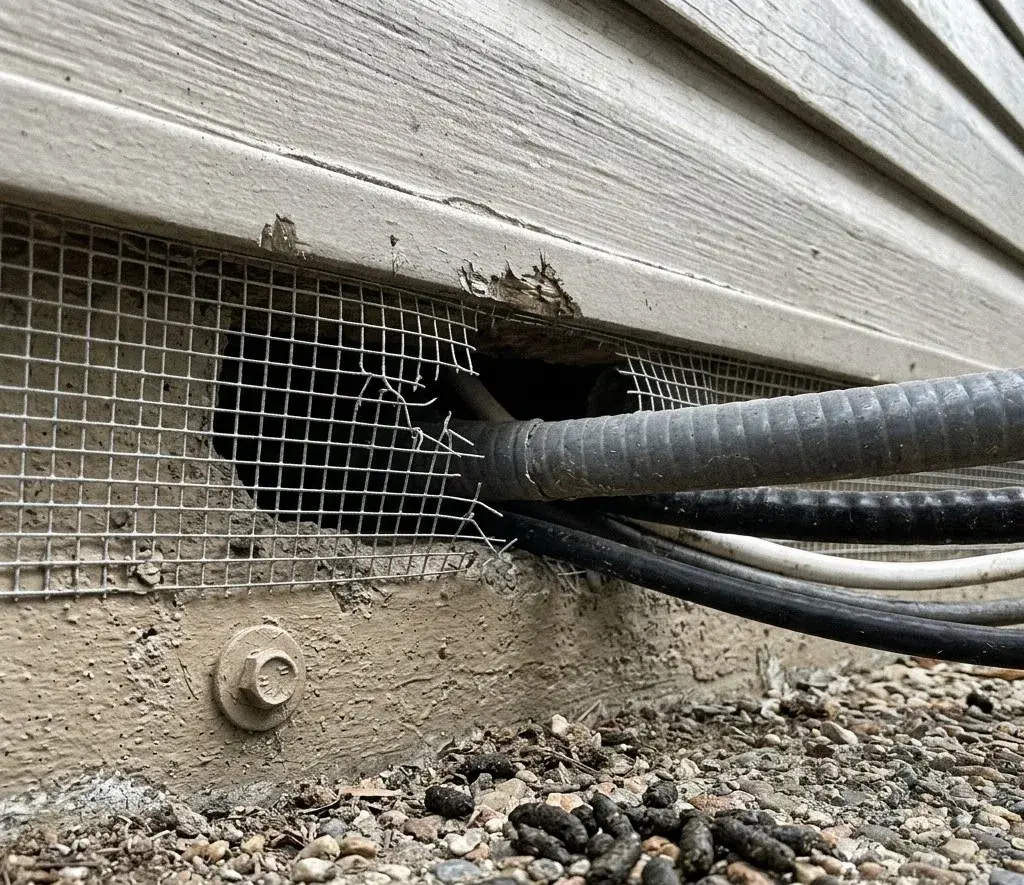
Rodent exclusion in Georgetown: sealing entry points, gaps and vents against roof rats and mice for good
Learn about Rodent Exclusion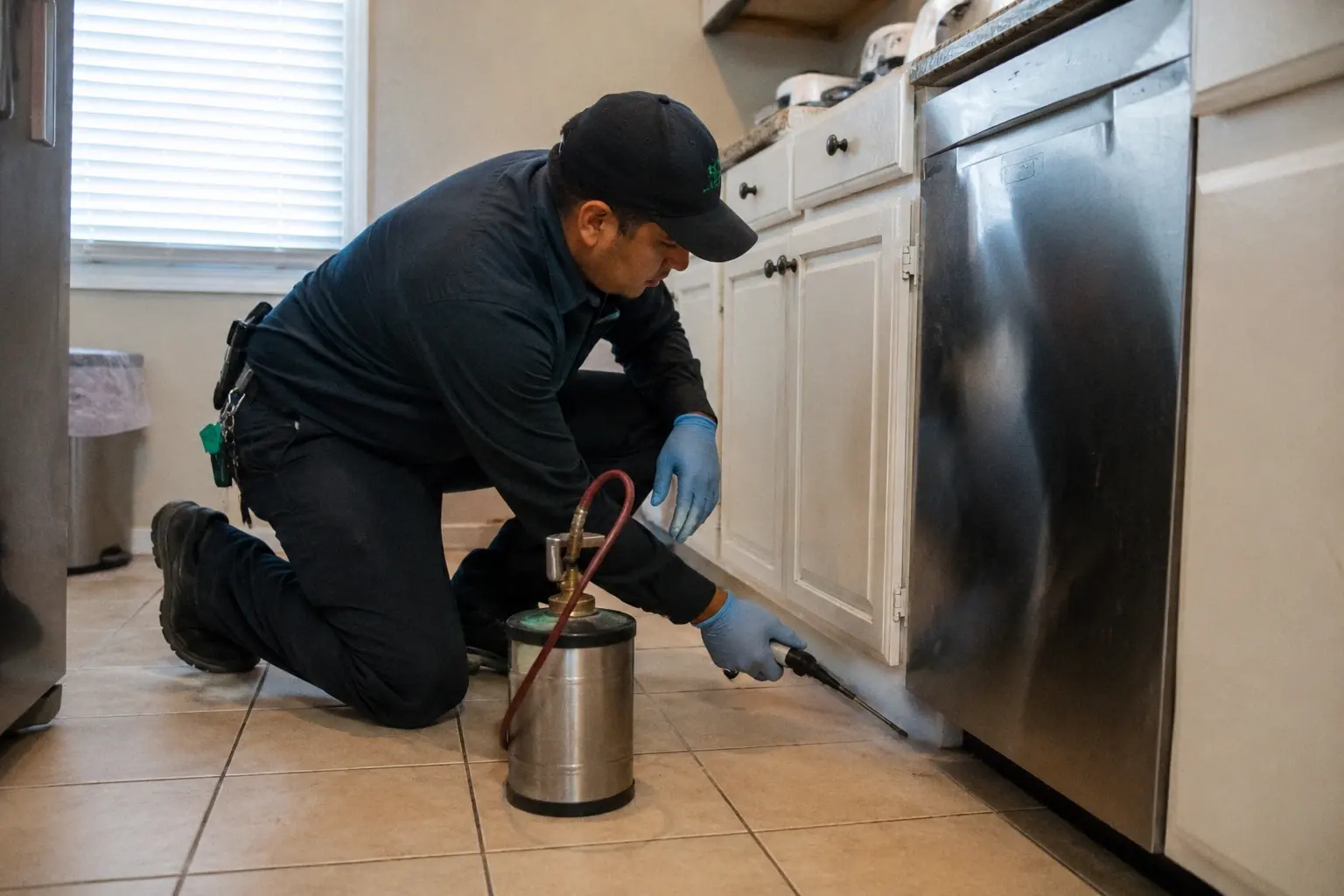
General pest control in Georgetown covering ants, roaches, spiders and silverfish with interior and exterior treatment
Learn about General Pest ControlWalburg sits out on the older rural stock northeast of Georgetown proper, off toward Weir, and a fair share of that housing predates the slab-on-grade subdivisions closer to town. That means pier-and-beam and small crawl spaces show up here more than in newer Georgetown neighborhoods. A crawl space gives subterranean termites a way in that a slab does not — direct wood-to-soil contact, no concrete barrier to tube across. An inspection out here checks the crawl space and the foundation piers for mud tubes and moisture, not just the slab perimeter. Fire ants are a given in the yard either way.
Yes. Fire ants don't care whether a lot sits inside Georgetown's newer subdivisions or out past Walburg on the older acreage — they build mounds wherever the soil stays workable, and a good rain gets new ones started fast. The difference out here is the yards tend to be bigger and less manicured, so mounds can sit unnoticed near a fence line or a pasture edge for a while before anyone treats the area or knocks them down.
The termite species active around Walburg is the eastern subterranean termite, and it swarms on warm days after rain, mostly between February and May. On the older pier-and-beam houses common out here, the first sign is usually mud tubes climbing a pier or foundation post rather than a slab edge, since there is no slab to climb.
A pier-and-beam house outside Walburg has an open crawl space rather than a sealed slab, so moisture underneath doesn't just sit against concrete, it sits against exposed wood framing. That's the detail an inspection has to catch early, because once ground moisture reaches the joists a termite colony has an easy way in that a slab home doesn't offer.
Walburg is far enough out that response times run a little longer than they do closer to Georgetown proper, but the licensed pros we connect you with still cover the area on the same schedule as anywhere else in the county. Anyone on rural acreage near Walburg should expect the same inspection and treatment options as a house closer in.
There is no fixed after-hours crew sitting idle waiting for the phone to ring. What exists is a routing process: your call goes to whichever licensed local pro can actually reach Walburg that day. Evenings and weekends are covered less consistently than a weekday morning, so if the problem can wait until the next business day, it is worth asking whether that saves you the after-hours rate.
Every neighborhood here has its own pattern, whether that is greenbelt scorpions, roof rats along the fence line, or fire ant mounds showing up after the first real rain. Call and name your street or subdivision. The licensed pros we connect you with will already know what to expect nearby.
Call (866) 829-2897