Most calls in Georgetown come down to a short list of pests, and the list is more predictable than people expect. What you meet depends heavily on which side of I-35 your house sits on, what season it is, and whether you're near the San Gabriel or out toward the Sun City side of town. This is a routing post, not a deep dive on any one of them — it walks through what's common here, roughly in the order people actually run into it, with a link to the full page on each so you can read further once you know what you're dealing with.
Ants, Almost Everywhere
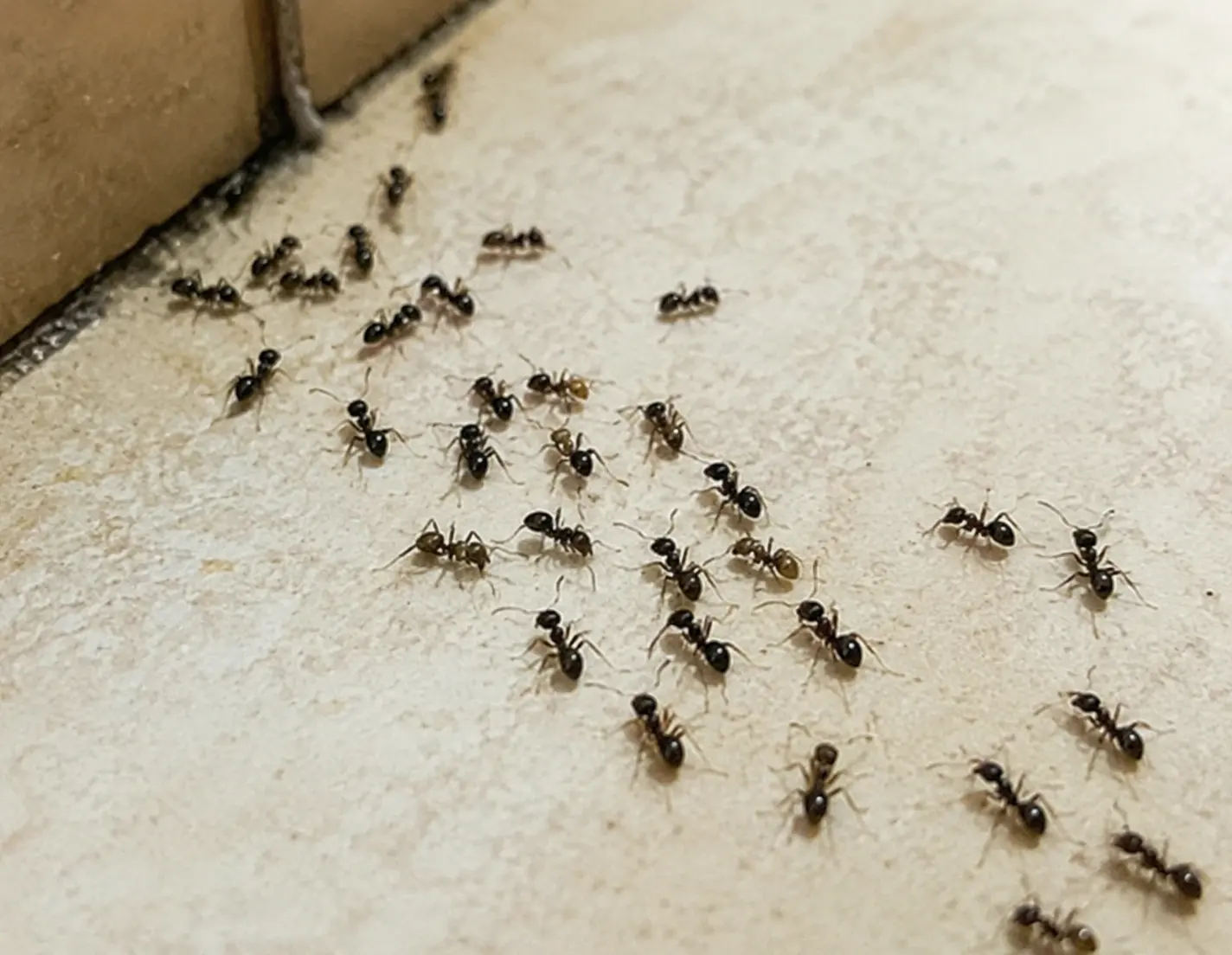
Ants are the most common call in Georgetown, and they show up nearly year-round because the winters here are too short and too mild to knock a colony back. You'll see trails along baseboards, around window frames, or streaming out from a crack in the slab near the kitchen or a bathroom. Some years bring bigger flare-ups after rain, since a wet spell along the San Gabriel or in low-lying yards near Blue Hole pushes colonies to move. It's rarely one ant, one entry point — a full look at the species and what treats them is on its own page.
Ants Are the Most Common Call Around Georgetown
Roaches are the second most common sign people search for, and in Georgetown they're mostly a moisture-and-food story rather than a dirty-house story. German roaches cluster in kitchens and bathrooms, especially in older Old Town homes with more plumbing runs and joints for them to hide in. Larger roaches turn up outdoors around mulch beds, woodpiles, or near the river parks, and wander in through a gap under a door or a poorly sealed utility line. Either kind means an entry point somewhere close to water.
Roof Rats Come In Overhead, Not Underneath
Ants are usually the first pest a Georgetown household notices, and the most frequent call. Small foraging trails along a kitchen counter or baseboard, often heavier after rain, point to a colony working from outside in. Odorous house ants and tiny sugar ants dominate here, and they show up in every part of town from Sun City to Teravista once the weather warms. They are a nuisance rather than a structural risk, but a trail is worth following back to its entry point, because the same gap that let ants in is wide enough for other things too.
Cockroaches and What Draws Them Indoors
Rodents in Georgetown are mostly a roof story, not a foundation story. The roof rat is the one that matters here, and it gets into a house at eave level, along a fence line, or by walking a tree limb onto the roofline, then nests in the attic or a soffit. If you're hearing movement above the ceiling at night rather than down low, that's the pattern. House mice are common too, and Norway rats do turn up, usually lower down and closer to a drainage line or standing water than up in the attic.
Fall Field Crickets Show Up by the Hundreds
The season for rodent calls tends to track the weather more than the calendar. A cold snap, even a short one, pushes them toward any warm gap in a soffit or gable vent, and Georgetown's mild winters mean that gap is worth checking well before the one hard freeze everyone remembers actually shows up. Because the entry point is almost always overhead, checking the ground floor and skipping the roofline is the most common way people miss where they're actually getting in.
Spiders Are Mostly a Sign of Something Else
Roaches come in a distant second, and in Georgetown that is mostly the German cockroach, found around kitchens, bathrooms, and anywhere with a steady water source. They travel in on grocery bags, secondhand furniture, or through a shared wall in denser housing, and they breed fast enough that a small sighting can turn into a real infestation within weeks if it is ignored. Unlike ants, a roach problem rarely resolves on its own, and it tends to point to a moisture issue somewhere in the house that is worth finding regardless of the pest.
Termites and the I-35 Ground Split
Spiders in Georgetown are mostly a sign that something else is already in the house, since most species are there to eat other insects rather than to get in on their own. Webs collecting in garage corners, under eaves, or around outdoor lighting near a porch are normal and mostly harmless. The exception people actually ask about is a spider hiding in seldom-disturbed spots like a garage shelf or a stack of firewood, which is worth knowing how to identify rather than assuming every spider in the house is one to worry about.
Bed Bugs Have No Season and No Pattern
The split between the two sides of I-35 matters here more than most homeowners realize. West of the interstate, thin soil over fractured limestone drains sideways rather than down, so ant colonies and roaches move along foundation cracks looking for the moisture that karst ground keeps redirecting. East toward the Blackland Prairie, spiders and rodents take over as the main entry-point problem, working fence lines and roof edges instead of slab cracks. Season plays a role too: crickets swarm porch lights every fall in numbers nobody plans for, while roof rats work year-round with no winter break to slow them. Georgetown's ground doesn't behave the same way on both sides of the highway, and neither do the pests that get in.
Wasps and Other Stinging Insects in Warm Months
Late summer into fall, Georgetown gets a very specific and very predictable event: the fall field cricket emergence. Black crickets show up in large numbers almost overnight and pile up wherever there's light at night — porch fixtures, garage doors, storefronts along Austin Avenue or out toward Wolf Ranch Town Center. It looks alarming because of the sheer number, but it's a lighting problem more than a pest-control one; turning outdoor lights off early or switching the bulb type does more than any treatment will.
Why the West Side and East Side Differ
Spiders round out the list, and in most Georgetown homes they are a sign that something else is already present, since spiders follow the insects they feed on. A few webs in a garage corner or along an exterior eave are normal and rarely worth treating on their own. What is worth noting is where the webs cluster, because a heavy concentration near one entry point, a window well, a gap under a door, usually means that spot is letting in more than spiders and is worth sealing regardless.
When a Sign Is Worth a Second Look
Season shapes a lot of this. Ant activity climbs with spring and summer rain, roach pressure holds steady indoors year-round wherever moisture collects, and rodents push harder into attics as the weather turns colder outside and the inside of a house stays the more comfortable option. None of these pests get a real winter break in Georgetown, since the cold snaps that do arrive pass quickly. Watching for the right pest at the right time of year, rather than treating everything the same in every month, is most of what separates a quick fix from a repeat call.
Dealing with this in your home?
Georgetown posts start the same way, and it always shows: a scorpion crossed the tile at midnight, a fire ant mound came up overnight off Williams Drive, something is moving in the attic above Berry Creek. This page pulls those threads apart one at a time — what the striped bark scorpion actually wants, why roof rats never touch your slab, why the San Gabriel doesn't explain the ants. By the end you'll know which of those calls can wait until morning.