A wasp nest under an eave usually shows up before the wasps do. Paper wasps build an open, umbrella-shaped comb with no outer covering, tucked against a soffit or a porch corner, and it starts as something the size of a coin. By the time it is noticed in Georgetown it may already hold a working colony, not just a queen. Red wasps build a similar open comb but tend to pick a slightly more sheltered spot, under a deck rail or inside a grill cover. Yellowjackets are the one to be careful with: their nest is usually hidden, either in a wall void or underground, and the only sign is a steady line of wasps going in and out of a gap in the siding or a hole in the lawn.
Does the Nest Actually Need to Go
Not every nest needs to come down. A paper wasp nest in a back corner of the yard, away from a door, a window, or anywhere someone stands or walks, can often be left alone through the season. Paper wasps are not especially aggressive unless the nest itself is disturbed, and they do some good in the yard picking off caterpillars and other soft-bodied insects. The nests that matter are the ones over a doorway, near a mailbox, above an air conditioning unit, or low enough that a mower or a hedge trimmer will hit them. A nest near Southwestern University housing or a rental near Wolf Ranch Town Center, where foot traffic is constant, is a different case than one at the back fence line of a Berry Creek lot.
Why Dusk Is the Safer Time
Time of day changes everything about how a nest behaves. Wasps are out foraging during the day and the colony is at its most active and most defensive from mid-morning through early evening. At dusk, most of the colony has returned to the nest and settled, and that is when activity is lowest and a nest is easiest to approach without provoking a mass response. It is also easier to see clearly at dusk than at true night, when a flashlight beam can agitate the colony instead of just illuminating it. Anyone dealing with a nest along Williams Drive or out toward DB Wood Road, where many homes back onto brush or open field, should plan around that window rather than the middle of the day.
The Real Risk of DIY
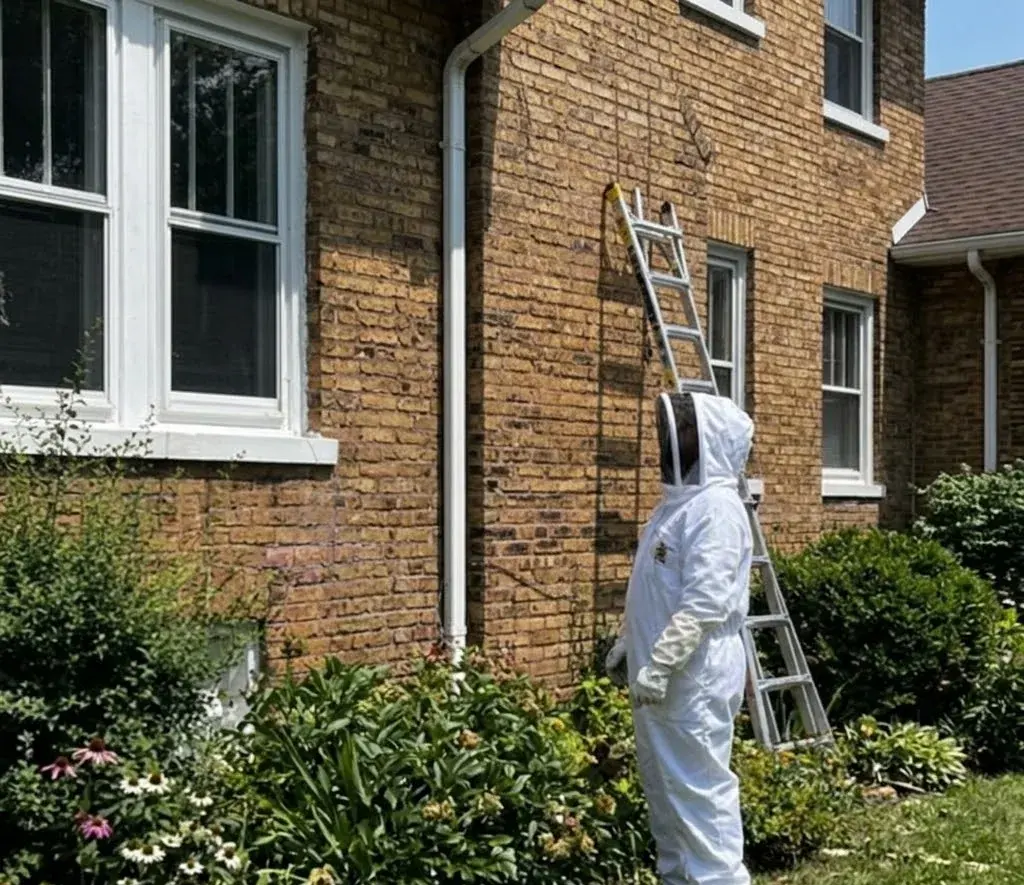
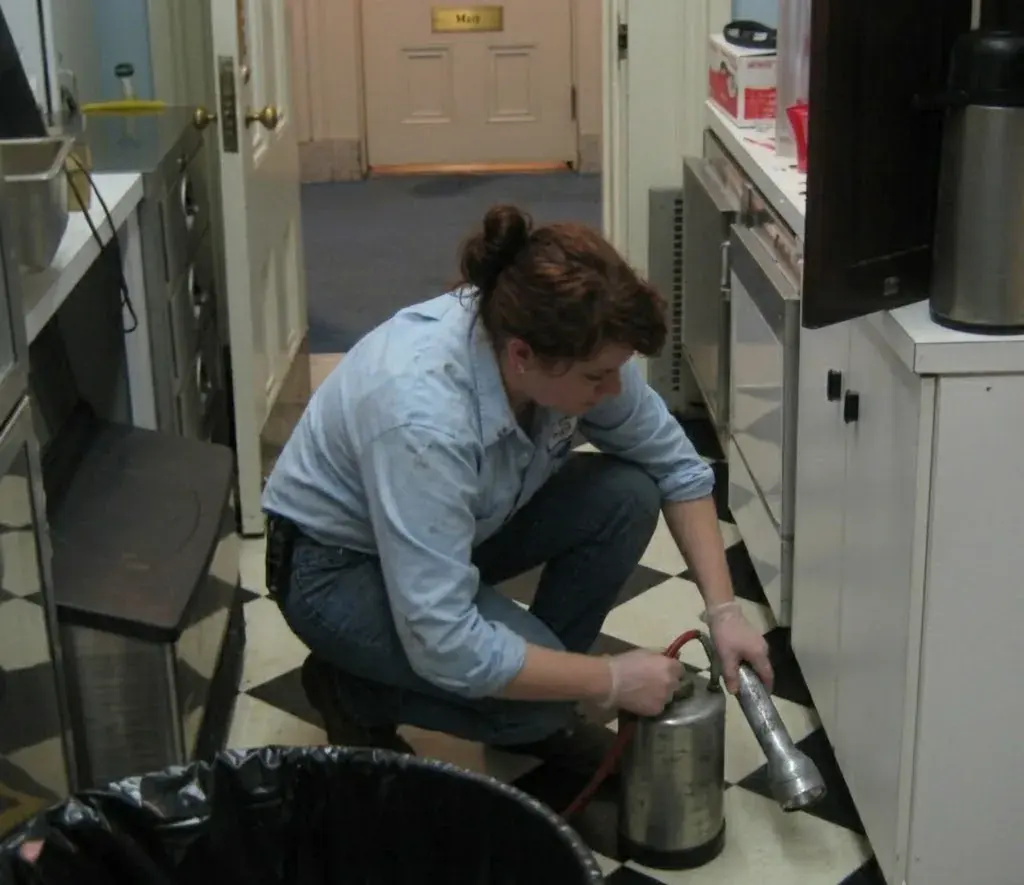
Doing it yourself carries real risk, and not just from stings. An aerosol wasp spray with a long-range jet is built to be used from several feet away, which is the right idea, but it does nothing for a hidden yellowjacket nest in a wall void, and spraying into a wall can push agitated wasps into the house through an outlet or a gap in the drywall rather than killing them outright. A ladder next to an eave, at dusk, with a can in one hand, is also just an awkward and unstable combination, and a fall is a more likely injury than a sting. Anyone with a known allergy, or anyone unsure whether they have one, should not be the person on the ladder at all.
When to Walk Away and Call
Walking away and calling for help makes the most sense when the nest is a yellowjacket colony rather than paper wasps, when it is in a wall, soffit, or anywhere it cannot be reached and confirmed fully destroyed from the ground, or when it sits over a door, a walkway, or anywhere near St. David's Georgetown Hospital-adjacent care routes or a school pickup line where a disturbed colony would put more than one person at risk. The licensed pros we connect you with carry protective equipment built for this, and they can treat a void nest properly instead of just knocking down what is visible. A homeowner in Sun City or Teravista dealing with a nest low in a fence line is a reasonable do-it-yourself case; a nest inside a wall near a bedroom is not.
Dealing with this in your home?
Georgetown posts start the same way, and it always shows: a scorpion crossed the tile at midnight, a fire ant mound came up overnight off Williams Drive, something is moving in the attic above Berry Creek. This page pulls those threads apart one at a time — what the striped bark scorpion actually wants, why roof rats never touch your slab, why the San Gabriel doesn't explain the ants. By the end you'll know which of those calls can wait until morning.