Most of what shows up around a Georgetown house in a given year does not need a phone call. A few ants on the kitchen counter after a dry August, a cricket that got in when the door was open, a wasp nest under the eaves in April — these are things a homeowner can watch and usually handle. The harder question is where that line sits, and it is not always obvious from inside the house. This post is about the signs that mean a problem has moved from occasional to established, because that is the point where the licensed pros we connect you with can actually do more than a can of spray from the hardware store on Austin Avenue.
Numbers, Not Just Sightings
One bug is a sighting. A dozen in a week, in the same spot, is a different situation. Ants in Sun City or Cimarron Hills that reappear along the same baseboard every few days, or crickets piling up at a porch light on Williams Drive night after night through the fall emergence, point to a nest or a colony working nearby rather than a one-off visitor. Scale matters more than species here — a single scorpion under a patio chair in Berry Creek is worth a look before bed, but a scorpion every week all summer means something is bridging the gap where the clay has pulled back from the slab edge.
Repeat Sightings After Treating
If a store-bought spray or bait knocked a problem back for a week or two and then it came back in the same place, that is a sign the source was never reached. This happens a lot in Georgetown because the pests that matter most here live somewhere a homeowner cannot easily get to — a roof rat nesting in the attic over Teravista or Wolf Ranch, or a termite colony working the soil under a slab near the San Gabriel River. Surface treatment kills what is out walking around and leaves the nest untouched, so the return is not bad luck. It is the treatment telling you where it did not reach.
Damage, Not Just a Nuisance
Droppings are the clearest sign something has moved in rather than passed through. A few ants at a windowsill or one cricket by the porch light isn't evidence of anything beyond an average week in Georgetown. Rodent droppings along an attic joist near Williams Drive or DB Wood Road, though, mean an animal is living there, not visiting. So does a scattering near a pantry shelf or behind the water heater. The number matters more than the sighting: one dropping could be old, a cluster in the same spot day after day means a nest is close by and the animal is using that route regularly.
When Treatment Doesn't Hold
Repeat sightings after you've already treated the problem are different from a first sighting. If you set traps, sprayed a perimeter, or sealed an obvious gap and the activity comes back within a few weeks, that usually means the entry point wasn't the only one, or the nest itself was never reached. Roof rats in particular get in overhead, along a fence line or where a tree limb meets the fascia, so a ground-level fix can look successful for a short while and then fail once the animal finds the same gable vent again. A single return visit from an ant trail after rain is normal. A rodent back in the same corner of the attic a month after you thought it was handled is not.
Anything That Stings
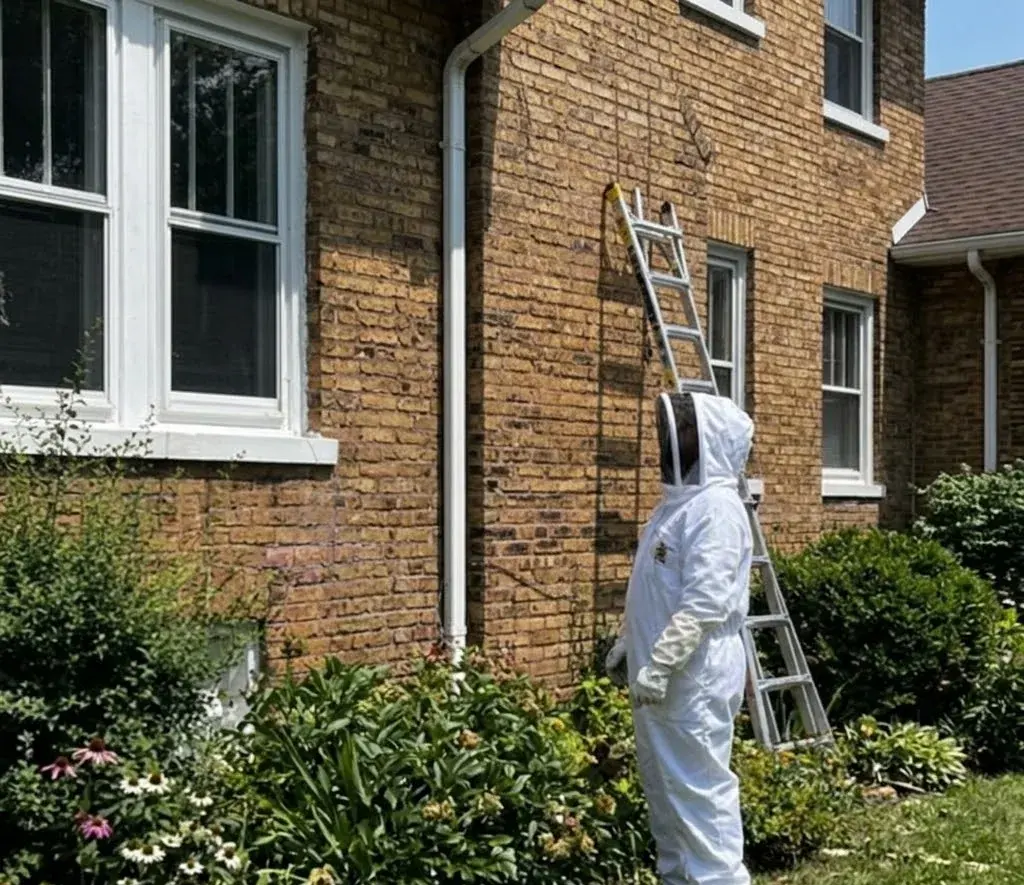
A wasp or hornet nest under a porch roof, in a shed near Garey Park, or tucked into a gable vent is a different category of problem from ants or crickets, because the risk is not property, it is getting stung while trying to deal with it. A nest that is small, out in the open, and away from a door is one thing to watch. A nest that has grown, that is inside a wall void or soffit, or that is anywhere near where kids or pets pass daily, is worth having removed by someone who can do it without getting stung repeatedly in the process. This is one of the few categories where waiting does not make the job easier — nests only get bigger through the season.
Anything In a Wall
Scratching, rustling, or a smell coming from inside a wall or ceiling almost always means something is living in a space nobody can reach without opening it up. In Georgetown this is usually a roof rat that came in overhead — along a fence line, a tree limb near the roof, or a gap where a branch touches the fascia — rather than anything that came in at ground level. Droppings in the attic, along a wall top, or in a cabinet back corner point the same direction. Once an animal or an infestation is inside a wall cavity, the search and the fix both need access most homeowners do not have and should not be cutting into drywall to get.
What Usually Doesn't Need a Call
None of this means every bug in the house needs a call. The line is repeat sightings after you have already treated, droppings in the same spot week after week, damage rather than a single startled bug on the wall, anything structural like a hollow-sounding sill or a mud tube on a pier, anything that stings when disturbed near the house, and anything moving inside a wall or ceiling rather than across a floor. A cricket on the porch after dusk in Georgetown is normal. A nest that keeps producing more of itself after you have sprayed is not, and that gap is exactly what the licensed pros we connect you with are for.
Dealing with this in your home?
Georgetown posts start the same way, and it always shows: a scorpion crossed the tile at midnight, a fire ant mound came up overnight off Williams Drive, something is moving in the attic above Berry Creek. This page pulls those threads apart one at a time — what the striped bark scorpion actually wants, why roof rats never touch your slab, why the San Gabriel doesn't explain the ants. By the end you'll know which of those calls can wait until morning.