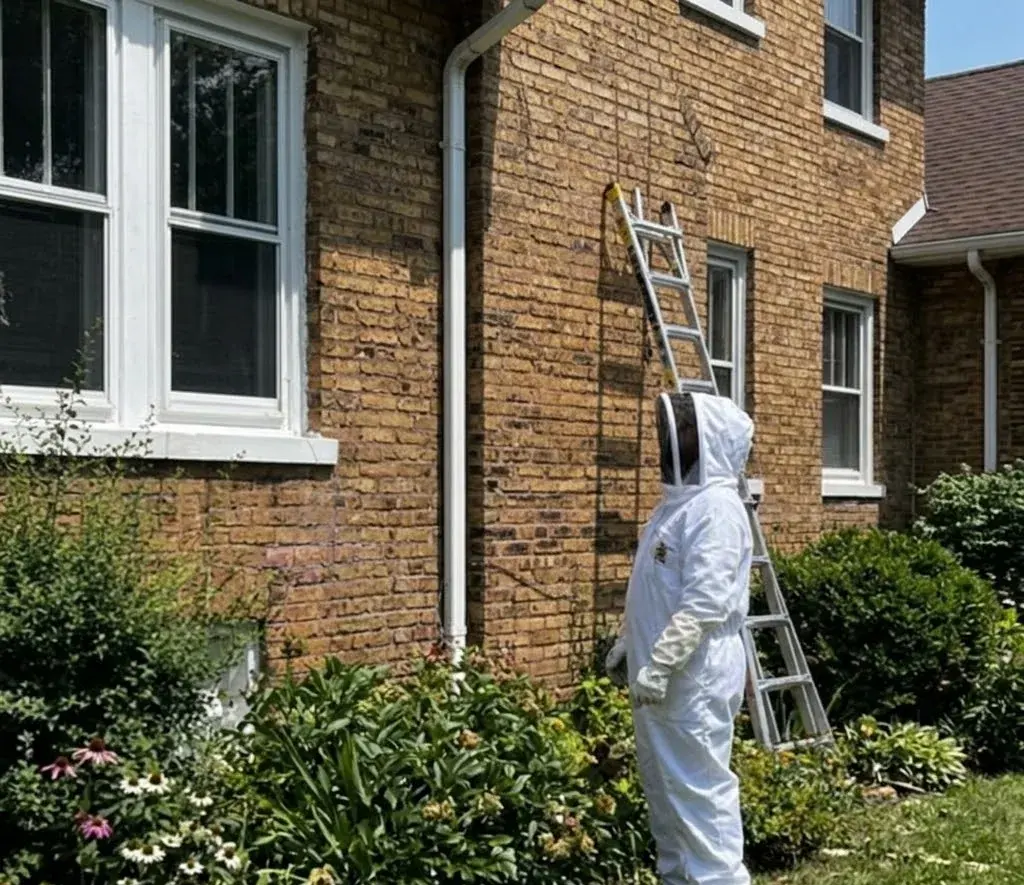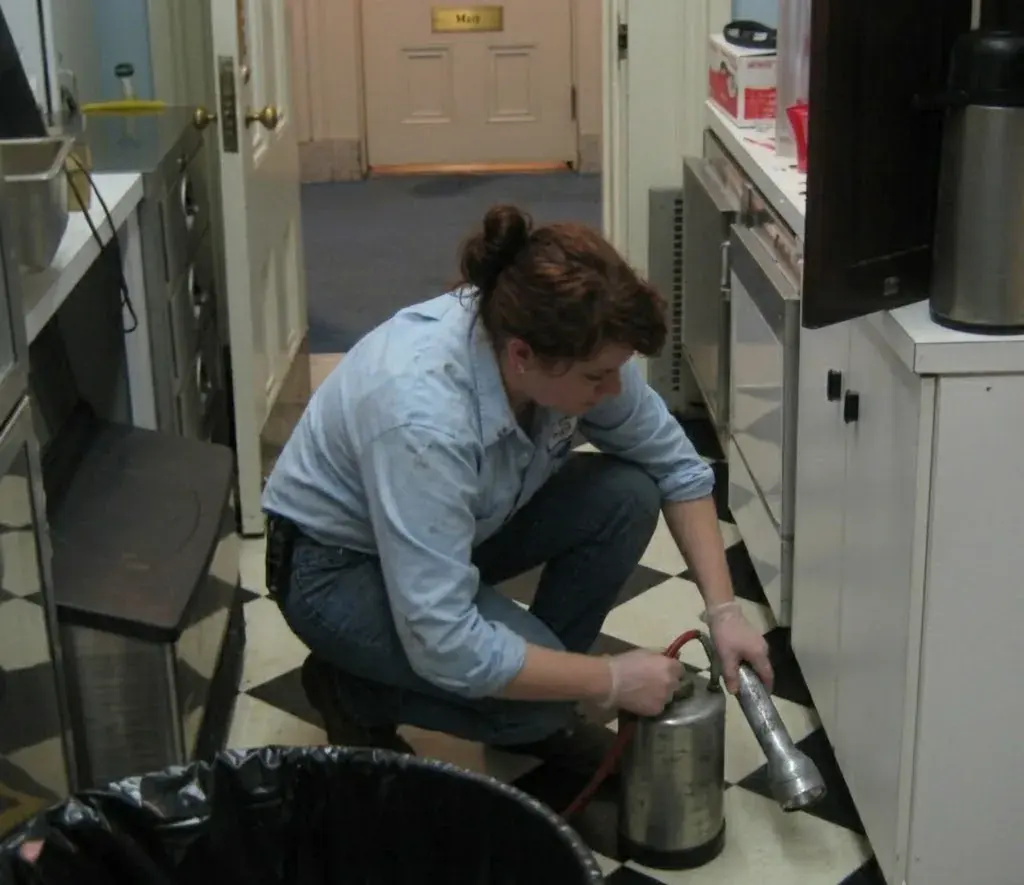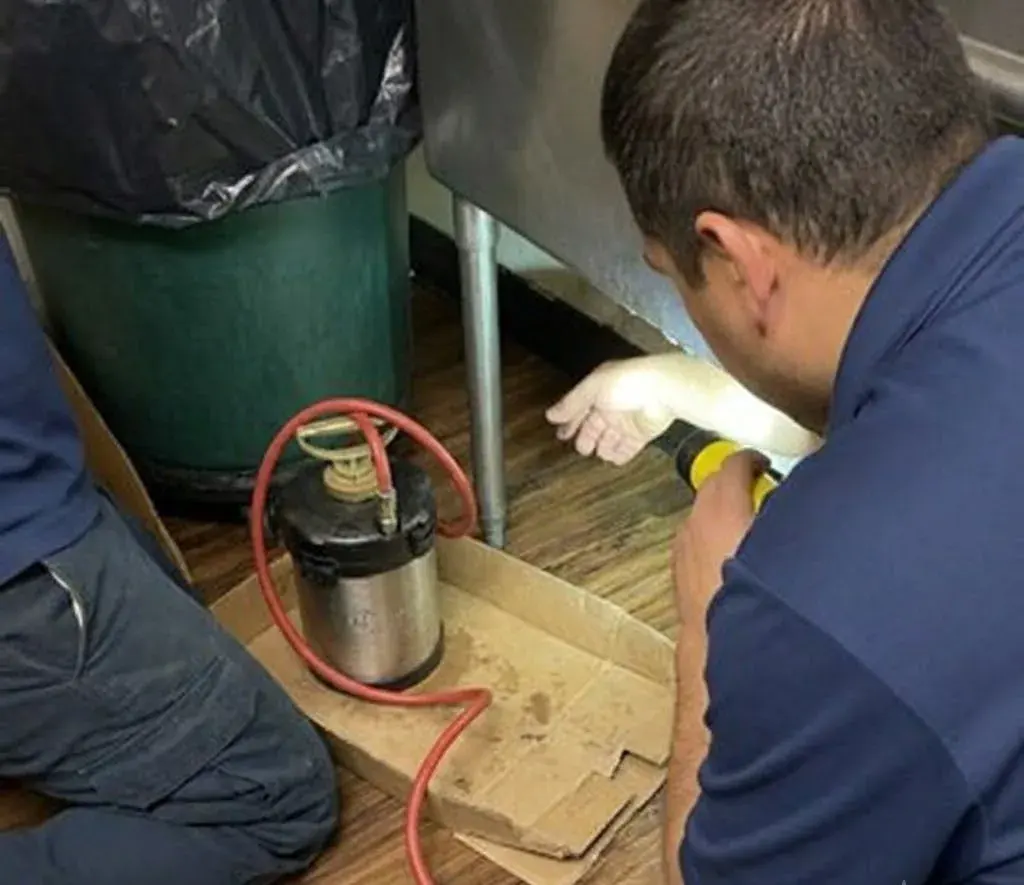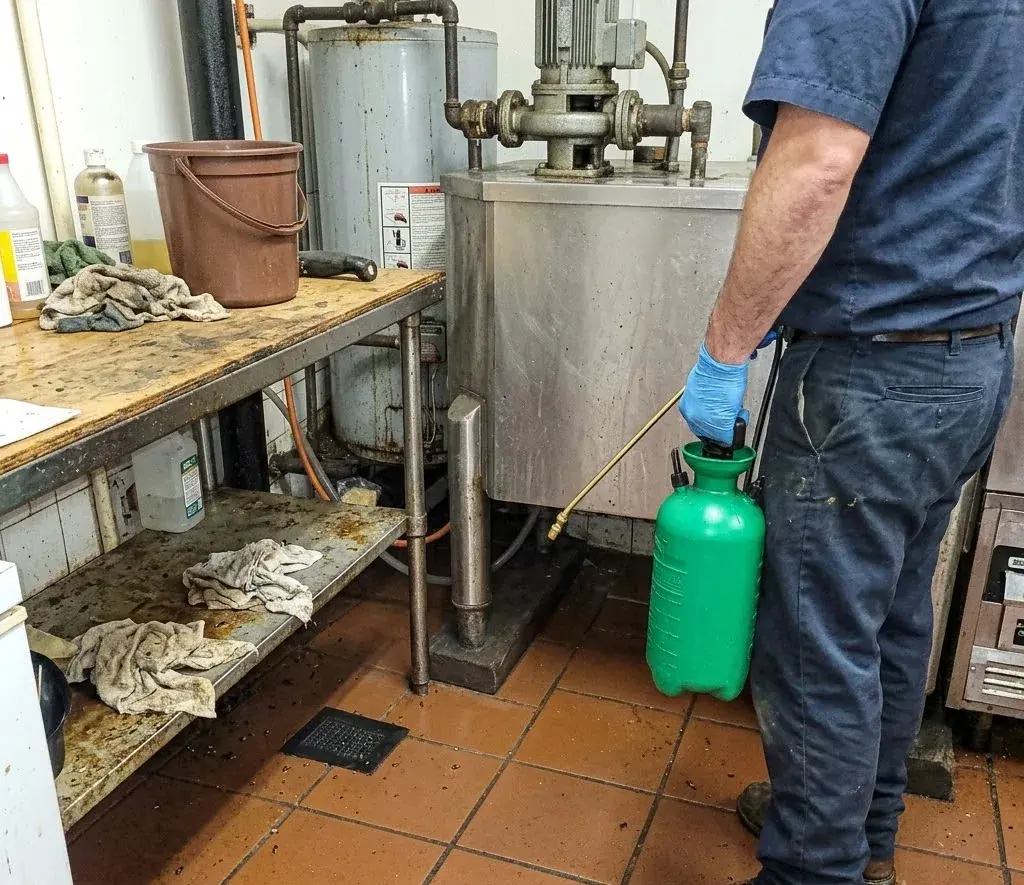
Georgetown gets three kinds of stinging insect calls, and most people use the words interchangeably even though the insects and the response should not be. Paper wasps build the open, umbrella-shaped nests you see tucked under eaves and soffits all over Sun City and Old Town from spring onward. Yellowjackets show up later in the year and nest differently, often hidden in a wall void or a gap in the ground rather than out in the open. Hornets are a third, less common category people mean when they say either of the first two. Bees are a fourth thing entirely, and the one homeowners most need to get right before they reach for anything.
The Paper Wasp Nest
A paper wasp nest looks like an exposed gray honeycomb, usually no bigger than a hand, hanging from a single stalk under a roofline, a porch ceiling, or a fence rail. You can see individual cells and often the wasps sitting on the outside of it, since there's no outer shell. Colonies stay fairly small, a few dozen wasps at most, and the insects themselves are slender with long legs that dangle visibly in flight. They're defensive around the nest itself but not looking for a fight away from it — mowing near an eave or reaching up to trim a hedge is what usually triggers a sting, not just walking through a yard in Berry Creek or Teravista.
The Yellowjacket Nest
Yellowjackets are shorter, stockier, and move faster and more erratically than a paper wasp. Instead of one exposed comb, their nest is enclosed — a papery outer shell built into a wall void, an old rodent burrow, a gap under a slab edge, or sometimes low in a shrub. Colonies get much larger than a paper wasp's, often into the hundreds, which is part of why a disturbed yellowjacket nest produces far more stings at once. They're the ones responsible for most of the aggressive, unprovoked-feeling encounters in late summer and fall, especially around Wolf Ranch and Cimarron Hills yards backing onto greenbelt where an in-ground nest can sit unnoticed until a mower or a dog finds it.
Where Hornets Fit In
Georgetown sees a late-season shift that catches people off guard. Paper wasps and red wasps show up first, building open umbrella-shaped combs under eaves and soffits from spring onward, usually somewhere you can point to. Yellowjackets come later in the year and build differently: a hidden colony packed into a wall void or an old rodent burrow in the ground, often at Garey Park, San Gabriel Park, or a quiet stretch of yard backing up to Berry Creek before anyone notices it's there. By the time it's obvious, the colony is already large, which is part of why yellowjackets get blamed for more stings than paper wasps do.
When It's Actually a Bee
Bees are not wasps and shouldn't be treated the same way. A honeybee colony is dense with a distinct hum, built around wax comb rather than a papery shell, and honeybees are far less inclined to sting away from the hive than yellowjackets are. Because honeybees are important pollinators, the standard approach when one turns up in a wall, a shed, or a tree near Water Oak or Katy Crossing is relocation rather than elimination — the licensed pros we connect you with can tell a honeybee swarm from a wasp nest on sight and will handle a bee colony differently for exactly that reason. If there's any doubt which of these is on the property, that's the detail worth getting answered before deciding what to do next.
Dealing with this in your home?
Georgetown posts start the same way, and it always shows: a scorpion crossed the tile at midnight, a fire ant mound came up overnight off Williams Drive, something is moving in the attic above Berry Creek. This page pulls those threads apart one at a time — what the striped bark scorpion actually wants, why roof rats never touch your slab, why the San Gabriel doesn't explain the ants. By the end you'll know which of those calls can wait until morning.