Georgetown does not get a winter in the way people moving here from farther north expect. There is no hard freeze that lasts, no snow load, no stretch where the ground shuts down and pest activity stops with it. What actually happens is a slow-down and a shift indoors. Rodents, spiders and a handful of insects that would otherwise stay outside start looking for somewhere warmer and drier the moment the first real cold front comes through off the plains, and a slab-on-grade house on Edwards limestone gives them plenty of ways in if nobody has checked for them. This is a checklist for that shift, not for a season that pauses.
Overwintering Pests to Expect
A handful of species overwinter rather than die off when the nights get cold, meaning they find a sheltered spot and go dormant until it warms up again. In Georgetown that mostly means roof rats and house mice looking for an attic or a wall void, along with spiders, crickets and the occasional wasp queen tucked into an eave or a stack of stored boxes in the garage. None of this is dramatic. It is a handful of animals solving the same problem a homeowner would: finding somewhere dry and out of the wind. The trouble starts when that somewhere is inside the house rather than under a rock pile in the yard.
Sealing the Attic and Vents
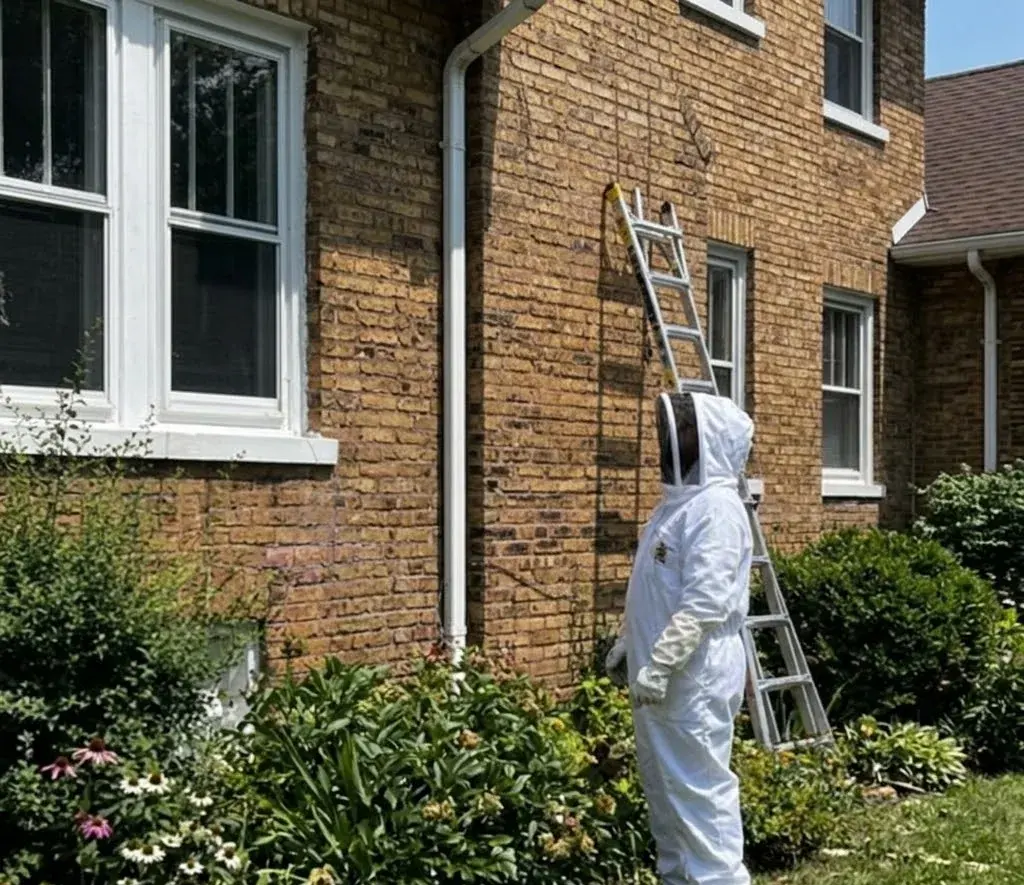
Because the roof rat is the rat that matters in this part of Central Texas, the search for gaps has to start at roof level rather than at the foundation. Roof rats come in overhead, along fence lines and tree limbs that touch the roofline, and through gable vents, soffit gaps and the small gap where a limb rests against the fascia. Walking the outside of the house and looking up, rather than down, is the most useful ten minutes anyone can spend before the cold sets in. Any vent cover that has come loose, any gap where a pipe or cable enters the attic, and any tree limb touching the roof are worth dealing with before a rodent decides the attic is a better winter address than the tree.
The Firewood Question
A firewood stack against the house is one of the most common ways a cold-season pest problem starts, because it is exactly the kind of shelter overwintering insects and the occasional rodent are looking for, and it sits right against the slab. Keeping firewood raised off the ground and a reasonable distance from the exterior wall, rather than stacked against it, cuts down on what gets carried inside a few logs at a time. It is worth knocking logs together and giving the stack a quick look before bringing an armful in, since spiders and the odd overwintering insect will use a woodpile exactly as they would a brush pile in the yard.
Checking Under an Older House
Almost all Georgetown housing built since the 1970s sits on a slab, so this does not apply to most of the city. Where it does matter is Old Town, around the Square, and some of the older stock out toward Weir and Walburg, where pier-and-beam construction and a small crawl space are more common. On those houses, a cold-weather check should include a look under the house for any gap in the skirting or foundation vents that would let a rodent or a cold-seeking insect in underneath, since that space stays warmer than the outside air and makes an easy first stop before an animal works its way up into the walls.
What Not to Worry About
There is no frost heave here, no snow load, and no real winter dormancy that shuts pest activity off the way it might in a state with a hard freeze. Termite swarms slow down but the colonies themselves do not go anywhere, and a wet spell in December or January can bring the same rodent and spider activity a normal fall does. Georgetown residents in Sun City, Berry Creek, Teravista and the neighborhoods along Williams Drive are better served treating the cold months as a lower-intensity version of the rest of the year than as an off season to ignore. A quick check of the attic, the vents and the woodpile before the first real cold front does more than waiting until something turns up inside.
Dealing with this in your home?
Georgetown posts start the same way, and it always shows: a scorpion crossed the tile at midnight, a fire ant mound came up overnight off Williams Drive, something is moving in the attic above Berry Creek. This page pulls those threads apart one at a time — what the striped bark scorpion actually wants, why roof rats never touch your slab, why the San Gabriel doesn't explain the ants. By the end you'll know which of those calls can wait until morning.