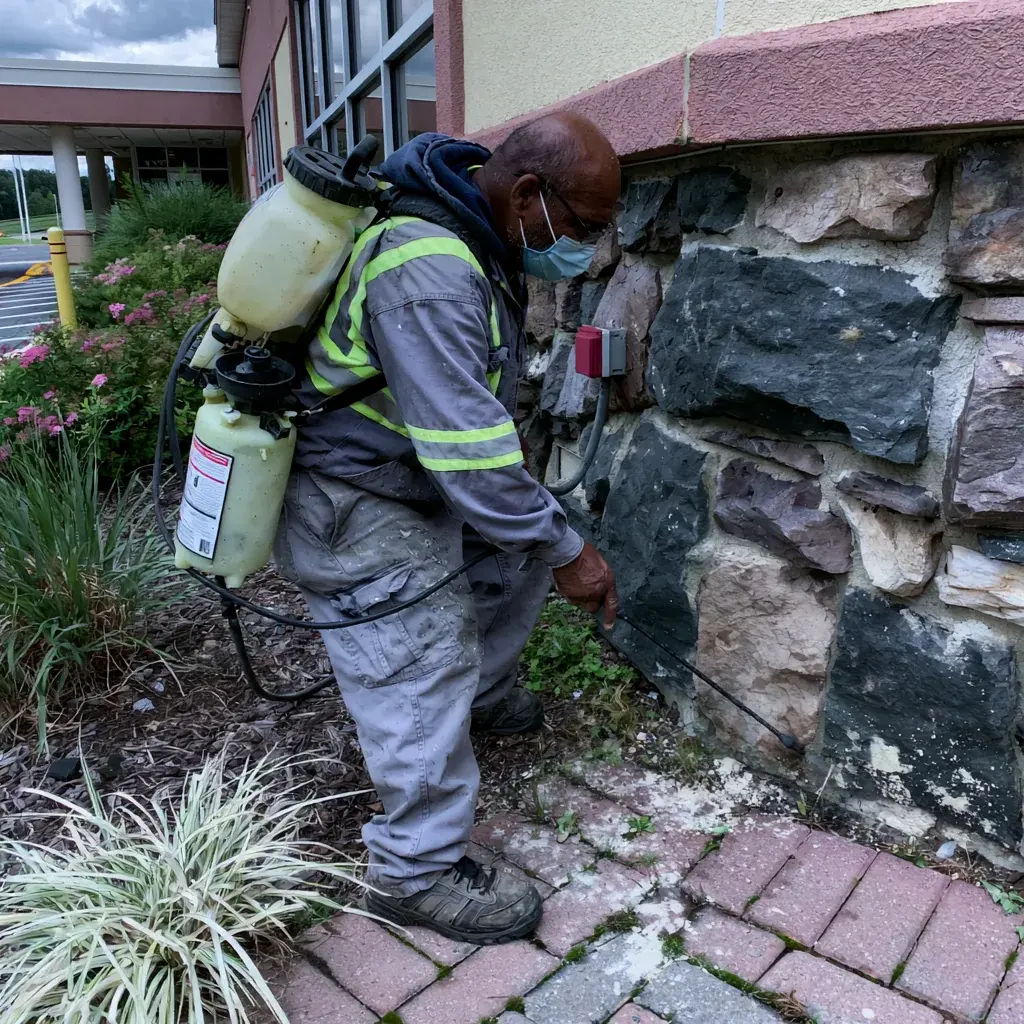
Why Birds in Vents and Soffits Do Well on This Ground
Georgetown's newer subdivisions, Wolf Ranch, Teravista, Sun City, are built with continuous soffit venting and gable vents that give a bird a dry, sheltered gap about the size of a dryer hose. Older Old Town houses have the same problem in a different form: gaps that opened up as fascia boards aged.
Open ground nearby doesn't help. Homes backing onto San Gabriel Park, Garey Park, or the tree line along the San Gabriel River sit close to the kind of cover birds already nest in, so a house eave or bathroom vent reads as just another ledge.
Late summer brings the fall field cricket flood, and Georgetown's lit storefronts along Austin Avenue and the pump islands near I-35 draw them by the thousands once the weather turns. A porch light left burning past dark pulls in more crickets than a whole can of spray keeps out. Swapping a white bulb for a warmer one, or just shutting outdoor lights off earlier, thins the swarm more than most homeowners expect.
Quick Identification
- Common entry points
- Roof vents, soffit gaps, gable louvers
- Usual culprits
- House sparrows, pigeons, occasional starlings
- Peak activity
- Spring nesting into early summer
- Typical sign
- Droppings staining soffit and siding
- Where they nest
- A single streak is normal traffic; a buildup that keeps growing week to week points to a nest still in use directly above it.
- No-Obligation Quotes
- Nesting activity picks up in spring and runs into early summer, which is when new gaps and fresh droppings tend to show up first. A vent that sat quiet all winter can have birds in it within days once the weather turns.
- Annual Contract
- an estimated $189–$499
Call Now for a Free Inspection
Bats roosting in the same gable vents. A squirrel is heavier and moves in a running scramble across a wider stretch of attic, while a bird's sound stays put at one vent or soffit opening. Squirrel damage also tends to include gnawed wood or wiring near the entry, which a bird does not do — a bird works with what gap is already there rather than making one.
What Treating Birds in Vents and Soffits Actually Involves
The first step is confirming what's actually in there before anything gets touched. The licensed pros we connect you with check whether a nest is active, eggs, chicks, or adults still coming and going, before deciding whether to wait, exclude, or clean the vent out.
Once a nest is confirmed empty, the fix is a one-way exclusion door or mesh screen fitted over the entry point, so any bird still nearby can leave but not get back into the attic or soffit cavity. Old nesting material gets pulled out and the gap gets screened for good, not just patched over.
A scorpion under the bathroom door in July gets a same-day call. A rat scratching in the attic over Wolf Ranch or Teravista in January gets put off for a week, then two. Both are worth acting on quickly, just for different reasons — one is a safety question for anyone with kids or pets in the house, the other is a structural one that gets more expensive the longer a roof line stays open.
Local pros who know Georgetown ground
| Scorpions, Fire Ants, Roof Rats |
Local Pros Along Williams Drive |
|---|
| Scorpion activity near Sun City and Cimarron Hills | Roof Rats In Attics |
| What actually works against fall crickets near Georgetown porches | Scorpion Season Watch |
| Fire ant mounds after rain, fall crickets under every porch light | Fire Ant Mounds Return After Rain |
Scorpions, Ants, Roof Rats HandledMost wild birds aren't something to trap, kill, or pull a nest away from casually, especially while there are eggs or chicks in it. The safer approach is to wait until the nest empties on its own, then exclude and screen so the gap can't be reused. Doing nothing for a few weeks is often the correct first move, not a delay.
With Birds in Vents and Soffits, the Mess Is the Second Job
Nesting material packed into a dryer or bathroom vent blocks the airflow it's built for, which is a fire risk with a dryer line specifically, not just a nuisance. Droppings and old nests left inside a soffit cavity also hold moisture against the wood and insulation, so a gap left unfixed for a season or two ends up costing more than the screening would have.
What You Can Do About Birds in Vents and Soffits Yourself
A homeowner can screen a vent that's already empty, and watch for new gaps opening along the soffit each spring. What's harder to judge from the ground is whether a nest is active, and pulling one out that still has chicks in it usually ends with adult birds trying to get back into a sealed opening for days.
Birds in Vents and Soffits and Safety, in Plain Terms
Dried droppings under a vent build up over seasons and can carry mites once a nest is disturbed, which is a more common complaint than anything from the birds themselves. Anyone clearing a soffit cavity by hand should wear gloves and a mask rather than working over it bare-handed.
Book a Same-Week Visit
Scorpions favor the limestone side of town, so a homeowner near Water Oak or backing onto a greenbelt off Williams Drive sees more of them than someone east of I-35. Whichever side you're on, describe what's turning up and where, and a licensed technician working in your part of Georgetown can walk the property and tell you what's actually going on.Scorpion visits usually come with an entry point already at fault — a slab crack, a loose weep screen, a gap around a laundry line. Fixing that spot is often folded into the same visit rather than billed as extra, since it's a few minutes of caulk and screen versus a repeat call in July. Roof rat exclusion works the same way: the estimate covers sealing the fascia gap or gable vent that let them into the attic in the first place, not just clearing what's already up there. pricing guide, and the service that handles this is Wildlife Removal.