Georgetown homeowners searching the pest aisle at a hardware store on Williams Drive have more choice than they did ten years ago, and some of it works. A bottle of ant bait or a can of spray labeled for scorpions or crickets is a real tool, not a placebo. The question worth asking isn't whether store products work at all, but which jobs they're built for and which ones outrun them. That line matters more here than in a lot of places, because the ground west of I-35 and the roof-level habits of the local rat push several common problems past what a label is written to handle.
What Over-the-Counter Products Actually Do
Bait stations, aerosol sprays and granular perimeter treatments sold at retail are formulated at lower concentrations than what a licensed applicator carries, and the label reflects that — it's written for a homeowner with no training, so it errs conservative on both the chemical and the instructions. For an isolated ant trail in a Teravista kitchen or a few crickets piling up at a porch light near Wolf Ranch Town Center, a bait or a spray applied correctly can genuinely end the problem. Where it struggles is anything with a nest, a colony, or an entry point the label was never meant to find. A can of spray kills what it touches; it doesn't locate where striped bark scorpions are coming in through a weep hole, and it doesn't reach a termite colony working a slab edge from underneath.
The Cost Over a Year
A single bottle of bait or a can of spray is cheap, which is the appeal, but pest pressure in Georgetown doesn't arrive once. Scorpion activity runs April through October and peaks in summer, cricket emergence hits every fall, and mosquito season stretches May into November per the county's own trap data — each of those is a repeat purchase, not a one-time fix. A homeowner treating the same weep holes and baseboards every few weeks for six months can spend more over a year than a single professional visit would cost, and still be dealing with the same striped bark scorpions each June because the product never addressed why they're getting in.
Where Over-Application Becomes the Problem
The instinct when a spray doesn't work is to use more of it, and that's where over-the-counter pest control causes its own damage. Doubling up a granular treatment around a Berry Creek foundation doesn't kill more insects; it just puts more pesticide into soil that drains sideways through the limestone fractures common on the west side of town. Repeated, heavier applications also drive resistance — insects that survive a weak or inconsistent dose pass that tolerance forward, so the next round of the same product works less well than the first. A licensed applicator works from a label and an application rate for a reason; a homeowner guessing at concentration to compensate for a product that isn't reaching the source is working against both goals at once.
The Jobs That Aren't a Homeowner Job
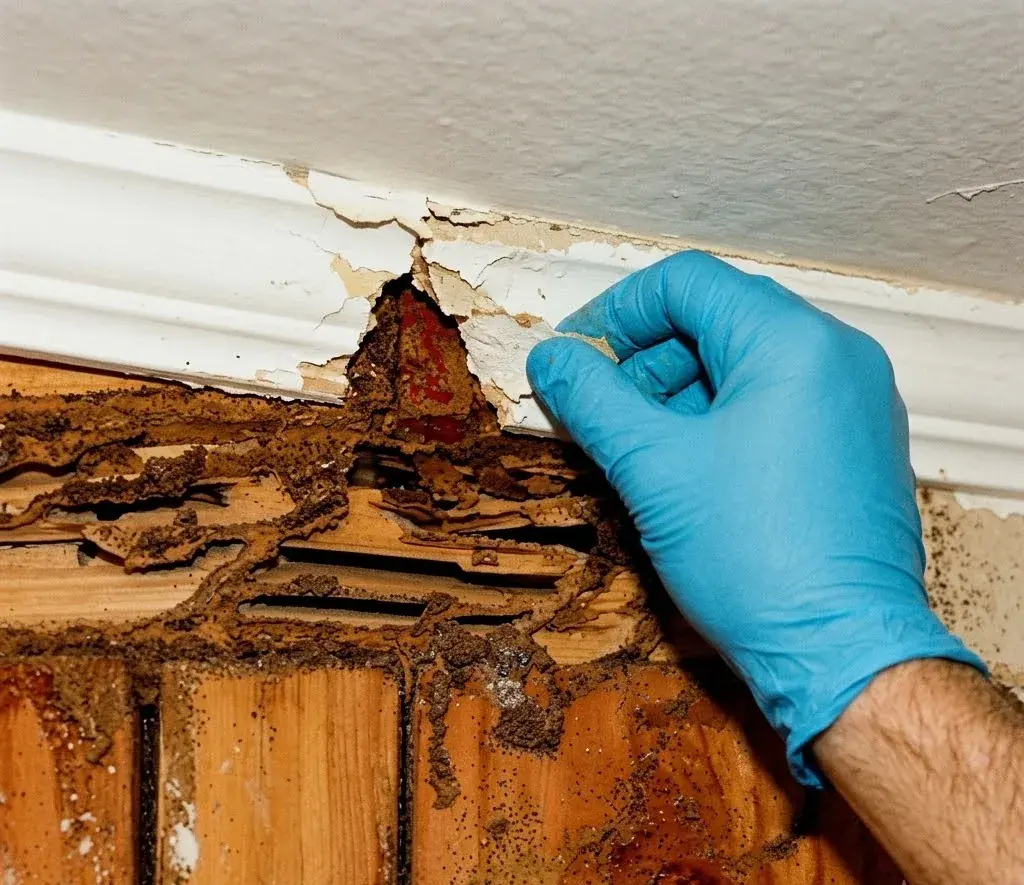
None of this means a homeowner is helpless. Sealing weep holes with copper mesh, keeping firewood off the slab, fixing the drip under an AC line and turning off unnecessary outdoor lighting near Wolf Ranch or Teravista during fall cricket season all reduce pressure without a single application. Store bait stations placed along a foundation can thin an ant trail. What over-the-counter products cannot do is confirm whether activity along a pier in Old Town is a live subterranean termite colony or an old mud tube, and they cannot legally back that judgment with the treatment disclosure Texas requires before wood-destroying insect work starts. That gap between reasonable prevention and a licensed inspection is where most Georgetown households end up calling rather than guessing.
Dealing with this in your home?
Georgetown posts start the same way, and it always shows: a scorpion crossed the tile at midnight, a fire ant mound came up overnight off Williams Drive, something is moving in the attic above Berry Creek. This page pulls those threads apart one at a time — what the striped bark scorpion actually wants, why roof rats never touch your slab, why the San Gabriel doesn't explain the ants. By the end you'll know which of those calls can wait until morning.