Waking up with bites is usually what starts the worry, but a bite on its own does not confirm anything. Mosquito bites, ant bites, and a reaction to something else entirely can all look similar on skin, and some people do not react to a bed bug bite at all for days, if ever. A Georgetown household with two adults can have one person covered in bites and the other showing nothing, from the same bed. That is normal for bed bugs and it is exactly why the physical evidence matters more than the bites themselves.
Cast Skins and What They Look Like
A bed bug sheds its outer shell every time it moves to a bigger size, five times before it reaches adulthood, and the empty shell is left behind exactly where it fed or hid. A cast skin looks like a hollow, pale-tan outline of the bug itself, translucent enough to see through, and it will not move or crush the way a live insect does because there is nothing left inside it. Finding several in one place, especially in a pile rather than scattered, points hard at bed bugs and rules out most other things people in Georgetown mistake for them.
Checking the Seams and the Headboard
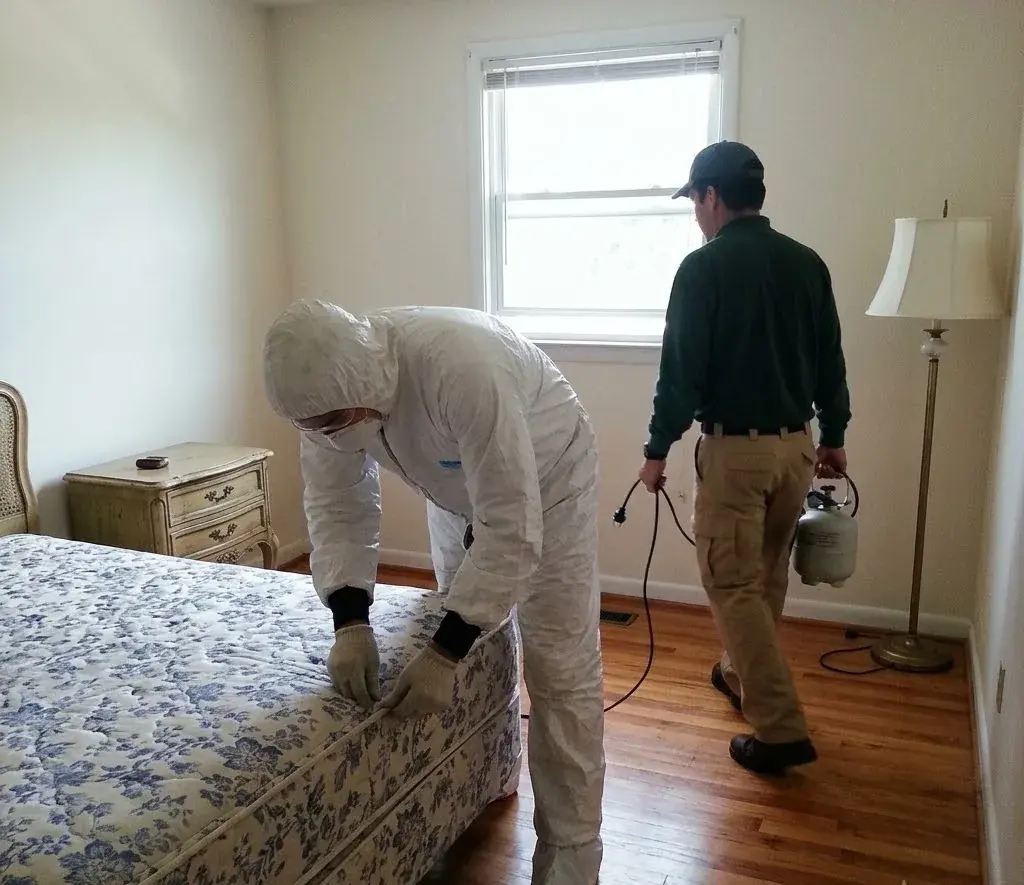
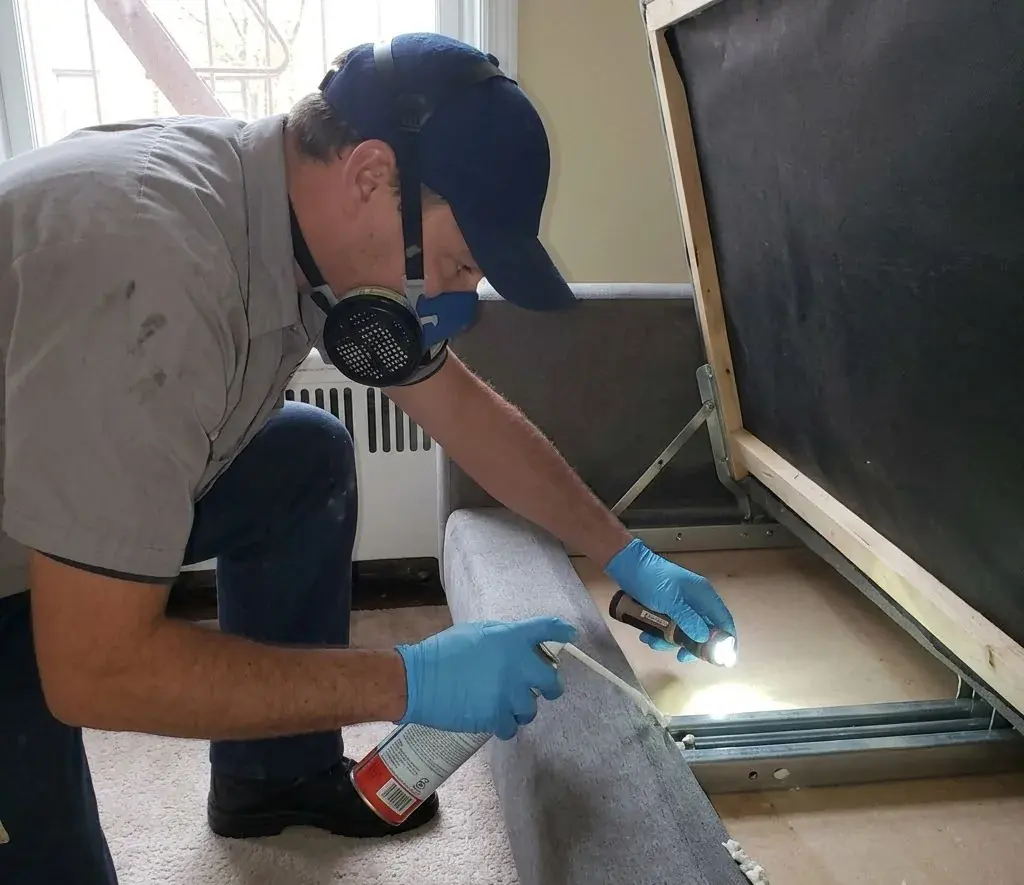
The seams of a mattress are the single best place to start, particularly the piping along the top edge and the fold where the side panel meets the bottom. Bed bugs sit tight against a seam because it holds them in place and hides them from view, so a flashlight run slowly along every seam will show cast skins, live bugs, or nothing at all. The headboard comes next, especially if it is mounted to the wall or has any screw holes, joints, or fabric backing, since those gaps behave exactly like a mattress seam and are often checked last.
What the Spotting Actually Is
The dark spotting people find on a sheet or mattress is digested blood, left behind when a bed bug feeds and then moves back to its hiding spot to rest. It shows up as small, irregular dots that smear slightly if wiped with a damp cloth while fresh, and dry to a flatter, rust-brown mark over time. It tends to cluster near the same seams and corners as the cast skins, which is useful, because spotting alone can be confused with other small stains, but spotting next to cast skins in the same spot is close to conclusive.
The Smell, If It Is Already Bad
A heavier infestation gives off a smell that people usually describe as musty or sweetish, coming from the bugs' scent glands, and it tends to be noticeable in a closed bedroom before anything else is found. This is a late sign rather than an early one — by the time a room smells like this in a Georgetown home, the population has usually been established for a while, and the physical evidence in the mattress and headboard will be easy to find once someone knows to look.
Where to Look First
Start at the mattress seams and the headboard, then move to the box spring edges, the nightstand drawers closest to the bed, and any fabric chair within a few feet of where someone sleeps. Bed bugs stay close to a person because they feed at night and retreat only as far as they need to, so the search radius around the bed matters more than checking an entire room at once. A Georgetown renter moving between an Old Town apartment and a house near Rivery should check secondhand furniture the same way before it comes inside, since that is how most infestations arrive in the first place.
Dealing with this in your home?
Georgetown posts start the same way, and it always shows: a scorpion crossed the tile at midnight, a fire ant mound came up overnight off Williams Drive, something is moving in the attic above Berry Creek. This page pulls those threads apart one at a time — what the striped bark scorpion actually wants, why roof rats never touch your slab, why the San Gabriel doesn't explain the ants. By the end you'll know which of those calls can wait until morning.