As Georgetown's nights cool from October on, mice stop treating a house as scenery and start treating it as shelter, and the way in is almost never the front door. It is a utility line running through the brick where the caulk has shrunk, a foundation vent with a bent louver, or a garage door that no longer meets the slab along its full width. A mouse only needs a gap it can flatten its skull through, and a skull is smaller than most homeowners guess. Walk the exterior at Sun City or an older Old Town lot with that in mind and the weak points usually show themselves within a few minutes.
Garage Doors Are a Common Entry Point
The rubber seal along the bottom of a garage door is one of the most common entry points in Georgetown homes, whether in a newer Wolf Ranch or Teravista subdivision or an older street near Old Town. Years of sun and use leave that seal warped, cracked, or lifted at the corners, and a gap that looks trivial from a standing position is plenty for a mouse at ground level. The side and top seals matter too. If daylight is visible around the frame when the door is closed, that is the same opening a mouse is using.
Utility Lines Leave Gaps Behind
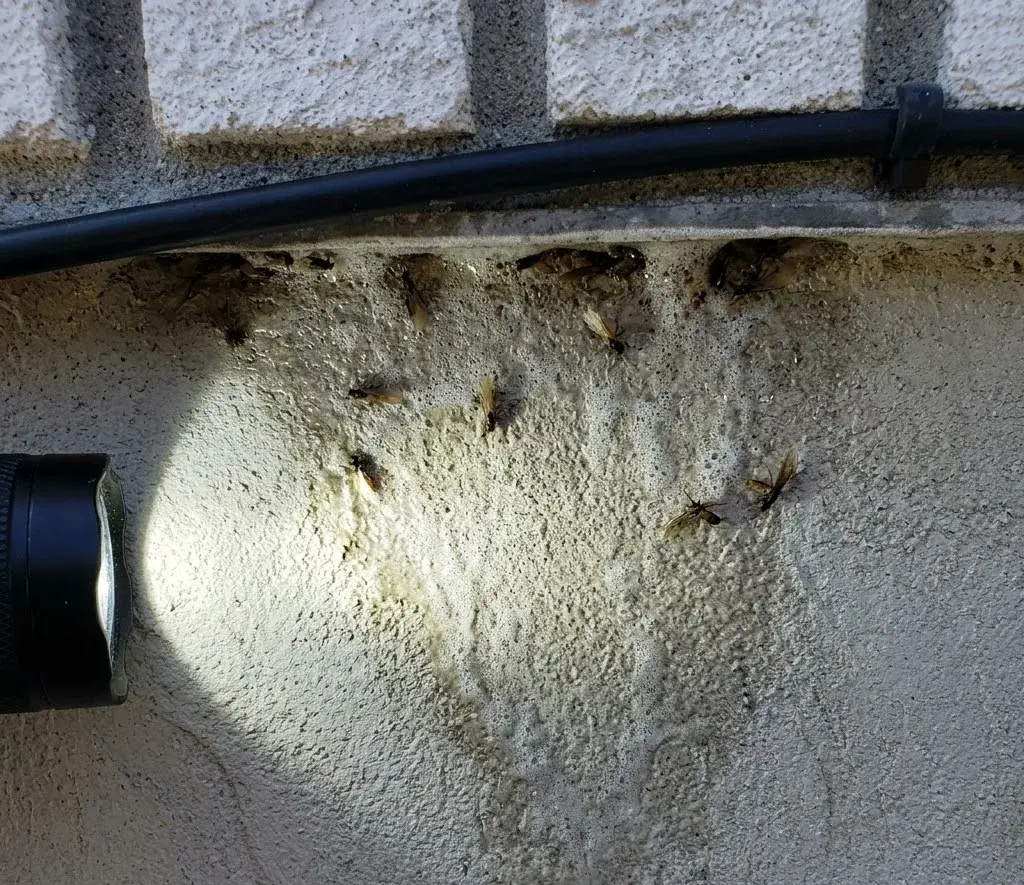
Every house has utility penetrations: the spots where a water line, gas line, dryer vent, electrical conduit or cable line passes through an exterior wall. Builders seal around these when the house goes up, but that seal shrinks, cracks or gets disturbed over time, especially on houses built through the 1990s and 2000s subdivisions common around Georgetown. A dryer vent with a damaged flap is a frequent one. So is the gap where an HVAC line set enters the wall near an outdoor condenser. These openings are often at ground level and easy to check with a flashlight from outside.
Foundation Vents and Slab Gaps
Georgetown is slab-on-grade country, so this is not about crawl space vents the way it might be in an older house up north. What matters here is the gap that opens between the soil and the slab edge after a dry summer, when clay pulls away from the foundation and leaves a space a hand can fit into. That gap runs along the base of the house and gives a mouse a direct route to any crack, weep hole or utility gap sitting right at slab level. It is worth checking after a dry stretch, not just once a year.
Roof Lines and Overhead Access
Mice will climb, and a tree limb resting against a roofline or fascia board is a bridge straight onto the house. From there, gaps at the gable vent, a gap where fascia has pulled away from the roof deck, or a soffit panel with a corner sprung loose all lead into the attic. This matters more for roof rats than mice, but the same overhead route works for both, and it is often missed because nobody thinks to look up. Anywhere a limb touches the house near Berry Creek, Cimarron Hills or similar tree-lined streets is worth trimming back regardless of what is using it.
Why Sealing Inside First Is a Mistake
A common mistake is sealing gaps found inside the house, around baseboards or under cabinets, and stopping there. That closes the route a mouse was using to move from the wall void into living space, but it does nothing about how the mouse got into the wall void in the first place. If the outside entry point stays open, another mouse takes the same route in, and the homeowner is back to square one having done real work that did not fix the actual problem. The outside has to be checked and closed before the inside gets attention.
Doing the Walk Yourself
The order matters as much as the list. Traps and bait placed inside the attic or under the sink feel like progress, but if the opening outside is still there, closing it later just pushes the problem into next winter, and in the meantime the smell of a dead mouse in a wall is worse than the mouse was. Walk the outside first, from the garage door track around past the foundation vents to wherever a utility line disappears into the brick, and seal what you find there before setting anything indoors. Do that circuit once along Williams Drive or DB Wood Road housing and most of the work is already done before a single trap gets placed.
Dealing with this in your home?
Georgetown posts start the same way, and it always shows: a scorpion crossed the tile at midnight, a fire ant mound came up overnight off Williams Drive, something is moving in the attic above Berry Creek. This page pulls those threads apart one at a time — what the striped bark scorpion actually wants, why roof rats never touch your slab, why the San Gabriel doesn't explain the ants. By the end you'll know which of those calls can wait until morning.