Ask why a pest showed up on a particular week in Georgetown and the answer is almost always weather, not chance. A stretch of drought pushes scorpions and ants toward the only moisture left in a house, a hard rain floods a colony out from under a slab, and a wet spring sends winged termites into the air on the first warm afternoon after the front clears. None of this is random. Activity tracks rainfall and heat the way a shadow tracks the sun, and once you see the pattern in one pest, you start seeing it in the rest.
Drought Sends Pests Indoors
West of I-35, the ground is thin limestone with a caliche cap, and it does not hold water the way soil does elsewhere. In a dry stretch that ground gives up what little moisture it had fast, and anything living in it, under it or near it starts moving toward whatever is left. That is why scorpions turn up in bathrooms and laundry rooms in Sun City, Cimarron Hills and along the Water Oak side of town during the hottest, driest weeks: a weep hole or a gap under a door is an easy way in, and a sink or a tub is worth the trip. Fire ants do the same thing on a smaller scale, working mulch beds and foundation lines for whatever condensation collects there.
Rain Moves the Colony, Not Just the Water
The San Gabriel River does not need much encouragement to flood, and Georgetown has seen it happen more than once, including the flash flooding along the I-35 corridor in October 2015 and the South San Gabriel cresting roughly 13 feet over flood stage in September 2018. A yard that floods pushes whatever was living in the ground, under a woodpile or along a fence line somewhere else, often toward a house that stayed dry. Termites work the same idea in slow motion: drought does not stop a subterranean colony, because it just follows the moisture that is still there, and the moisture under a slab in Georgetown does not go away when the surface does.
The Swarm After the Front
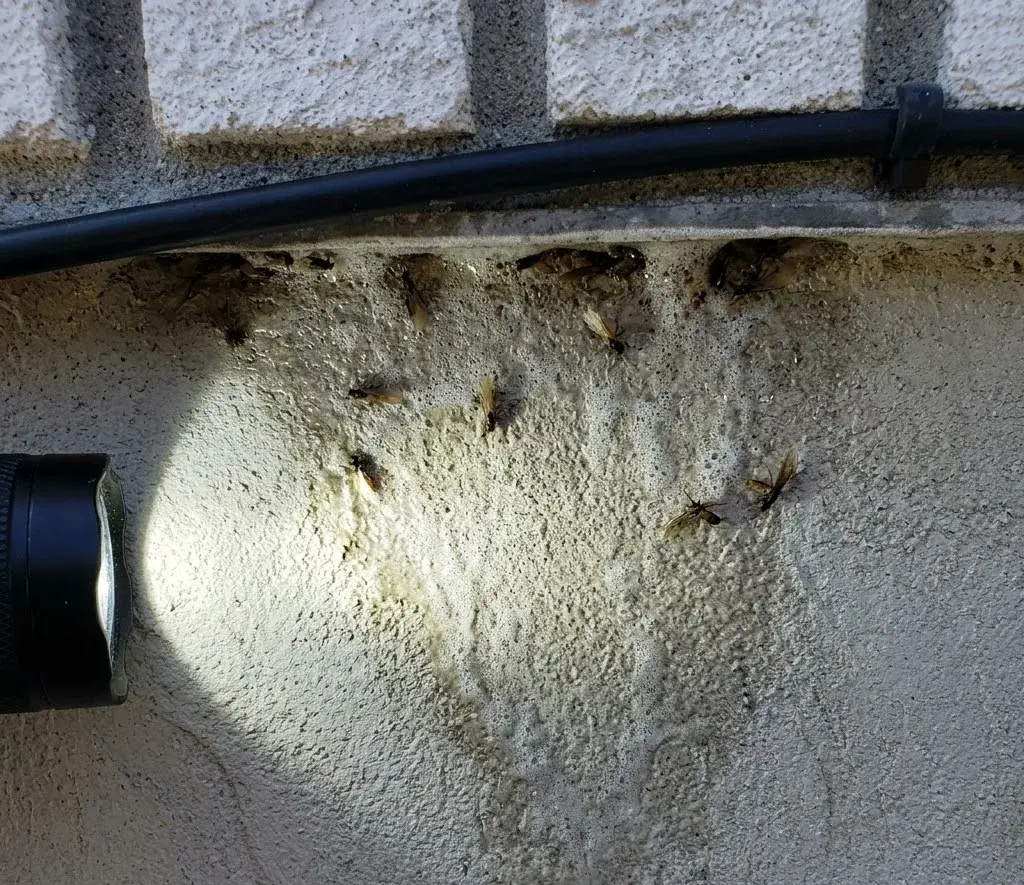
Drought does not shut termite activity down; it pushes it underground and out of sight, then a wet spell brings the swarms up where somebody can finally see them. The colony stays wherever the soil still holds water, and on the expansive clay and limestone under most Georgetown lots that is usually right along the slab edge. Owners who assume a dry summer means no termites are often the ones surprised by wings on a windowsill the following spring, once rain has come back and the ground near the foundation is damp enough for a swarm to reach daylight.
Heat, Humidity and the Fall Cricket Surge
By late summer the pattern shifts again. Heat and whatever humidity is sitting on top of it push field crickets toward light, and late summer into fall the fall field cricket emergence is one of the most predictable events on the Georgetown calendar, with black crickets piling up under porch lights, at gas stations and along storefronts near Wolf Ranch Town Center and The Square. Roof rats follow a similar seasonal push, moving along fence lines and tree limbs into attics and soffits once the outdoor heat makes an air-conditioned attic gap worth the risk. Neither problem is really about the season on its own. It is about where the moisture and the shade went.
No Real Off Season Here
Put the whole year together and Georgetown does not get a quiet stretch. Wet spring weather sets up termite swarms and gives mosquitoes standing water to work with, the dry hot middle of the year pushes scorpions and ants inside after moisture, and the fall wet spell brings a second wave of crickets and rodents on top of whatever the summer left behind. A homeowner near Berry Creek or Cimarron Hills is not dealing with one pest problem that flares up once a year. They are dealing with the same underlying moisture question, asked by a different pest depending on which part of the weather cycle Georgetown happens to be in.
Dealing with this in your home?
Georgetown posts start the same way, and it always shows: a scorpion crossed the tile at midnight, a fire ant mound came up overnight off Williams Drive, something is moving in the attic above Berry Creek. This page pulls those threads apart one at a time — what the striped bark scorpion actually wants, why roof rats never touch your slab, why the San Gabriel doesn't explain the ants. By the end you'll know which of those calls can wait until morning.